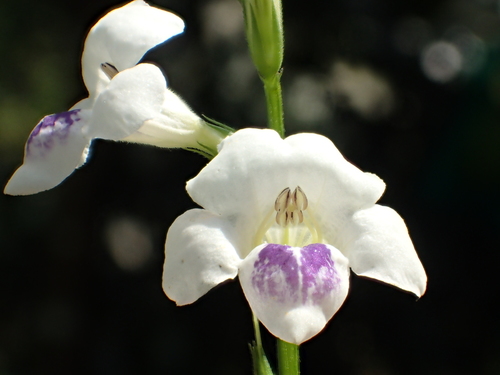


African Coromandel
asystasia intrusa
The African Coromandel (Asystasia intrusa) is a vigorous, fast-growing perennial herb famous for its sprawling, carpet-like growth and delicate, bell-shaped flowers. Belonging to the family Acanthaceae, this resilient plant thrives in disturbed environments, agricultural plantations, and forest edges. While it is admired by some as an attractive ground cover and a valuable nectar source for local pollinators, it is also notorious in many tropical and subtropical regions outside of Africa for its aggressive, invasive tendencies. Its ability to quickly smother competing undergrowth makes it a formidable ecological force, often blanketing entire forest floors and outcompeting native vegetation. In agricultural settings, it acts as a dense weed, but it also aids in soil conservation by preventing erosion on slopes.
Habitat: Typically found in disturbed soils, roadside ditches, agricultural plantations, and damp forest margins within tropical and subtropical climates.
This creeping herb features opposite, thin, oval to lance-shaped leaves that are light to medium green with slightly wavy margins. The tubular, trumpet-shaped flowers are small and usually white or pale cream, distinctly marked with purple or violet streaks and speckles in the throat to guide insect pollinators. The stems are green, slightly square in cross-section, and highly branched, sprawling along the ground or scrambling over other plants up to a height of two meters. After flowering, it produces club-shaped, explosive green seed capsules that turn brown and dry as they mature.
Category
PlantsRarity
Common
Danger
1/5 · Very low
Snaps
Be the first to snap!
Despite its weedy nature, the leaves are sometimes harvested from the wild and cooked as a nutritious pot herb in traditional African cuisine.
In parts of its introduced range, it is considered a serious agricultural weed because it competes heavily with cash crops like rubber and oil palm for nutrients.
The dry seed pods of this plant can burst open with an audible cracking sound when exposed to moisture or direct heat.
When mature, the club-shaped seed capsules dry out and split open violently, launching seeds several meters away from the parent plant.
The scrambling stems readily produce new roots wherever their nodes touch moist soil, allowing the plant to propagate vegetatively and form dense mats rapidly.
This species can photosynthesize efficiently in both full, harsh sunlight and deep forest understory shade, enabling it to invade diverse habitats.
As a photoautotrophic plant, it synthesizes its own energy using sunlight, water, carbon dioxide, and essential mineral nutrients absorbed from the soil.
Hypolimnas bolina
Serves as a vital larval host plant for the caterpillars of the Great Eggfly butterfly.
Apis cerana
Flowers are actively visited and pollinated by honey bees seeking nectar.
Spodoptera litura
Leaves and tender shoots are grazed upon by agricultural pest caterpillars.
No trait badges are assigned for this object yet.
Collections for this object will appear here as more themes are added.
Danger
1/5 · Very low
No special safety notes yet.
The easiest way to identify African Coromandel is to use the Snappit nature identifier app.
30+ cm
1+ years
As a photoautotrophic plant, it synthesizes its own energy using sunlight, water, carbon dioxide, and essential mineral nutrients absorbed from the soil.
Typically found in disturbed soils, roadside ditches, agricultural plantations, and damp forest margins within tropical and subtropical climates.
Zoom in to split clusters and explore where this object has been snapped.
Recent snaps will appear here as new observations are added.
Take the discovery with you
Snap it with Snappit to identify it, learn what makes it special, and add the discovery to your collection.









.jpg&width=800)



_001.jpg&width=800)




