.jpg&width=800)





African Jacana
Actophilornis africanus
The African Jacana is a beautiful bird known for its long legs and big feet. It walks on lily pads and floats on water, making it look like it's dancing!
Habitat: Wetlands
The African Jacana is a striking bird with a chestnut-brown body, a black cap, and a bright white neck stripe. It has a vivid sky-blue frontal shield and exceptionally long, spider-like toes for walking on water plants.
Category
BirdsRarity
Common
Danger
1/5 · Very low
Snaps
Be the first to snap!
Dad Jacanas carry their tiny chicks safely tucked under their wings.
Its babies can swim and dive almost immediately after hatching!
Their long toes help them balance on lily pads, making them look like water ballerinas!
They lay shiny, olive-brown eggs that blend perfectly with swampy water.
African Jacana can seemingly walk on water because its incredibly long toes spread weight over floating vegetation, preventing sinking.
African Jacana has super dads that incubate eggs and care for chicks, allowing mothers to find other mates.
African Jacana chicks can dive underwater and cling to vegetation, hiding completely from predators with only their bill exposed.
These birds nibble on insects, small fish, and seeds found in watery habitats.
Haliaeetus vocifer
Preys on adult jacanas and their chicks.
Crocodylus niloticus
Ambush predator of adults and chicks near water.
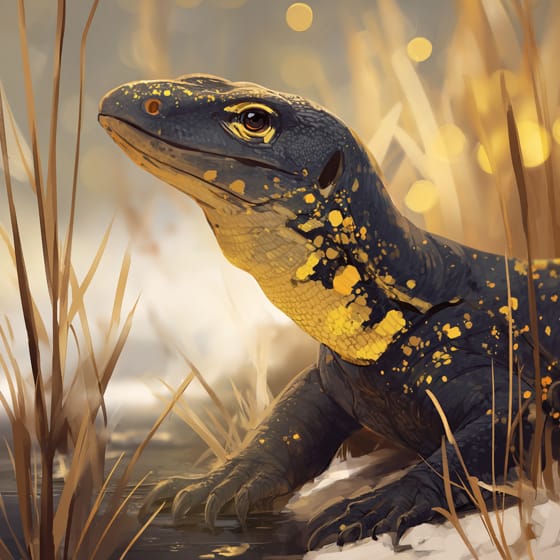
Varanus niloticus
Raids nests for eggs and preys on chicks.
Laccotrephes robustus
Eats this common aquatic insect in wetlands.
Bulinus globosus
Forages for this small snail among aquatic plants.
Feathered describes animals, primarily birds, possessing a covering of feathers.
Characterized by having toes connected by a membrane, typically aiding in swimming.
Marked with spots or patches of a different color.
Social animals live in organized groups, cooperating for survival benefits such as foraging, defense, and raising offspring.

Colorful describes organisms or objects displaying a wide range of bright and distinct colors.

This trait identifies organisms whose diet primarily consists of insects and other small invertebrates.

This habitat trait identifies species found in wetlands, which are areas of land saturated with water, either permanently or seasonally, including marshes, swamps, and bogs.

Diurnal animals are primarily active during daylight hours, typically resting or sleeping at night.

Describes a species whose presence and role have a disproportionately large effect on its environment.
No aliases listed yet.
Danger
1/5 · Very low
Always watch birds from a distance and don't disturb their homes.
The easiest way to identify African Jacana is to use the Snappit nature identifier app.
23-31 cm
45-50 cm
0.13-0.26 kg
8-12 years
35 km/h
These birds nibble on insects, small fish, and seeds found in watery habitats.
Wetlands
Zoom in to split clusters and explore where this object has been snapped.
Recent snaps will appear here as new observations are added.
Take the discovery with you
Snap it with Snappit to identify it, learn what makes it special, and add the discovery to your collection.




.jpg&width=800)








