





Anna's Hummingbird
Calypte anna
Anna's Hummingbird is a tiny bird known for its beautiful green and pink feathers. They are very fast and can hover in one place while they drink nectar from flowers.
Habitat: Urban areas, gardens
The Anna's Hummingbird has an iridescent green back and dull greyish-white underside. Males boast a dazzling rose-red, iridescent gorget and crown that can appear dark in poor light, distinguishing them from other hummingbirds. Females have green heads, often with a small red throat patch, and a relatively stout, straight bill.
Category
BirdsRarity
Common
Danger
1/5 · Very low
Snaps
45
Anna's Hummingbirds are the only hummingbird species that regularly breeds through winter.
Their heart can beat over 1,200 times per minute when they are flying fast!
Their tiny nests are expertly built with spider silk, bits of lichen, and soft plant down!
These brave little birds sometimes catch insects right out of the air like a tiny flycatcher.
Anna's Hummingbird can beat its wings up to 80 times per second because of strong flight muscles, allowing it to hover perfectly still.
Anna's Hummingbird can enter torpor, a deep sleep-like state, that helps them conserve energy and survive cold winter nights.
Anna's Hummingbird can fly backwards and hover precisely because its unique wing structure allows for incredible maneuverability in the air.
Anna's Hummingbird males can perform a spectacular high-speed dive and produce a loud 'pop' sound using their tail feathers.
This little bird mostly sips sweet flower nectar but also munches on tiny insects and spiders for protein.
Salvia sp.
Essential for transferring pollen between tubular flowers they feed from.

Aphelocoma californica
Larger birds like jays may prey on eggs, nestlings, or adult hummingbirds.
Homo sapiens
Benefits from backyard feeders and garden flowers provided by people.
Social animals live in organized groups, cooperating for survival benefits such as foraging, defense, and raising offspring.
Singing animals produce complex vocalizations, often for purposes of attracting mates, defending territory, or communicating within their species.
Colorful describes organisms or objects displaying a wide range of bright and distinct colors.
This trait characterizes organisms whose diet consists entirely or primarily of plant material.

Diurnal animals are primarily active during daylight hours, typically resting or sleeping at night.

Pertaining to species that are significantly smaller than typical or average for their kind.

This trait identifies organisms that exhibit exceptional swiftness in movement for hunting, escape, or travel.

Migratory animals undertake seasonal movements from one region to another, typically in response to changes in climate or food availability.

This habitat trait indicates species that can coexist with humans in urban and suburban environments, utilizing man-made structures and green spaces.

Describes organisms that transfer pollen, enabling the fertilization and reproduction of plants.
No aliases listed yet.
Danger
1/5 · Very low
Enjoy watching hummingbirds from a distance and don't try to catch them.
The easiest way to identify Anna's Hummingbird is to use the Snappit nature identifier app.
9.9-10.9 cm
11-12 cm
0.003-0.006 kg
3-8 years
61 km/h
This little bird mostly sips sweet flower nectar but also munches on tiny insects and spiders for protein.
Urban areas, gardens
Zoom in to split clusters and explore where this object has been snapped.
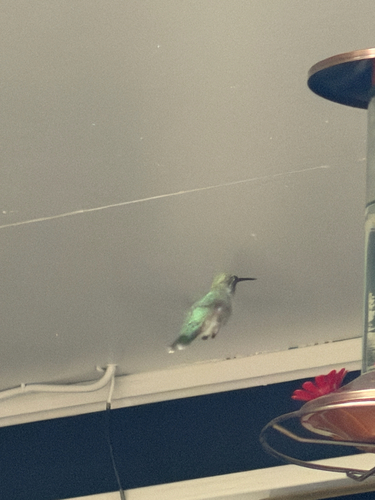
Jun 8, 2026
Lower Cushman DamPhoto attribution
no rights reserved
License: CC0 1.0 ↗
Image may be shown cropped inside the card frame.
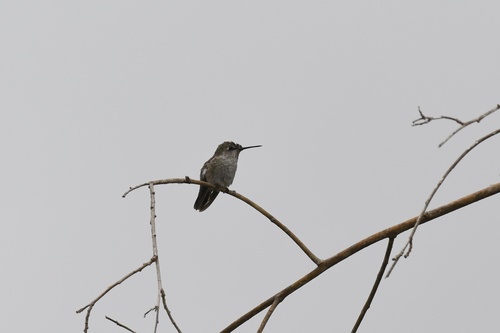
Jun 6, 2026
Mount EcclesiaPhoto attribution
(c) zr217, some rights reserved (CC BY)
License: CC BY 4.0 ↗
Image may be shown cropped inside the card frame.
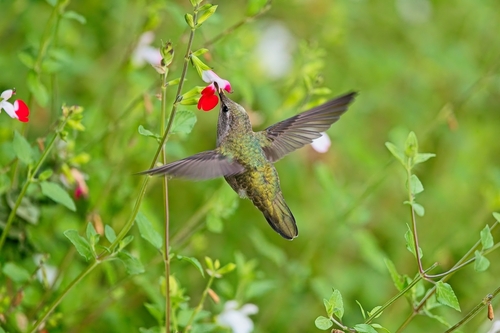
Jun 3, 2026
Sonoma PlazaPhoto attribution
(c) Daveozric, some rights reserved (CC BY)
License: CC BY 4.0 ↗
Image may be shown cropped inside the card frame.
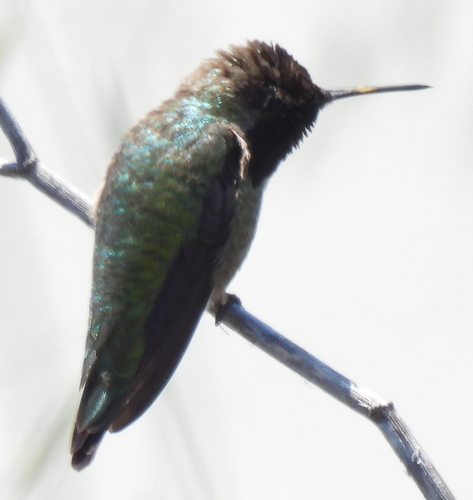
May 9, 2026
CuriOdysseyPhoto attribution
(c) Timothy Whitehead, some rights reserved (CC BY)
License: CC BY 4.0 ↗
Image may be shown cropped inside the card frame.

California, US
You might spot Redwood Sorrel, Redwood, and Button's Banana Slug.
View guide →

Arizona, US
You might spot Northern Cardinal, Engelmann's Hedgehog Cactus, and Queen.
View guide →

California, US
You might spot Great Blue Heron, Western Gull, and Coyote.
View guide →

California, US
You might spot Largemouth Bass and Birdcage Evening Primrose.
View guide →

California, US
You might spot Toyon, Mule Deer, and White Globe Lily.
View guide →

Washington, US
You might spot Barrow's Goldeneye and Pacific Banana Slug.
View guide →
Take the discovery with you
Snap it with Snappit to identify it, learn what makes it special, and add the discovery to your collection.




.jpg&width=800)








