.jpg&width=800)





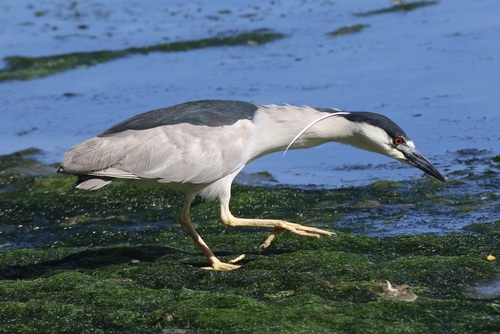
Black-crowned Night Heron
Nycticorax nycticorax
The Black-crowned Night Heron is a unique bird that loves to hunt for fish and frogs at night. With its striking black crown and white body, it is a beautiful sight near water.
Habitat: Wetlands
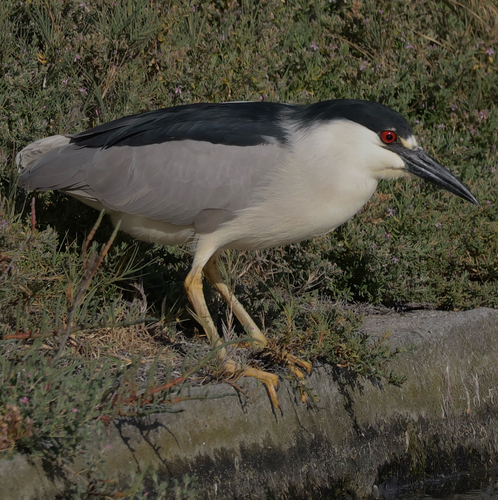
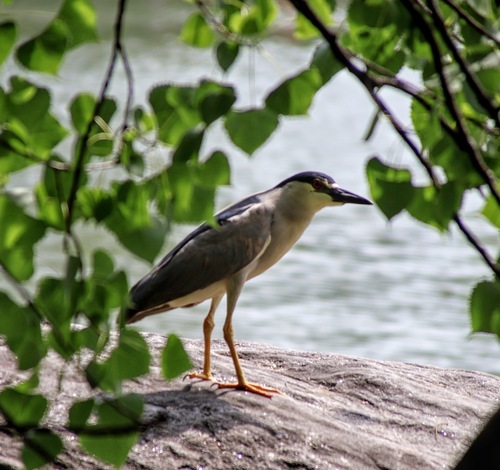
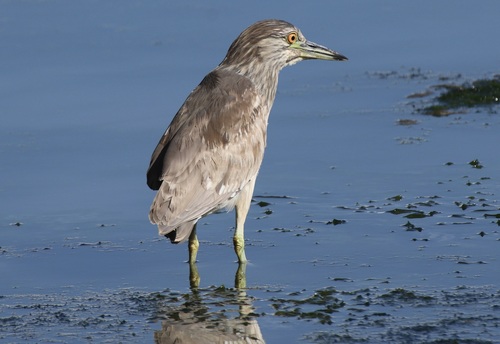
The Black-crowned Night Heron has a stout body, a distinct black cap and back, and grey wings. Its bright red eyes, white facial plumes (in breeding adults), and yellow legs make it easily recognizable. Juveniles are streaky brown for camouflage.
Category
BirdsRarity
Common
Danger
1/5 · Very low
Snaps
155
A Black-crowned Night Heron can live over 20 years in the wild! Wow!
Hundreds of these herons often roost together, creating noisy "bird cities" in trees!
Juvenile herons are speckled brown, camouflaged perfectly among reeds and branches.
They make a unique, frog-like "quark!" sound, unlike most squawking herons.
Black-crowned Night Herons can see exceptionally well in low light, helping them hunt for fish and frogs after sunset.
This heron has incredible patience, standing perfectly still for long periods to ambush unsuspecting prey with a sudden lunge.
Black-crowned Night Herons can strike with lightning speed from a still position, allowing them to snatch fast-moving aquatic food.
These opportunistic hunters mainly eat small fish, amphibians, crustaceans, and insects from shallow water.

Fundulus heteroclitus
A common small fish in estuaries they actively prey upon.
Lithobates sp.
These herons regularly prey on various species of frogs.
Procambarus clarkii
Crayfish are a frequent and important part of their diet.
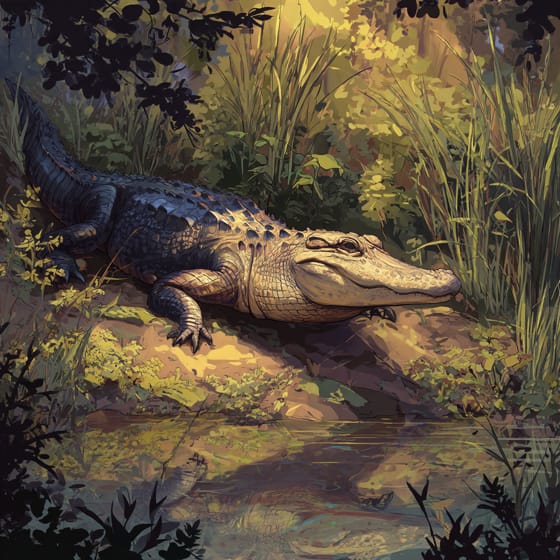
Alligator mississippiensis
Alligators are opportunistic predators of heron eggs and chicks.
Didelphis virginiana
Opossums can raid nests, eating heron eggs and young chicks.
Feathered describes animals, primarily birds, possessing a covering of feathers.
Solitary animals live alone for most of their lives, only interacting with others for mating or parental care.
Piscivorous organisms are animals that primarily subsist on a diet of fish.
An ambush predator hunts by patiently waiting and concealing itself, then launching a sudden attack when unsuspecting prey comes within range.

This habitat trait identifies species found in wetlands, which are areas of land saturated with water, either permanently or seasonally, including marshes, swamps, and bogs.

This trait identifies organisms whose diet consists entirely or primarily of animal tissue.

Nocturnal animals are primarily active during the nighttime hours, typically resting or sleeping during the day.
Danger
1/5 · Very low
Always watch birds from a distance and don't try to touch them.
The easiest way to identify Black-crowned Night Heron is to use the Snappit nature identifier app.
58-65 cm
90-112 cm
0.5-1 kg
10-21 years
50 km/h
These opportunistic hunters mainly eat small fish, amphibians, crustaceans, and insects from shallow water.
Wetlands
Zoom in to split clusters and explore where this object has been snapped.
Jun 19, 2026
Palo Alto Baylands Nature PreservePhoto attribution
no rights reserved
License: CC0 1.0 ↗
Image may be shown cropped inside the card frame.
Jun 6, 2026
Henderson Place Historic DistrictPhoto attribution
(c) cappycollins, some rights reserved (CC BY)
License: CC BY 4.0 ↗
Image may be shown cropped inside the card frame.
Jun 6, 2026
Koko Crater Botanical GardenPhoto attribution
(c) Damien Wallace, some rights reserved (CC BY)
License: CC BY 4.0 ↗
Image may be shown cropped inside the card frame.
Jun 5, 2026
Aquarium of the BayPhoto attribution
(c) Cricket Raspet, some rights reserved (CC BY)
License: CC BY 4.0 ↗
Image may be shown cropped inside the card frame.
Jun 5, 2026
Aquarium of the BayPhoto attribution
(c) Cricket Raspet, some rights reserved (CC BY)
License: CC BY 4.0 ↗
Image may be shown cropped inside the card frame.

Michigan, US
You might spot Eastern Gray Squirrel, Tree-Of-Heaven, and House Sparrow.
View guide →

California, US
You might spot Snowy Egret, Great Blue Heron, and Willet.
View guide →
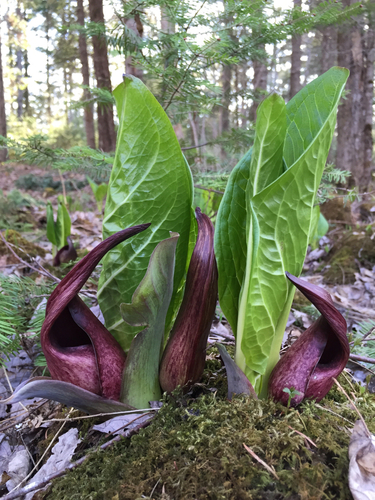
Connecticut, US
You might spot Eastern Skunk Cabbage and Eastern White Pine.
View guide →

Louisiana, US
You might spot Brown Anole, White Ibis, and Duck.
View guide →

Rhode Island, US
You might spot Spotted Lanternfly, Duck, and American Robin.
View guide →

New York, US
You might spot American Robin, Pond Slider, and Northern Cardinal.
View guide →
Take the discovery with you
Snap it with Snappit to identify it, learn what makes it special, and add the discovery to your collection.