





Great Egret
Ardea alba
The Great Egret is a tall, graceful bird with long legs and a beautiful white body. It loves to stand still by the water, waiting to catch fish with its sharp beak.
Habitat: Wetlands
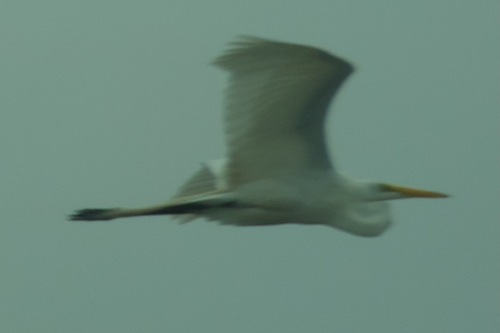
The Great Egret is a large bird with stunning pure white plumage, an elegant S-curved neck, and long, slender black legs. It has a distinctive yellowish-orange bill that turns brighter during breeding season. Its striking all-white body sets it apart from other wading birds.
Category
BirdsRarity
Common
Danger
1/5 · Very low
Snaps
176
An egret's extra-long toes spread out to help them walk on squishy mud without sinking! Wow!
During breeding season, the male egret's bill turns an amazing orange-red color!
Their dazzling white feathers were once so popular for hats, they were hunted almost to extinction!
They often stand completely still, waiting patiently for prey to swim close before striking!
Great Egret can extend its S-curved neck with incredible speed to spear fish, helping them catch quick, elusive prey.
Great Egret has long, stilt-like legs that help them wade into deep water without getting wet, allowing access to hidden food.
Great Egret has special 'powder down' feathers that continuously crumble, helping them clean sticky fish slime from their plumage.
The Great Egret mostly eats small fish, but also enjoys other tasty treats found in the water.
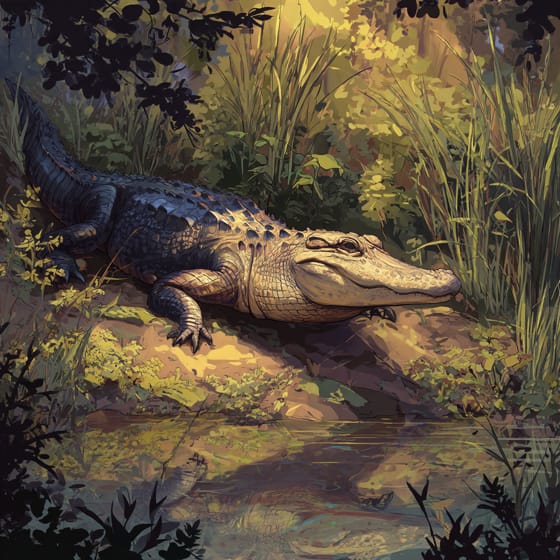
Alligator mississippiensis
Alligators prey on egret eggs and chicks.

Procyon lotor
Raccoons often raid egret nests for eggs and young.
Gambusia affinis
A common small fish prey in their wetland habitats.
Lithobates pipiens
Egrets hunt these frogs in shallow waters.
Taxodium distichum
Often nests in colonies within these large trees.
Feathered describes animals, primarily birds, possessing a covering of feathers.
Solitary animals live alone for most of their lives, only interacting with others for mating or parental care.
Piscivorous organisms are animals that primarily subsist on a diet of fish.
An ambush predator hunts by patiently waiting and concealing itself, then launching a sudden attack when unsuspecting prey comes within range.

This habitat trait identifies species found in wetlands, which are areas of land saturated with water, either permanently or seasonally, including marshes, swamps, and bogs.

This trait identifies organisms whose diet consists entirely or primarily of animal tissue.

Diurnal animals are primarily active during daylight hours, typically resting or sleeping at night.

Describes a species whose presence and role have a disproportionately large effect on its environment.

Migratory animals undertake seasonal movements from one region to another, typically in response to changes in climate or food availability.
Danger
1/5 · Very low
Always watch birds from a distance and don't try to touch them.
The easiest way to identify Great Egret is to use the Snappit nature identifier app.
80-104 cm
131-170 cm
0.7-1.5 kg
15-24 years
35 km/h
The Great Egret mostly eats small fish, but also enjoys other tasty treats found in the water.
Wetlands
Zoom in to split clusters and explore where this object has been snapped.
Jun 19, 2026
Congress Avenue Historic DistrictPhoto attribution
(c) Trey Philips, some rights reserved (CC BY)
License: CC BY 4.0 ↗
Image may be shown cropped inside the card frame.
May 31, 2026
Connecticut College ArboretumPhoto attribution
(c) Sawyer Baran, some rights reserved (CC BY)
License: CC BY 4.0 ↗
Image may be shown cropped inside the card frame.
May 25, 2026
Liston Range Rear LightPhoto attribution
(c) Elizabeth Green, some rights reserved (CC BY)
License: CC BY 4.0 ↗
Image may be shown cropped inside the card frame.

Alabama, US
You might spot Elf Orpine, Canada Goose, and Leatherleaf Mahonia.
View guide →

California, US
You might spot Acorn Woodpecker and Western Fence Lizard.
View guide →

South Carolina, US
You might spot American Alligator, Anole, and Great Blue Heron.
View guide →

Alabama, US
You might spot Anole, Eastern Gray Squirrel, and Asian Lady Beetle.
View guide →

Georgia, US
You might spot Gulf Fritillary, Anole, and American Beautyberry.
View guide →

Rhode Island, US
You might spot Common Eastern Bumble Bee and Osprey.
View guide →
Take the discovery with you
Snap it with Snappit to identify it, learn what makes it special, and add the discovery to your collection.





.jpg&width=800)







