





Ailanthus Webworm Moth
Atteva aurea
The Ailanthus Webworm Moth is a colorful little moth with bright yellow and black stripes. It loves to flutter around trees and is often seen in gardens during warm months.
Habitat: Urban areas
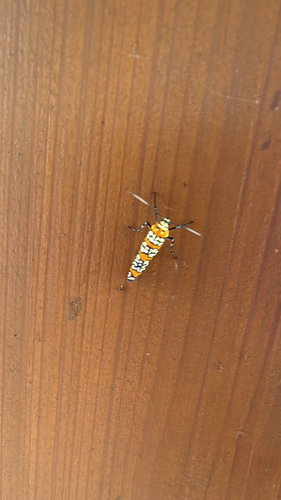
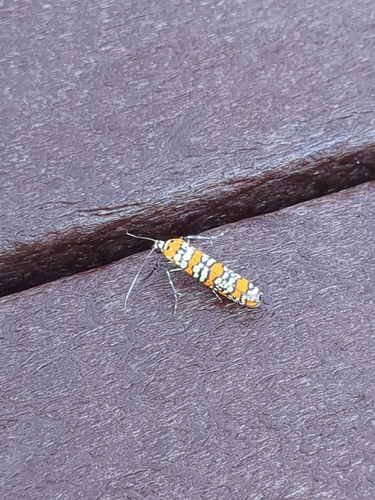
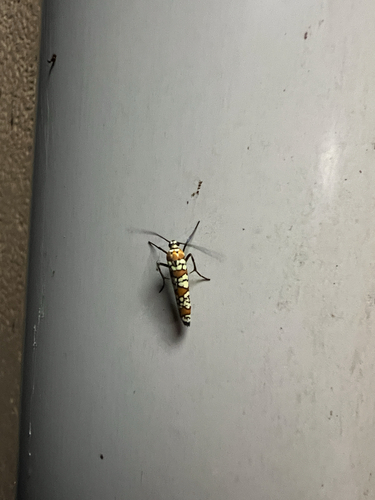
The Ailanthus Webworm Moth has striking yellowish-orange wings adorned with iridescent blue-black spots and stripes, giving it a jewel-like appearance. Its slender body and long antennae contribute to its distinct, almost wasp-like look, making it easily distinguishable.
Category
InsectsRarity
Common
Danger
1/5 · Very low
Snaps
27
Its caterpillar can eat so much it completely defoliates an entire tree!
The vibrant colors of this moth warn predators to stay away, like a secret code!
This moth's larvae live together inside silken webs on their host plant.
Unlike many moths, the Ailanthus Webworm Moth is active and flies during the daytime.
Ailanthus Webworm Moths have bright, contrasting patterns that help them mimic wasps, deterring predators who mistake them for stinging insects.
Ailanthus Webworm Moth larvae can spin protective silk webs around their food source, which helps them stay safe from birds and other threats.
Ailanthus Webworm Moth caterpillars consume toxins from host plants, making them unpalatable to many predators that might try to eat them.
Larvae munch on tree leaves while adults sip sweet nectar from various flowers.
Age differences: Larvae (caterpillars) chew on leaves, while adult moths sip flower nectar.
Ailanthus altissima
Larvae exclusively feed on its leaves for growth.
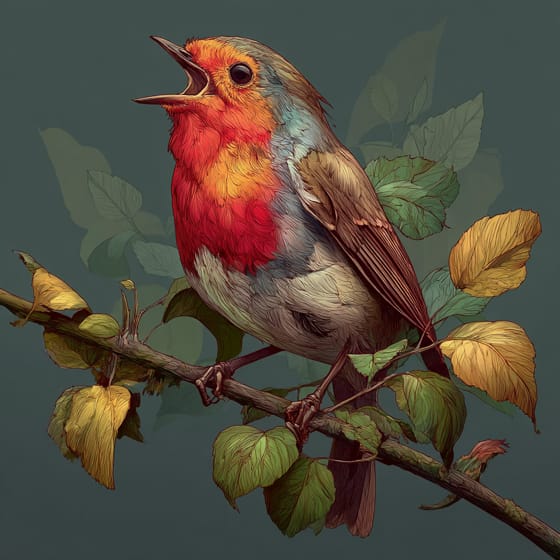
Turdus migratorius
Moths and caterpillars are a food source for birds.
Apanteles atrevi
Wasp larvae develop inside the moth's caterpillar host.
Marked with parallel bands or lines of color.
Solitary animals live alone for most of their lives, only interacting with others for mating or parental care.
This trait characterizes organisms that construct elaborate silken webs for catching prey, shelter, or reproduction.
Colorful describes organisms or objects displaying a wide range of bright and distinct colors.

This trait characterizes organisms whose diet consists entirely or primarily of plant material.

Describes plants that are particularly attractive and beneficial to a wide range of pollinating organisms.

Diurnal animals are primarily active during daylight hours, typically resting or sleeping at night.

This habitat trait indicates species that can coexist with humans in urban and suburban environments, utilizing man-made structures and green spaces.

Describes organisms that transfer pollen, enabling the fertilization and reproduction of plants.
No aliases listed yet.
Danger
1/5 · Very low
Moths are usually safe to watch, but don't touch them as they can be delicate.
The easiest way to identify Ailanthus Webworm Moth is to use the Snappit nature identifier app.
25-35 mm
10-15 mm
15-30 days
Larvae munch on tree leaves while adults sip sweet nectar from various flowers.
Urban areas
Foraging
6
Zoom in to split clusters and explore where this object has been snapped.
May 28, 2026
Tennessee AquariumPhoto attribution
(c) charlie olson, some rights reserved (CC BY)
License: CC BY 4.0 ↗
Image may be shown cropped inside the card frame.
Aug 31, 2025
Fincastle Historic DistrictPhoto attribution
no rights reserved
License: CC0 1.0 ↗
Image may be shown cropped inside the card frame.
Jul 26, 2024
Glen Echo ParkPhoto attribution
(c) Carrie Seltzer, some rights reserved (CC BY)
License: CC BY 4.0 ↗
Image may be shown cropped inside the card frame.

Alabama, US
You might spot Anole, Eastern Gray Squirrel, and Asian Lady Beetle.
View guide →

Illinois, US
You might spot Carolina Mantis and Goldenrod Soldier Beetle.
View guide →

Iowa, US
You might spot House Sparrow, Northern Cardinal, and House Finch.
View guide →

Alabama, US
You might spot Anole, Eastern Gray Squirrel, and Asian Lady Beetle.
View guide →

US
You might spot Pond Slider, Black-Bellied Whistling-Duck, and Brown Anole.
View guide →

Alabama, US
You might spot Cave Salamander and Pink Lady's Slipper.
View guide →
Take the discovery with you
Snap it with Snappit to identify it, learn what makes it special, and add the discovery to your collection.







.jpg&width=800)



