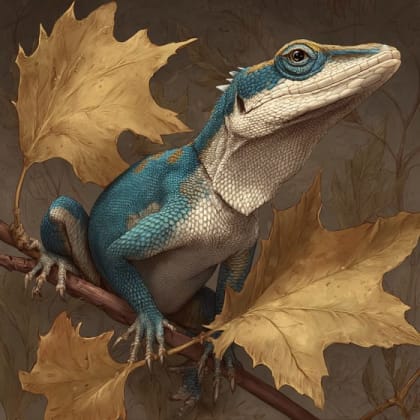
Brown Anole

Fort Brown offers a profound journey into key chapters of American and Texan history.
Fort Brown offers a profound journey into key chapters of American and Texan history. Established in 1846, this former military post stood as a crucial outpost during the Mexican-American War and played significant roles in subsequent conflicts. Today, its hallowed grounds and preserved buildings serve as a National Historic Landmark, seamlessly integrated into the vibrant campus of the University of Texas Rio Grande Valley (UTRGV) and Texas Southmost College (TSC), offering a unique blend of education and historical preservation. Visitors can explore the remnants of its past, from battle-scarred earthworks to elegant 19th-century military architecture.
The venue’s historical landscape features remnants of the original star-shaped earthworks, silent witnesses to the opening battles of the Mexican-American War. Visitors can trace the footsteps of soldiers and pioneers, viewing a commemorative cannon marking the spot where Major Jacob Brown, the fort's namesake, fell during a fierce siege. Several well-preserved buildings from the post-Civil War era stand as architectural testaments, including the historic Post Hospital, Old Morgue (Buildings 85 & 86), and the Cavalry Barracks, each telling a story of military life, medical advancements, and border defense.
Visiting Fort Brown is an immersive experience that connects you directly to the forces that shaped the U.S.-Mexico border and the American Southwest. It’s an essential destination for those seeking to understand the complexities of military history, the resilience of frontier life, and the evolution of a significant Texas landmark. Whether you're a history buff, an architecture enthusiast, or simply curious about the past, Fort Brown provides a compelling narrative etched into its very foundations. Take the ultimate field guide with you: use the Snappit app to identify birds, plants, and animals on your trip.
Fort Brown, originally known as Fort Texas, was established by General Zachary Taylor and U.S. forces in March 1846 as a critical position on the Rio Grande, intended to assert the U.S. claim to the river as the southern boundary of Texas. During the Mexican-American War, the fort endured a siege, resulting in the death of Major Jacob Brown, in whose honor the fort was subsequently renamed. The fort continued to be a vital military post through various periods of conflict, including the Civil War, where it was alternately occupied by Union and Confederate forces due to its strategic importance for controlling the cotton trade. After the Civil War, permanent brick buildings replaced earlier structures, with construction beginning in 1867 and continuing into the 1870s. These buildings were central to military operations and even played a role in groundbreaking medical research, as Dr. William C. Gorgas conducted significant studies on yellow fever at the post hospital in 1882. Fort Brown remained active, serving as headquarters for the Twelfth Cavalry from World War I until 1941, and as a training ground during World War II, before being officially decommissioned in 1946. In 1948, the land was transferred to the City of Brownsville and Texas Southmost College, and in 1960, several key areas of the former post were designated a discontiguous National Historic Landmark District, recognizing its immense historical importance. Recently, the Consolidated Appropriations Act, 2023, authorized its addition to the Palo Alto Battlefield National Historical Park.
Walk the grounds of the former fort, now part of the UTRGV Brownsville campus, using the historical markers to guide your journey. Photograph the distinctive 19th-century military architecture and imagine life at this frontier outpost. Enjoy the scenic views, including those towards the Rio Grande, which played a central role in the fort's strategic importance.
Summers in Brownsville are very hot and humid, so visitors should plan accordingly with hydration and sun protection. While there are no specific animal activities, the Rio Grande Valley is known for birdwatching, which may be of interest to visitors.
As part of a university campus, Fort Brown likely offers paved pathways and accessible routes around the historical buildings. However, specific accessibility for entering individual historic buildings may vary and should be confirmed with the university or Texas Southmost College for interior access.
See the surviving remnants of the 1846 earth fortification, which stood during the Mexican-American War.
A striking upended cannon marks the spot where Major Jacob Brown fell during the siege.
An important building where Dr. William C. Gorgas conducted pioneering yellow fever research.
Another site linked to Gorgas's medical studies.
Each card links to a full Explore page with photos, traits, and fun facts.
Start with the big picture, then zoom in to explore individual wildlife observations around this place.
Wear comfortable walking shoes
You'll be exploring the grounds and exteriors of several historical buildings.
Stay hydrated
Brownsville's climate can be hot, especially outside of winter. Bring water, particularly if visiting during warmer months.
Check for campus access
If you're interested in potential interior access to any historical buildings, contact the University of Texas Rio Grande Valley or Texas Southmost College in advance.
Combine with other historical sites
Fort Brown is near other significant historical locations like Palo Alto Battlefield National Historical Park and the Historic Brownsville Museum, making it easy to create a comprehensive history tour.
Look for historical markers
Numerous Texas Historical Markers are placed throughout the site, providing valuable context and stories.
Utilize campus parking
Parking is available on the university campus, which provides access to the historical areas.
Jun 15, 2026
Jun 13, 2026
Jun 12, 2026
Jun 12, 2026
Jun 12, 2026

Maryland, US
You might spot White-Tailed Deer and Eastern Gray Squirrel.
View guide →
.jpg)
District of Columbia, US
You might spot Eastern Gray Squirrel, Duck, and House Sparrow.
View guide →

Illinois, US
You might spot American Robin, Canada Goose, and House Sparrow.
View guide →

Virginia, US
You might spot Spotted Lanternfly and Northern Cardinal.
View guide →
Take the discovery with you
Identify the wildlife you spot, learn as you go, and keep a collection of the adventure.





















.jpg&width=800)




.jpg&width=800)