.jpg&width=800)





Allen's swamp monkey
Allenopithecus nigroviridis
Allen's swamp monkey is a playful and curious monkey that loves to swing through the trees. They have a special black and green fur that helps them blend into their wetland home.
Habitat: Wetlands
The Allen's swamp monkey has a stocky build with grayish-green fur on its back and a lighter belly. Its face is hairless and bluish-black. They are unique for their partially webbed fingers and toes, a special adaptation for their watery home.
Category
MammalsRarity
Rare
Danger
2/5 · Low
Snaps
Be the first to snap!
Allen's swamp monkeys sleep high in trees to stay safe from predators!
These monkeys often eat small frogs and fish right out of the water!
They are the only monkey in their genus, Allenopithecus!
They communicate with unique calls, including a "hoo" sound to warn others!
Allen's swamp monkey can swim and dive expertly because of its partially webbed fingers and toes that help them navigate watery habitats.
Allen's swamp monkey has large cheek pouches that help them temporarily store lots of food, keeping them safe while gathering.
Allen's swamp monkey can hide in dense vegetation near water, because its grayish-green fur helps them blend in perfectly.
These omnivores enjoy a varied menu of fruits, leaves, insects, and even small aquatic animals!
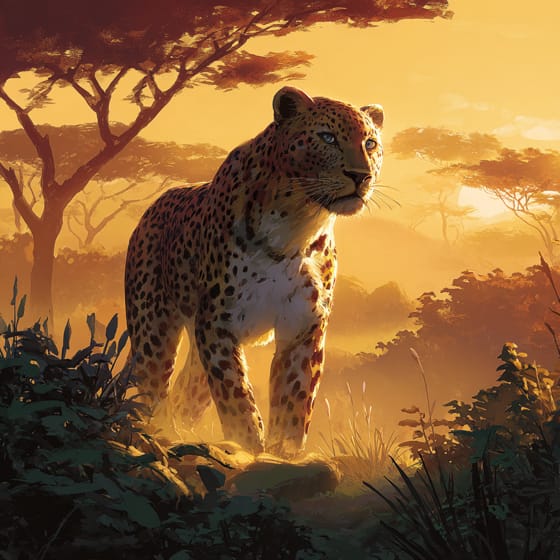
Panthera pardus
A primary predator of monkeys in its habitat.
%2C_at_Ndumo_Nature_Reserve%2C_KwaZulu-Natal%2C_South_Africa_(28947411865).jpg&width=800)
Stephanoaetus coronatus
Large raptor that preys on arboreal mammals.
Python sebae
Large constrictor that can prey on monkeys.
Ficus exasperata
Often eats fruits from specific fig tree species.
Cynometra alexandri
Consumes leaves and pods from certain swamp trees.
Furry describes animals possessing a dense covering of soft hair or fur.
Social animals live in organized groups, cooperating for survival benefits such as foraging, defense, and raising offspring.
This trait identifies organisms whose diet includes both plant and animal matter.
Arboreal animals live primarily in trees, utilizing them for shelter, food, and protection from predators.

This habitat trait identifies species found in wetlands, which are areas of land saturated with water, either permanently or seasonally, including marshes, swamps, and bogs.

Diurnal animals are primarily active during daylight hours, typically resting or sleeping at night.

Endangered status indicates a species is at a very high risk of extinction in the wild in the near future.
Danger
2/5 · Low
Always watch from a distance and never try to touch wild animals.
The easiest way to identify Allen's swamp monkey is to use the Snappit nature identifier app.
45-60 cm
2-6 kg
15-23 years
25 km/h
These omnivores enjoy a varied menu of fruits, leaves, insects, and even small aquatic animals!
Wetlands
Foraging
Zoom in to split clusters and explore where this object has been snapped.
Recent snaps will appear here as new observations are added.
Take the discovery with you
Snap it with Snappit to identify it, learn what makes it special, and add the discovery to your collection.




.jpg&width=800)



.JPG&width=800)



.jpg&width=800)
