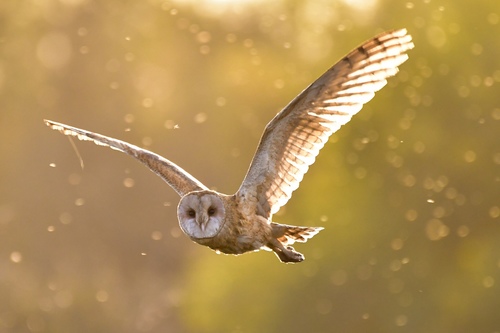


American Barn Owl
tyto furcata
The American Barn Owl is a mesmerizing, nocturnal predator famous for its distinct, ghostly white, heart-shaped facial disc and silent flight. Moving like a specter over open fields, grasslands, and agricultural areas, this elegant raptor plays a critical role in controlling rodent populations. Unlike typical owls, it does not hoot, but instead emits eerie, rasping screeches that can startle unsuspecting night walkers. Blessed with incredibly acute hearing, it can pinpoint the movement of small mammals beneath dense ground cover or snow in complete darkness. Highly adaptable to human presence, they frequently nest in quiet, dark spaces like barns, silos, and church steeples, making them a beloved friend to farmers everywhere.
Habitat: Found in open habitats such as grasslands, agricultural fields, marshes, and pasturelands, where they frequently nest in hollow trees, caves, or man-made structures like barns.
This medium-sized owl is easily recognized by its heart-shaped white face outlined with brown, and its dark, staring eyes that lack the yellow irises of many other owl species. Its plumage is a gorgeous mosaic of sandy-buff, gold, and light gray above, finely speckled with black and white, while its underparts are pure white to pale cinnamon with small dark spots. It possesses long, rounded wings, a short tail, and exceptionally long, sparsely feathered legs. In flight, it appears remarkably buoyant and mostly white from below.
Category
BirdsRarity
Common
Danger
1/5 · Very low
Snaps
4
A single family of Barn Owls can consume up to 3,000 rodents in a single breeding season, making them highly effective, chemical-free pest control.
Rather than hooting like typical owls, the American Barn Owl produces an array of eerie screeches, hisses, and clicks that have inspired many ghost stories.
Their hearing is so precise that they can successfully capture prey hidden entirely beneath snow or thick vegetation in total darkness.
Feathers with velvety surfaces and soft, fringed edges break up air turbulence, allowing them to fly almost silently to ambush prey.
Ear openings positioned at different heights on the skull enable precise vertical and horizontal sound localization in absolute darkness.
The stiff feathers of the heart-shaped facial disc channel even the faintest sounds of scurrying rodents directly to its ears like a satellite dish.
Feeds almost exclusively on small mammals, particularly rodents, which it swallows whole and later regurgitates as compact, gray pellets.
Microtus pennsylvanicus
Preys heavily upon this small rodent in grassy fields, serving as a vital natural pest control agent.
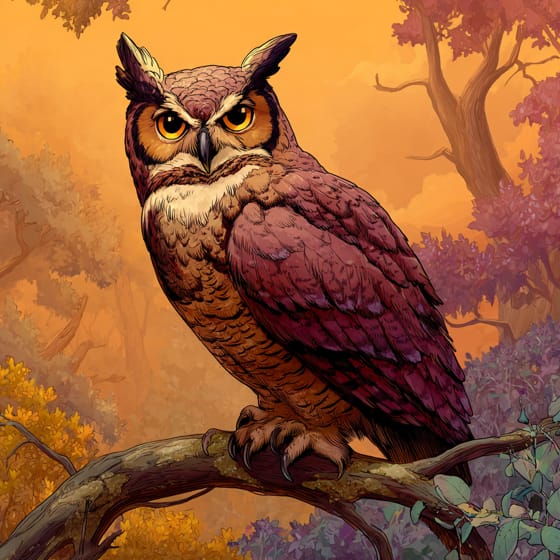
Bubo virginianus
A major nocturnal competitor and apex predator that will hunt and kill barn owls when territories overlap.
Peromyscus maniculatus
A common nocturnal rodent that serves as a primary food source across North America.
No trait badges are assigned for this object yet.
No aliases listed yet.
Collections for this object will appear here as more themes are added.
Danger
1/5 · Very low
No special safety notes yet.
The easiest way to identify American Barn Owl is to use the Snappit nature identifier app.
32+ cm
100+ cm
0.4+ kg
2+ years
35 km/h
Feeds almost exclusively on small mammals, particularly rodents, which it swallows whole and later regurgitates as compact, gray pellets.
Found in open habitats such as grasslands, agricultural fields, marshes, and pasturelands, where they frequently nest in hollow trees, caves, or man-made structures like barns.
Zoom in to split clusters and explore where this object has been snapped.

California, US
You might spot Warrior's Plume and Purple Owl's-Clover.
View guide →

California, US
You might spot Checkerbloom and Fuchsiaflower Gooseberry.
View guide →

Hawaii, US
You might spot ʻōhiʻa Lehua and Stinking Passionflower.
View guide →

California, US
You might spot Common Raven and Red-Tailed Hawk.
View guide →
Take the discovery with you
Snap it with Snappit to identify it, learn what makes it special, and add the discovery to your collection.







.jpg&width=800)









