.jpg&width=800)





Pine Warbler
Setophaga pinus
The Pine Warbler is a small, cheerful bird that loves to sing! It has a bright yellow belly and a lovely song that sounds like a sweet melody. You can often find it hopping around in pine trees.
Habitat: Forests
The Pine Warbler is a small songbird with a yellowish chest, olive-green back, and two distinctive white wing bars. Males are brighter yellow than females, which are duller with more streaking, helping them blend into their pine tree habitat.
Category
BirdsRarity
Common
Danger
1/5 · Very low
Snaps
14
Males sing a cheerful, musical trill, often described as sounding like a tiny sewing machine!
Pine Warblers often hang upside down to find insects hidden deep within pine cones and needles!
Pine Warblers will visit suet feeders in winter, a rare treat for a warbler species!
They are one of the earliest warblers to arrive back in northern areas during the spring migration.
Pine Warblers can cleverly forage for insects among pine needles, which helps them find food where other birds might struggle.
Pine Warblers have adaptations to drink sweet tree sap, which helps them get energy when insect food is scarce.
Pine Warblers can cling and climb on tree trunks and branches, which helps them search for hidden insects and seeds.
These little birds enjoy a mix of tasty insects, spiders, and seeds, especially from pine trees.
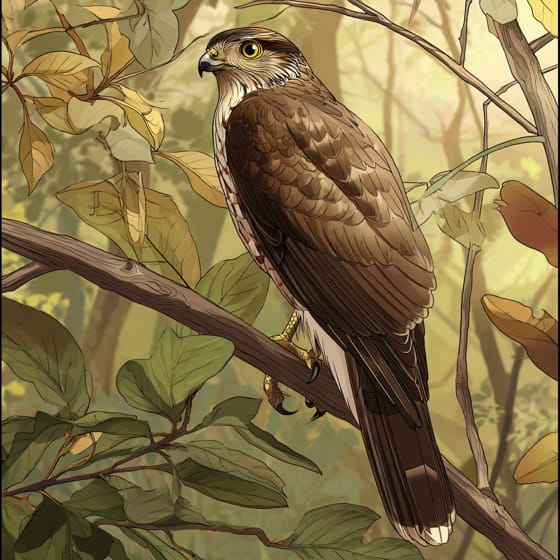
Accipiter cooperii
Often hunted by sharp-shinned and Cooper's hawks.
Malacosoma americanum
Feeds on caterpillars like the Eastern tent caterpillar, helping control pests.
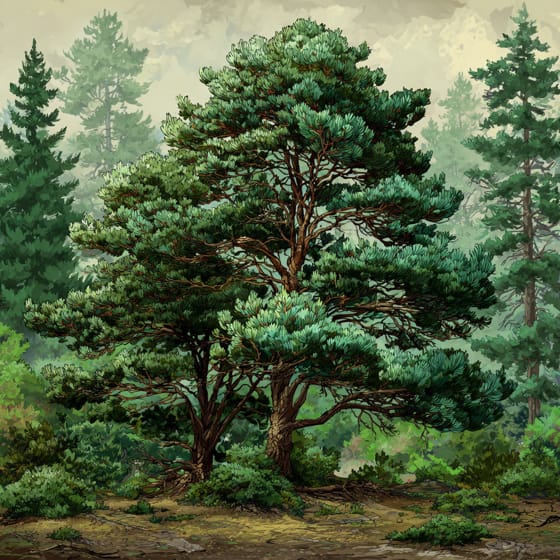
Pinus strobus
Relies on Eastern White Pine for nesting sites and a source of seeds.
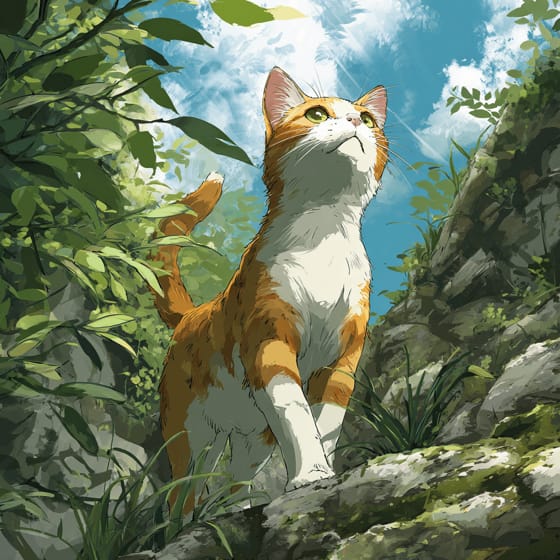
Felis catus
Vulnerable to predation by outdoor domestic cats.
Feathered describes animals, primarily birds, possessing a covering of feathers.
Social animals live in organized groups, cooperating for survival benefits such as foraging, defense, and raising offspring.
Singing animals produce complex vocalizations, often for purposes of attracting mates, defending territory, or communicating within their species.
This trait identifies organisms whose diet primarily consists of insects and other small invertebrates.

Forest habitats are terrestrial environments dominated by dense tree cover, supporting a high diversity of plant and animal life.

Diurnal animals are primarily active during daylight hours, typically resting or sleeping at night.
No aliases listed yet.
Danger
1/5 · Very low
Always watch birds from a distance and don't try to touch them.
The easiest way to identify Pine Warbler is to use the Snappit nature identifier app.
12-14 cm
20-23 cm
0.008-0.015 kg
4-7 years
40 km/h
These little birds enjoy a mix of tasty insects, spiders, and seeds, especially from pine trees.
Forests
Zoom in to split clusters and explore where this object has been snapped.

Georgia, US
You might spot Baldcypress, Anole, and American Alligator.
View guide →

Ontario, CA
You might spot Painted Turtle, Common Watersnake, and Pickerelweed.
View guide →

Wisconsin, US
You might spot American Cancer-Root and Eastern White Pine.
View guide →

Massachusetts, US
You might spot Autumn Olive and Eastern Skunk Cabbage.
View guide →

Louisiana, US
You might spot Rough Horsetail, Northern Mockingbird, and Anole.
View guide →

South Carolina, US
You might spot Northern Cardinal, Chipping Sparrow, and House Finch.
View guide →
Take the discovery with you
Snap it with Snappit to identify it, learn what makes it special, and add the discovery to your collection.




.jpg&width=800)








