.jpg&width=800)





American Jerusalem Crickets
Stenopelmatini
American Jerusalem Crickets are large, interesting insects that live in the ground. They have long legs and can make loud chirping sounds at night, which makes them fun to listen to!
Habitat: Desert
The American Jerusalem Cricket has a stout, robust body, ranging from yellowish-brown to reddish-brown. It is wingless and boasts a notably large, bald head with powerful, black mandibles. Its spiky, strong legs are designed for digging, making it visually distinct from winged crickets.
Category
InsectsRarity
Common
Danger
3/5 · Moderate
Snaps
Be the first to snap!
Despite their name, they are not true crickets and are not found anywhere near Jerusalem!
Some people call them 'Potato Bugs' because they like to dig up and eat potato roots!
Their powerful jaws can give a surprisingly painful nip if they feel threatened or provoked!
They make a unique hissing sound by rubbing their strong legs together when they feel scared!
American Jerusalem Crickets can dig tunnels using their strong, spiky legs because of their powerful muscles, creating shelter and hunting grounds.
American Jerusalem Crickets has incredibly strong jaws that helps them crush tough prey and deter predators with a painful bite.
American Jerusalem Crickets can detect tiny ground vibrations with specialized sensors, helping them find hidden prey or sense danger.
American Jerusalem Crickets has senses adapted for darkness that helps them navigate and hunt efficiently during the night.
These hungry omnivores feast on roots and small insects found underground.

Bubo virginianus
This owl will hunt and eat them at night.
Mephitis mephitis
Skunks dig them up from the soil for a tasty meal.
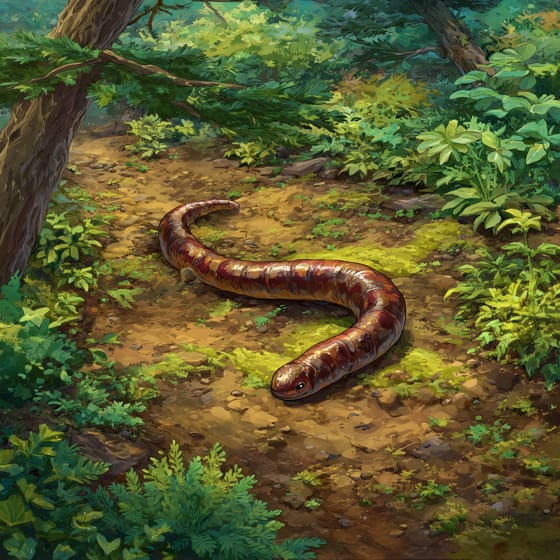
Lumbricus terrestris
They actively hunt and eat earthworms in the soil.
Tenebrio molitor
Burrowing beetle larvae are common and easy prey.
Furry describes animals possessing a dense covering of soft hair or fur.
Solitary animals live alone for most of their lives, only interacting with others for mating or parental care.
This trait identifies organisms whose diet includes both plant and animal matter.
Singing animals produce complex vocalizations, often for purposes of attracting mates, defending territory, or communicating within their species.

Burrowing animals dig tunnels and chambers in the ground, using these subterranean structures for shelter, hunting, or breeding.

Desert habitats are arid regions characterized by extremely low precipitation and often extreme temperatures, supporting specialized flora and fauna.

Giant describes organisms or objects of significantly larger size than average for their species or type.

Nocturnal animals are primarily active during the nighttime hours, typically resting or sleeping during the day.
Danger
3/5 · Moderate
Don't touch them if you see one! They can bite if they feel scared.
The easiest way to identify American Jerusalem Crickets is to use the Snappit nature identifier app.
20-70 mm
90-365 days
These hungry omnivores feast on roots and small insects found underground.
Desert
Foraging
6
Zoom in to split clusters and explore where this object has been snapped.
Recent snaps will appear here as new observations are added.
Take the discovery with you
Snap it with Snappit to identify it, learn what makes it special, and add the discovery to your collection.









.jpg&width=800)




