





American pokeweed
Phytolacca americana
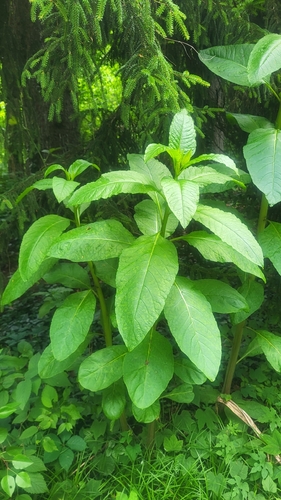
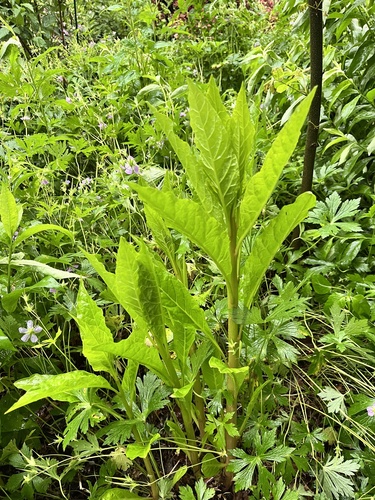
American pokeweed is a tall plant with big green leaves and purple berries. It grows in sunny areas and can be found in gardens and fields. Be careful, though, as the berries can be harmful if eaten!
Habitat: Urban areas
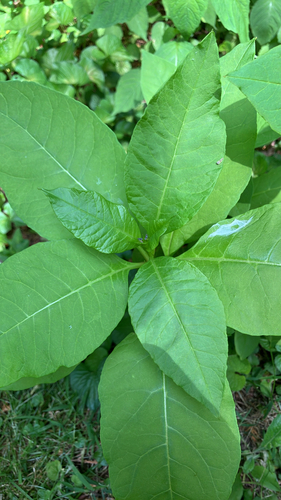
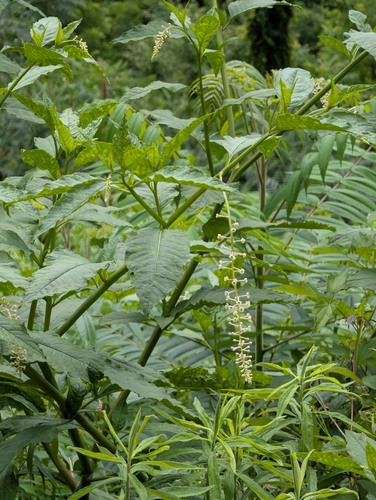
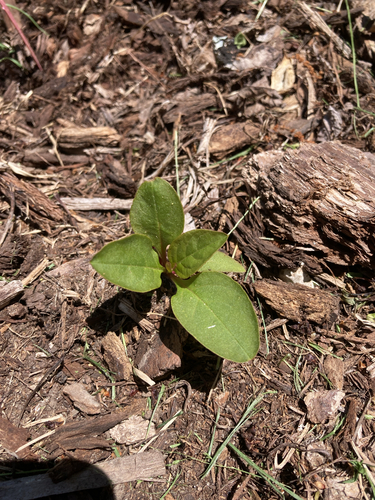
The American pokeweed is a tall, stout plant with large, oval green leaves and sturdy, often reddish stems. Its small white-to-greenish flowers mature into distinctive drooping clusters of shiny, dark purple-black berries.
Category
PlantsRarity
Common
Danger
4/5 · High
Snaps
177
Its vibrant purple berries were once used to make ink and dye for fabric!
The name "pokeweed" comes from an Algonquin word meaning "blood," for its red berry juice.
Though poisonous to humans, many birds can safely eat its berries without getting sick!
Young pokeweed shoots are sometimes cooked, but only after boiling repeatedly to remove toxins.
American pokeweed produces toxins that deter most animals from eating its leaves and roots, helping it survive.
Its berries provide a safe, tasty meal for many birds, who then help spread its seeds far and wide!
American pokeweed regrows quickly from its deep, thick taproot after being cut, making it very resilient.
Apis mellifera
Gathers nectar from its small flowers.
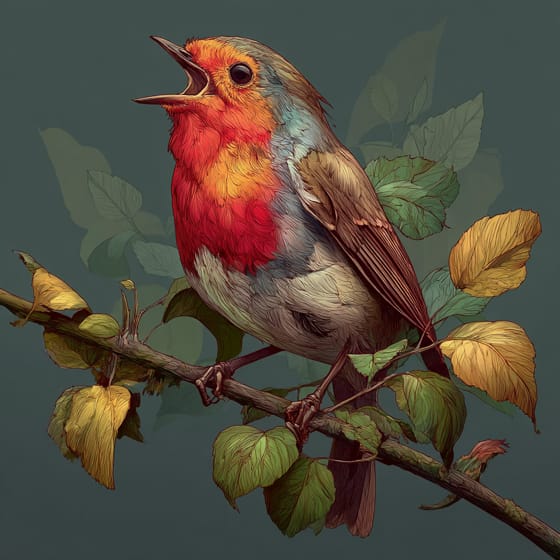
Turdus migratorius
Consumes its ripe berries and disperses seeds.
Manduca sexta
Feeds on pokeweed leaves, showing toxin tolerance.
Deciduous plants periodically shed all their leaves, typically during autumn or dry seasons.
Fruit-bearing plants produce fruits, which are the mature ovaries of flowering plants containing seeds.
Medicinal plants possess chemical compounds that can be used for therapeutic purposes to treat illnesses or maintain health.
Colorful describes organisms or objects displaying a wide range of bright and distinct colors.

Fall color refers to the seasonal change in foliage pigmentation, primarily in deciduous plants, displaying vibrant hues.

Poisonous organisms produce toxins that can cause harm when ingested, inhaled, or absorbed through contact.

This habitat trait indicates species that can coexist with humans in urban and suburban environments, utilizing man-made structures and green spaces.
No aliases listed yet.
Danger
4/5 · High
Do not eat any part of the pokeweed plant, as it can be very harmful.
The easiest way to identify American pokeweed is to use the Snappit nature identifier app.
100-300 cm
100-200 cm
0.5-1 cm
Summer-Fall
No
High
Perennial
Zoom in to split clusters and explore where this object has been snapped.
Jun 6, 2026
The Arboretum at Penn StatePhoto attribution
no rights reserved
License: CC0 1.0 ↗
Image may be shown cropped inside the card frame.
May 31, 2026
Arrowmont School of Arts and CraftsPhoto attribution
(c) Nick Kleinschmidt, some rights reserved (CC BY)
License: CC BY 4.0 ↗
Image may be shown cropped inside the card frame.
May 30, 2026
Bronson Park Historic DistrictPhoto attribution
no rights reserved
License: CC0 1.0 ↗
Image may be shown cropped inside the card frame.
May 25, 2026
Spring Grove CemeteryPhoto attribution
no rights reserved
License: CC0 1.0 ↗
Image may be shown cropped inside the card frame.
May 24, 2026
Compo–Owenoke Historic DistrictPhoto attribution
no rights reserved
License: CC0 1.0 ↗
Image may be shown cropped inside the card frame.

New York, US
You might spot Sundial Lupine, Spotted Horsemint, and New Jersey Tea.
View guide →

Virginia, US
You might spot Cope's Gray Tree Frog and Basilica Orbweaver.
View guide →

South Carolina, US
You might spot Anole, Green Treefrog, and Eastern Gray Squirrel.
View guide →

Tennessee, US
You might spot Black Bear, Yellow Wakerobin, and Pipevine Swallowtail.
View guide →

Rhode Island, US
You might spot Common Eastern Bumble Bee and Osprey.
View guide →

Arkansas, US
You might spot Eastern Gray Squirrel and Asian Lady Beetle.
View guide →
Take the discovery with you
Snap it with Snappit to identify it, learn what makes it special, and add the discovery to your collection.








.jpg&width=800)



_001.jpg&width=800)




