



Angulate And Roundshouldered Orbweavers
araneus
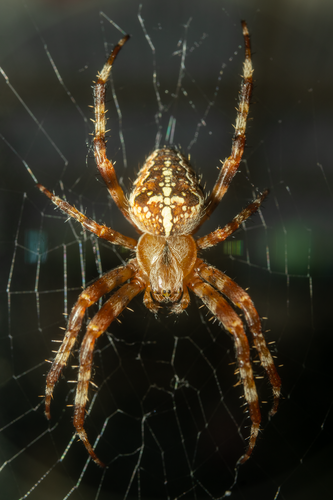
The angulate and roundshouldered orbweavers of the genus Araneus are remarkable arachnids famous for building classic, geometrically perfect spiral webs. Found globally, these spiders are essential pest controllers in forest and garden ecosystems. Their common names derive from the distinctive humps or 'shoulders' on the upper margins of their large abdomens. Primarily active at twilight and night, they showcase incredible engineering skills, spinning strong silk structures to capture flying insects. Many species within this genus consume their web daily to recycle the proteins before building a new one.
Habitat: Typically found in temperate forests, woodlands, gardens, and shrublands, often constructing webs between tree branches or near outdoor light fixtures.
These medium to large spiders are characterized by a bulbous, triangular abdomen with prominent shoulder humps. Their coloration is highly variable, ranging from mottled greys, browns, and tans to striking yellows and oranges, providing excellent camouflage against tree bark. Many species display a leaf-like pattern called a folium on their back. Their legs are long, robust, and heavily spined, often banded with alternating dark and light rings to disrupt their outline. Females are much larger than males, with body lengths typically between 1 and 3 centimeters.
Category
InvertebrateRarity
Common
Danger
1/5 · Very low
Snaps
1
Spider silk from this genus is exceptionally strong, possessing a tensile strength comparable to high-grade steel of the same thickness.
The shoulder humps on angulate orbweavers help disguise them as tree bark nodules or seed pods when they tuck their legs in.
They often eat and rebuild their webs daily, a process that takes only about 30 to 45 minutes of intensive work.
They construct highly organized vertical spiral webs using both non-sticky structural silk and sticky capture silk, optimized to trap flying insects.
They systematically consume their old webs daily, digesting the silk proteins to quickly produce fresh webbing with minimal waste.
They rely on highly sensitive slit sensilla on their legs to detect minute vibrations traveling through the web, allowing them to pinpoint prey instantly.
They primarily feed on insects that fly into their spiral webs, which they wrap in silk and paralyze with venom.
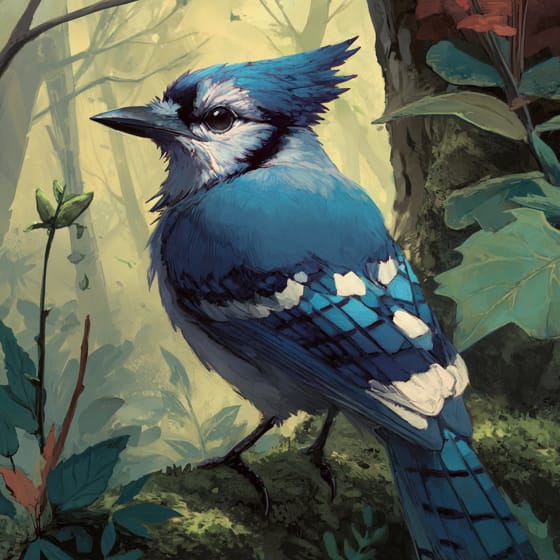
Cyanocitta cristata
Predator that frequently plucks orbweavers directly from their webs.
Sceliphron caementarium
A wasp that paralyzes orbweavers to provision its mud nests for its larvae.
Musca domestica
Common flying insect pest captured and consumed by the spider.
Solitary animals live alone for most of their lives, only interacting with others for mating or parental care.
Aerial creatures spend a significant portion of their lives airborne, utilizing flight for various activities such as hunting, migration, or nesting.
This trait characterizes organisms that construct elaborate silken webs for catching prey, shelter, or reproduction.
Colorful describes organisms or objects displaying a wide range of bright and distinct colors.

This trait identifies organisms whose diet primarily consists of insects and other small invertebrates.

Forest habitats are terrestrial environments dominated by dense tree cover, supporting a high diversity of plant and animal life.

This trait identifies organisms whose diet consists entirely or primarily of animal tissue.
Collections for this object will appear here as more themes are added.
Danger
1/5 · Very low
No special safety notes yet.
The easiest way to identify Angulate And Roundshouldered Orbweavers is to use the Snappit nature identifier app.
1-3 cm
0.0001-0.005 kg
1-2 years
They primarily feed on insects that fly into their spiral webs, which they wrap in silk and paralyze with venom.
Typically found in temperate forests, woodlands, gardens, and shrublands, often constructing webs between tree branches or near outdoor light fixtures.
Ambush
100-800
Zoom in to split clusters and explore where this object has been snapped.
Take the discovery with you
Snap it with Snappit to identify it, learn what makes it special, and add the discovery to your collection.