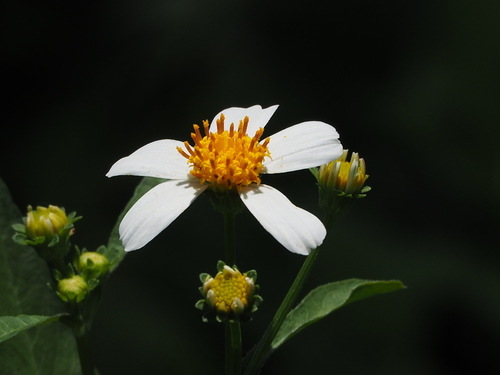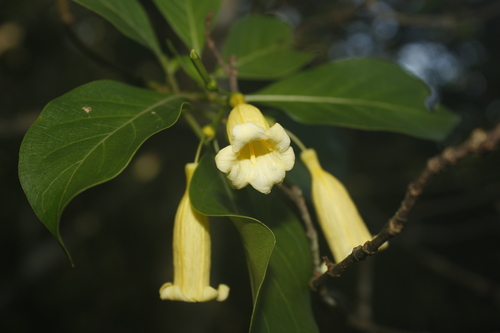





Antillean Firebush
hamelia cuprea
The Antillean Firebush is a bright and colorful plant that attracts butterflies and hummingbirds! Its vibrant flowers can make any garden look like a tropical paradise.
Habitat: It thrives in sunny areas, often found in coastal regions and gardens.
The Antillean Firebush is a vibrant shrub showcasing striking tubular, orange-red flowers that cluster at branch tips. Its glossy green leaves often have a reddish tint, especially on new growth, and stems can also be reddish, giving the plant a fiery appearance.
Category
PlantsRarity
Common
Danger
0/5 · No known danger
Snaps
Be the first to snap!
Despite its name, it doesn't cause fires, it just looks wonderfully fiery!
Its flowers are like tiny trumpets, perfectly shaped for hummingbird beaks!
People in some regions use its leaves to make traditional herbal remedies.
The leaves can turn brilliant red in bright sunlight, making the bush extra fiery!
Antillean Firebush can signal hummingbirds with its bright red, tubular flowers, helping it reproduce by attracting skilled pollinators.
Antillean Firebush has adaptations to withstand dry periods, helping it survive in less consistent tropical environments.
Antillean Firebush can grow quickly, allowing it to establish itself and outcompete other plants for resources.

Archilochus colubris
Its nectar feeds this busy pollinator.

Danaus plexippus
Provides nectar for migrating butterflies.
Atta cephalotes
Ants sometimes harvest its leaves.

Anolis sagrei
Offers hiding spots for small lizards.
Colorful describes organisms or objects displaying a wide range of bright and distinct colors.
This trait characterizes organisms whose diet consists entirely or primarily of plant material.
Coastal habitats are dynamic environments located along the interface between land and sea, influenced by tides, waves, and saltwater.
Diurnal animals are primarily active during daylight hours, typically resting or sleeping at night.
Describes organisms that transfer pollen, enabling the fertilization and reproduction of plants.
Danger
0/5 · No known danger
No special safety notes yet.
Start with the whole plant, then compare leaf arrangement, leaf edges, stems and any flowers or fruit. Opposite leaves grow in pairs; alternate leaves come one at a time along the stem. These details tell you far more together than a single green leaf does. Plant Identifier: upload a photo and compare the visible details.
100-300 cm
80-250 cm
1-2 cm
Year-round
No
None
Perennial
Zoom in to split clusters and explore where this object has been snapped.
Recent snaps will appear here as new observations are added.
Take the discovery with you
Snap it with Snappit to identify it, learn what makes it special, and add the discovery to your collection.