





Ashe juniper
Juniperus ashei
The Ashe juniper is a small tree with soft, green leaves. It grows in warm areas and provides shelter for many animals. Its berries are food for birds and other wildlife!
Habitat: Mountain regions
The Ashe juniper is a medium-sized evergreen tree with a dense, rounded crown and reddish-brown, shredding bark. Its scale-like, dark green leaves are often covered in small, waxy blue-gray cones, which are technically modified berries, giving the tree a distinctive frosted appearance.
Category
PlantsRarity
Common
Danger
1/5 · Very low
Snaps
1
Its 'berries' aren't true berries, but tiny seed cones!
Its wood smells like a cedar chest or pencil!
Some call it 'cedar,' but it's actually a juniper!
This tree is famous for making people sneeze in winter!
Ashe juniper has tiny, waxy, scale-like leaves that help it conserve precious water in dry climates.
Ashe juniper can release clouds of pollen into the cold winter wind, pollinating before most other plants.
Ashe juniper can regrow from its base after damage like fire, helping it bounce back stronger.
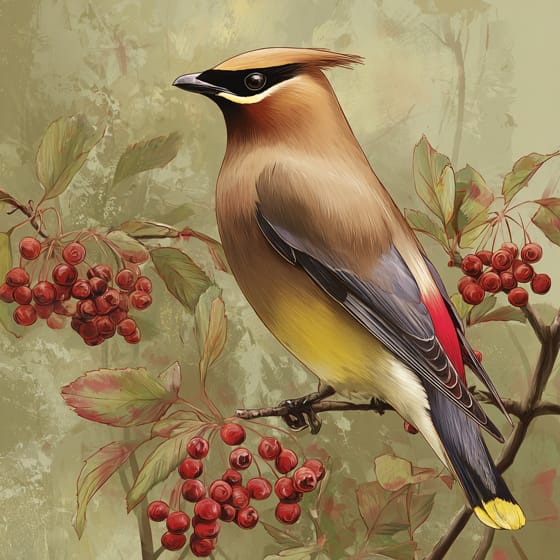
Bombycilla cedrorum
eats its waxy blue cones for food
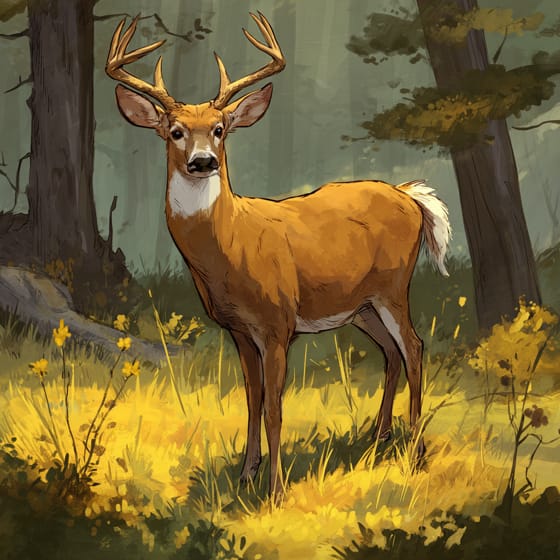
Odocoileus virginianus
browses its evergreen foliage for sustenance
Setophaga chrysoparia
nests exclusively in its shreddy bark

Peromyscus leucopus
finds shelter and hiding spots in its thick canopy
Aromatic plants produce and emit fragrant volatile organic compounds, often for defense or to attract pollinators.
Broadleaf trees are angiosperms characterized by flat, wide leaves that are typically shed annually in temperate climates.
Coniferous plants are typically evergreen, bearing needles or scales and reproductive cones.
Evergreen plants retain their foliage throughout the year, never shedding all their leaves at once.

Fruit-bearing plants produce fruits, which are the mature ovaries of flowering plants containing seeds.

Edible plants are those parts of a plant that are considered safe for human consumption.

Describes plants that are particularly attractive and beneficial to a wide range of pollinating organisms.

Timber refers to wood that has been prepared for use in building and carpentry.

This habitat trait identifies species found in mountainous regions, characterized by high elevation, steep slopes, and varying climate zones.

This trait characterizes organisms with an exceptionally long lifespan compared to others of their kind.

Describes a species whose presence and role have a disproportionately large effect on its environment.
No aliases listed yet.
Danger
1/5 · Very low
Be careful not to touch the sharp leaves too much, as they can be prickly.
The easiest way to identify Ashe juniper is to use the Snappit nature identifier app.
300-1000 cm
200-800 cm
Winter-early spring
No
Mild
Perennial
Wind
Zoom in to split clusters and explore where this object has been snapped.
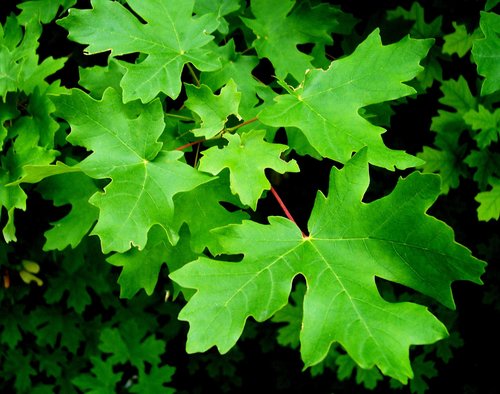
Texas, US
You might spot Bigtooth Maple, Texas Madrone, and Scarlet Leather Flower.
View guide →
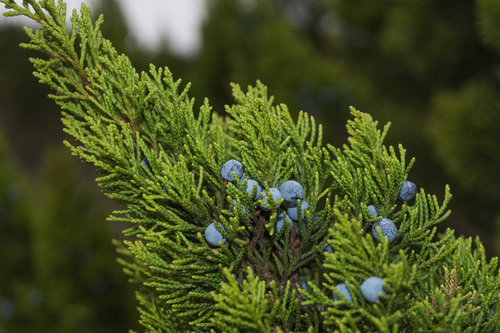
Texas, US
You might spot Ashe Juniper, Texas Bluebonnet, and Texas Live Oak.
View guide →

Texas, US
You might spot Evergreen Sumac, Lindheimer's Silktassel, and Ashe Juniper.
View guide →
Take the discovery with you
Snap it with Snappit to identify it, learn what makes it special, and add the discovery to your collection.









.jpg&width=800)


_001.jpg&width=800)

