

Asian Shore Crab
hemigrapsus sanguineus
The Asian Shore Crab (Hemigrapsus sanguineus) is a highly adaptable and opportunistic crustacean native to the rocky coasts of the western Pacific Ocean. Recognized for its remarkable hardiness and rapid reproduction rates, this small crab has successfully established itself as a prolific invasive species along the Atlantic coasts of North America and parts of Europe. Armed with a voracious appetite and a broad tolerance for varying temperatures and salinities, it quickly dominates intertidal zones, often outcompeting native crabs. While it is a fascinating subject for marine biologists studying invasive ecology, its presence can significantly alter local coastal food webs by heavily preying on small invertebrates and young bivalves.
Habitat: Found in rocky intertidal zones, typically hiding under loose stones or boulders along shallow coastal shores.
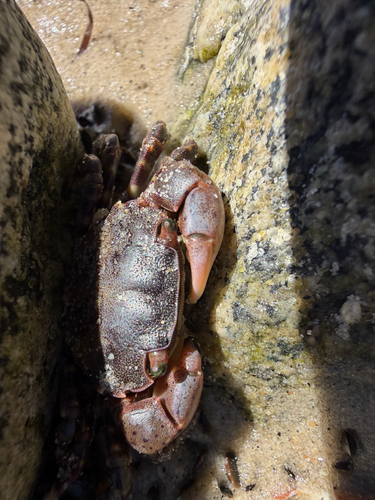
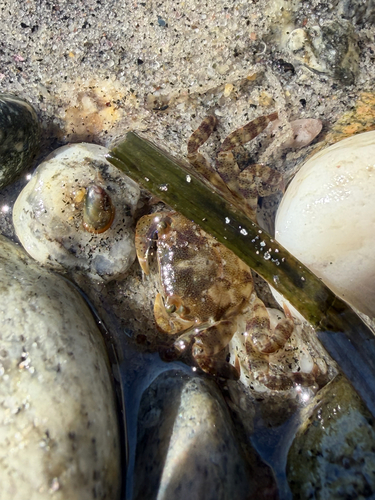
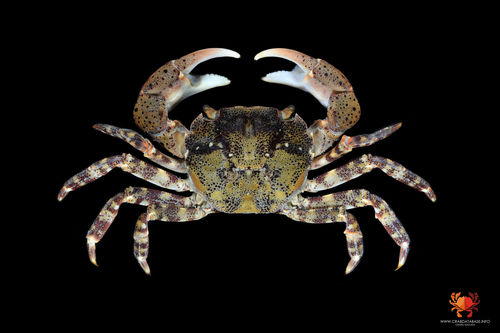
The Asian Shore Crab is a small crab with a distinctively square-shaped carapace that typically measures up to 4.5 centimeters across. Its shell color is highly variable, ranging from mottled greenish-brown to dark purple or reddish-orange, which allows it to blend into rocky backgrounds. A key identifying feature is the presence of exactly three teeth, or spines, on each side of the carapace just behind the eyes. Its legs are unmistakably banded with alternating light and dark stripes. Additionally, adult males possess a distinctive, bulbous fleshy vesicle at the base of the movable finger on their pincers.
Category
AnimalRarity
Common
Danger
1/5 · Very low
Snaps
9
Because a single female can produce up to 3 or 4 clutches of eggs each year, their populations can explode from just a few individuals to millions in a short span.
In their invasive range on the US East Coast, their densities can reach staggering numbers, sometimes exceeding 100 crabs per square meter of rocky shoreline.
Their distinctively banded legs make them easy to identify, earning them the nickname 'banded shore crab' in some coastal regions.
To escape predators, the Asian Shore Crab can self-amputate its own legs or claws, a process called autotomy, and regenerate them over subsequent molts.
Adult males have unique blister-like fleshy bulbs at the base of their claws, which are thought to play a role in mating displays or sensory functions.
Capable of surviving wide fluctuations in temperature and salinity, allowing them to thrive in varied estuarine and intertidal environments.
Females can produce multiple clutches of up to 50,000 eggs per breeding season, enabling explosive population growth in newly invaded territories.
An opportunistic feeder, the Asian Shore Crab consumes a wide variety of plant and animal matter, easily adapting its diet to whatever is most abundant in its habitat.
Age differences: Larvae are planktonic and filter-feed on microscopic plankton, while adults are benthic foragers eating larger algae and macroinvertebrates.

Carcinus maenas
Competes for food and habitat, often displacing this native crab in North American habitats.

Mytilus edulis
Preys heavily on the juvenile and larval stages of this bivalve.
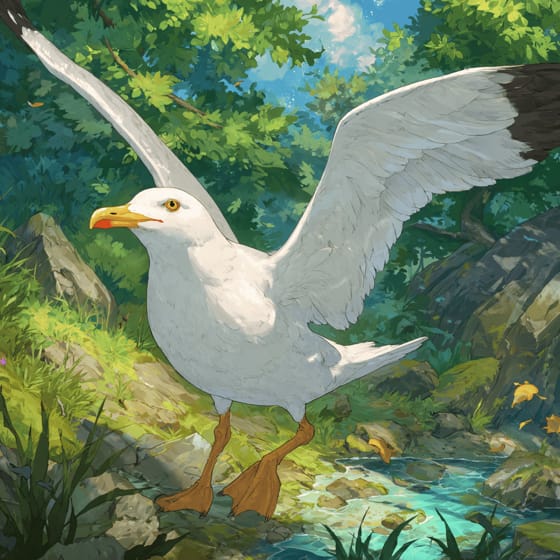
Larus argentatus
Frequently hunted by coastal birds during low tide when exposed on rocky shores.
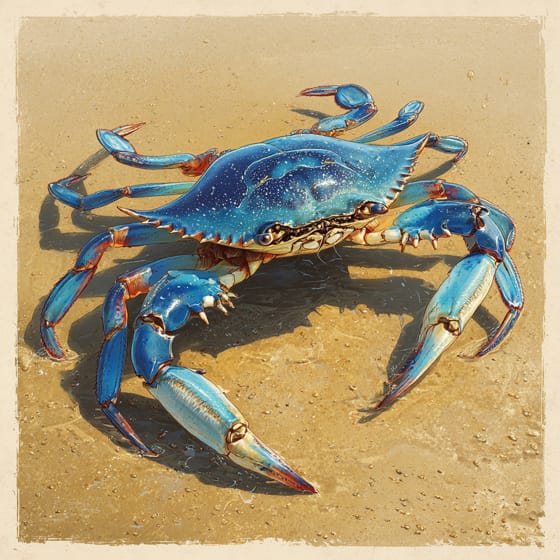
Callinectes sapidus
Faces competition and occasional predation from larger native crabs.
No trait badges are assigned for this object yet.
No aliases listed yet.
Collections for this object will appear here as more themes are added.
Danger
1/5 · Very low
No special safety notes yet.
The easiest way to identify Asian Shore Crab is to use the Snappit nature identifier app.
1-5 cm
0.005-0.04 kg
2-3 years
An opportunistic feeder, the Asian Shore Crab consumes a wide variety of plant and animal matter, easily adapting its diet to whatever is most abundant in its habitat.
Found in rocky intertidal zones, typically hiding under loose stones or boulders along shallow coastal shores.
Foraging
15000-50000
Zoom in to split clusters and explore where this object has been snapped.
Jun 20, 2026
Harkness Memorial State ParkPhoto attribution
(c) Sawyer Baran, some rights reserved (CC BY)
License: CC BY 4.0 ↗
Image may be shown cropped inside the card frame.
Jun 20, 2026
Harkness Memorial State ParkPhoto attribution
(c) Sawyer Baran, some rights reserved (CC BY)
License: CC BY 4.0 ↗
Image may be shown cropped inside the card frame.

Rhode Island, US
You might spot Rugosa Rose and American Herring Gull.
View guide →

New Jersey, US
You might spot Brant, Laughing Gull, and Great Black-Backed Gull.
View guide →

US
You might spot Common Eider, American Herring Gull, and Common Periwinkle.
View guide →

Connecticut, US
You might spot Brant, American Herring Gull, and Double-Crested Cormorant.
View guide →

Maine, US
You might spot Rugosa Rose and European Green Crab.
View guide →

US
You might spot Rugosa Rose and American Herring Gull.
View guide →
Take the discovery with you
Snap it with Snappit to identify it, learn what makes it special, and add the discovery to your collection.