_03.jpg&width=800)





Baird's Sandpiper
Calidris bairdii
Baird's Sandpiper is a small, wading bird that loves to run along the shore. It has a lovely brown and white pattern that helps it blend in with the sand and rocks.
Habitat: Coastal areas
The Baird's Sandpiper is a small shorebird with noticeably long wings that extend beyond its tail, giving it a distinctive silhouette. It has a streaky brown back, a pale belly, and a dark cap that contrasts with a clear, unstreaked breast.
Category
BirdsRarity
Common
Danger
1/5 · Very low
Snaps
1
Baird's Sandpipers are sometimes called 'Pectoral Sandpipers of the High Arctic'!
Their long wings, stretching beyond their tail, are a perfect identifier in flight!
These tiny birds make one of the longest migrations of *any* bird, traveling pole to pole!
They nest in the very cold Arctic, building their homes in shallow scrapes on the ground!
Baird's Sandpiper has incredible stamina that helps them fly over 15,000 km from the Arctic to South America each year.
Baird's Sandpiper can survive the harsh Arctic conditions because of its ability to breed in cold, exposed tundra environments.
Baird's Sandpiper can blend into its rocky or marshy surroundings because of its streaky brown feathers.
Baird's Sandpiper can find hidden insects because of its sensitive bill that probes the mud and sand.
They mainly eat small insects and their larvae found by probing soft ground.
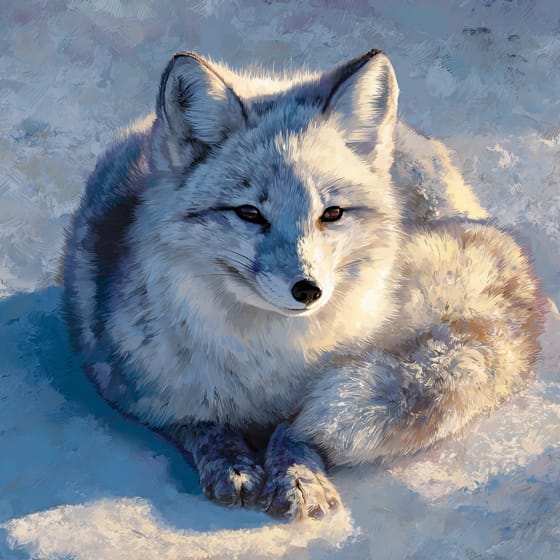
Vulpes lagopus
Foxes prey on eggs and young in Arctic nesting grounds.
Stercorarius parasiticus
Jaegers are aerial predators of adult sandpipers and chicks.
Chironomus plumosus
Baird's Sandpipers consume midge larvae and adults.
Salix arctica
Provides shelter and microhabitat in their Arctic breeding grounds.
Feathered describes animals, primarily birds, possessing a covering of feathers.
This trait identifies organisms whose diet primarily consists of insects and other small invertebrates.
Coastal habitats are dynamic environments located along the interface between land and sea, influenced by tides, waves, and saltwater.
This trait identifies organisms whose diet consists entirely or primarily of animal tissue.

This trait identifies organisms that exhibit exceptional swiftness in movement for hunting, escape, or travel.

Migratory animals undertake seasonal movements from one region to another, typically in response to changes in climate or food availability.
No aliases listed yet.
Danger
1/5 · Very low
Always watch birds from a distance and don't try to catch them.
The easiest way to identify Baird's Sandpiper is to use the Snappit nature identifier app.
14-19 cm
38-44 cm
0.03-0.06 kg
3-5 years
75 km/h
They mainly eat small insects and their larvae found by probing soft ground.
Coastal areas
Zoom in to split clusters and explore where this object has been snapped.
Take the discovery with you
Snap it with Snappit to identify it, learn what makes it special, and add the discovery to your collection.





.jpg&width=800)








