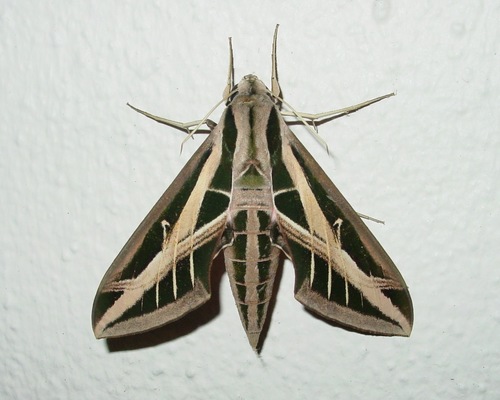


Banded Sphinx
eumorpha fasciatus
The Banded Sphinx (Eumorpha fasciatus) is a magnificent and acrobatic member of the hawkmoth family, Sphingidae. Renowned for its stunning, aerodynamic design, this large moth is an exceptional flier, often mistaken for a hummingbird as it hovers effortlessly in front of deep-throated flowers at dusk. Found primarily across the warmer regions of the Americas, this species plays a crucial ecological role as a highly efficient pollinator, bridging the gap between various night-blooming plant species. In its larval stage, the Banded Sphinx is equally fascinating, showcasing a brilliant array of color morphs ranging from lime green to neon yellow and deep red. These caterpillars feed voraciously on water primroses, storing energy for their dramatic metamorphosis. Witnessing a Banded Sphinx moth darting swiftly through a twilight garden is an unforgettable experience that highlights the incredible diversity of nocturnal insects.
Habitat: Typically found in wet areas such as swamps, marshes, and riverbanks where its larval host plants flourish, as well as suburban gardens and parks.
Adult Banded Sphinx moths possess a robust, bullet-shaped body and narrow, swept-back forewings spanning 7 to 11 centimeters. The forewings feature a beautiful mosaic of dark olive-green or rich brown, intersected by a prominent, creamy-white diagonal band and several fine, parallel pale stripes. The hindwings offer a dramatic splash of color, displaying a vibrant pink or rosy patch bordered by stark black and white bands. The caterpillar is highly variable but often adorned with diagonal yellow or white stripes along its sides, sometimes accompanied by a distinctive tail-like horn near its rear.
Category
InsectsRarity
Common
Danger
1/5 · Very low
Snaps
Be the first to snap!
Despite being a moth, the Banded Sphinx flies with such speed and precision that it is regularly mistaken for a baby bird.
The caterpillars can grow up to 10 centimeters in length and change color dramatically right before pupating in the soil.
Their wings can beat up to 80 times per second, generating an audible humming sound similar to that of a bee.
Utilizes rapid wingbeats and precise hovering capabilities to mimic hummingbirds, allowing it to feed on nectar without landing.
Possesses an exceptionally long, tubular proboscis that uncoils to access nectar hidden deep inside nocturnal flowers.
Caterpillars can develop into multiple distinct color morphs, helping them camouflage against different parts of their host plants to evade predators.
Larvae feed strictly on the leaves of the evening primrose family, while adults feed exclusively on floral nectar.
Age differences: Caterpillars consume leafy green foliage to build fat reserves, whereas adults transition to a purely liquid diet of high-energy nectar.
Ludwigia octovalvis
Larvae feed exclusively on the foliage of this wetland plant.
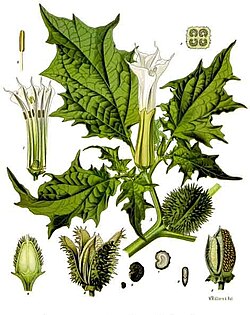
Datura stramonium
Adult moths are frequent pollinators of this night-blooming flower.

Megascops asio
Adult moths are preyed upon during their nocturnal flights.
No trait badges are assigned for this object yet.
No aliases listed yet.
Collections for this object will appear here as more themes are added.
Danger
1/5 · Very low
No special safety notes yet.
Compare resting wing shape, forewing markings, antennae and body build. Small brown moths can hinge on fine details a phone photo can't always catch. Moth Identifier: upload a photo and compare the visible details.
4-6 cm
7-11 cm
0.001-0.003 kg
45 km/h
Larvae feed strictly on the leaves of the evening primrose family, while adults feed exclusively on floral nectar.
Typically found in wet areas such as swamps, marshes, and riverbanks where its larval host plants flourish, as well as suburban gardens and parks.
Foraging
Zoom in to split clusters and explore where this object has been snapped.
Recent snaps will appear here as new observations are added.
Take the discovery with you
Snap it with Snappit to identify it, learn what makes it special, and add the discovery to your collection.