





Eastern Screech-Owl
Megascops asio
The Eastern Screech-Owl is a small owl that can be gray or red. They are great at hiding in trees and make a funny sound that sounds like a whistle. These owls are active at night and love to hunt for insects and small animals.
Habitat: Forests
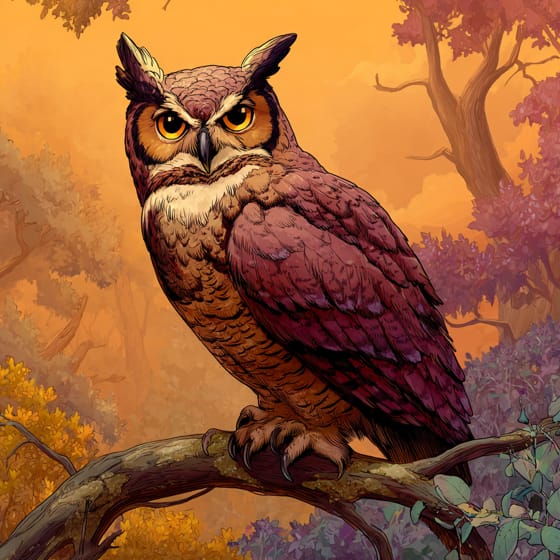
The Eastern Screech-Owl is a small, stocky owl with striking yellow eyes and prominent ear tufts. It comes in two distinct color variations: a rufous (reddish-brown) morph and a gray morph. These color forms provide excellent camouflage, helping it blend perfectly with tree bark.
Category
BirdsRarity
Common
Danger
2/5 · Low
Snaps
23
Eastern Screech-Owls can sing duets with their mate, a rare and charming owl trait!
These owls sometimes shiver, mimicking a swaying branch to hide from predators!
They often nest in old woodpecker holes or natural tree cavities, not building their own.
They sometimes store extra food, like mice, in their tree cavities for later snacks!
Eastern Screech-Owls can fly almost silently because their specialized feathers have soft fringes that muffle sound, helping them surprise prey.
Eastern Screech-Owls can turn their heads nearly 270 degrees because their eyes are fixed, allowing them to scan surroundings for prey.
Eastern Screech-Owls have two distinct color morphs that help them blend perfectly into different tree barks, making them almost invisible.
These small predators eat mostly insects and small mammals, hunting at night.
Feathered describes animals, primarily birds, possessing a covering of feathers.
Solitary animals live alone for most of their lives, only interacting with others for mating or parental care.
Camouflaged describes organisms that possess coloring or patterns that allow them to blend into their environment.
This trait identifies organisms whose diet primarily consists of insects and other small invertebrates.

An ambush predator hunts by patiently waiting and concealing itself, then launching a sudden attack when unsuspecting prey comes within range.

Forest habitats are terrestrial environments dominated by dense tree cover, supporting a high diversity of plant and animal life.

This trait identifies organisms whose diet consists entirely or primarily of animal tissue.

Nocturnal animals are primarily active during the nighttime hours, typically resting or sleeping during the day.
No aliases listed yet.
Danger
2/5 · Low
Always watch owls from a distance and never try to touch them.
The easiest way to identify Eastern Screech-Owl is to use the Snappit nature identifier app.
16-25 cm
48-61 cm
0.121-0.244 kg
2-10 years
45 km/h
These small predators eat mostly insects and small mammals, hunting at night.
Forests
Zoom in to split clusters and explore where this object has been snapped.

Louisiana, US
You might spot Brown Anole, White Ibis, and Duck.
View guide →

Kentucky, US
You might spot Bird's-Eye Speedwell and Barn Swallow.
View guide →

Illinois, US
You might spot American Robin, Monarch, and Duck.
View guide →

New York, US
You might spot Eastern Skunk Cabbage and Yellow Trout Lily.
View guide →

Virginia, US
You might spot Eastern Box Turtle and Northern Cricket Frog.
View guide →
Louisiana, US
You might spot Brown Anole, White Ibis, and Black-Bellied Whistling-Duck.
View guide →
Take the discovery with you
Snap it with Snappit to identify it, learn what makes it special, and add the discovery to your collection.




.jpg&width=800)






