





Barbour's Map Turtle
Graptemys barbouri
Barbour's Map Turtle is a special turtle with beautiful, map-like patterns on its shell. They love to bask in the sun on logs and enjoy swimming in rivers and lakes.
Habitat: Freshwater rivers and lakes
The Barbour's Map Turtle has a prominent ridge, or keel, down its olive-green to brown shell, which is covered in intricate, map-like yellow lines. Its dark skin displays striking yellow markings, especially on the head and neck, making it visually distinct from other river turtles.
Category
ReptilesRarity
Common
Danger
1/5 · Very low
Snaps
Be the first to snap!
Female Barbour's Map Turtles can grow much bigger than males, up to twice as long!
Their incredible map-like shell patterns are unique, just like a human fingerprint!
They are expert shell-crushers, with super strong jaws for their favorite mollusk snacks!
This turtle lives only in specific rivers in the southeastern USA, found nowhere else!
Barbour's Map Turtle has powerful jaws and a strong bite that helps them easily crush the shells of snails and clams for food.
Barbour's Map Turtle has intricate patterns on its shell that help them blend into rocky riverbeds and hide from predators.
Barbour's Map Turtle has specialized eyes that help them see clearly underwater to spot tiny prey in murky river waters.
Barbour's Map Turtle can swim powerfully and navigate strong river currents because of its streamlined shell and webbed feet.
They mostly munch on snails, clams, and insects, but also eat some aquatic plants.
Age differences: Young turtles eat more insects, while larger females specialize in crushing mollusks.
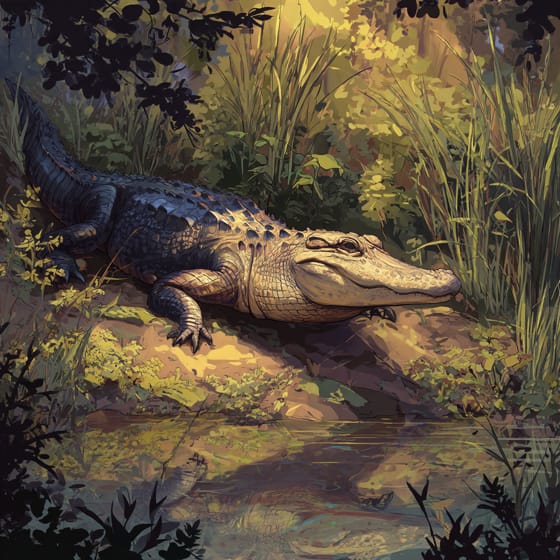
Alligator mississippiensis
Adult turtles can be prey for large alligators.

Procyon lotor
Raccoons often raid nests, eating Barbour's Map Turtle eggs.
Viviparus georgianus
These turtles crush and consume various river snails.
Elliptio crassidens
Large females prey on freshwater mussels found in riverbeds.
Marked with spots or patches of a different color.
Solitary animals live alone for most of their lives, only interacting with others for mating or parental care.
This trait identifies organisms whose diet includes both plant and animal matter.
Diurnal animals are primarily active during daylight hours, typically resting or sleeping at night.

Freshwater habitats include non-saline aquatic environments such as rivers, lakes, ponds, and wetlands, vital for numerous species.

Describes a species whose presence and role have a disproportionately large effect on its environment.

Aquatic habitats encompass environments where organisms live predominantly in water, including oceans, rivers, lakes, and wetlands.

Endangered status indicates a species is at a very high risk of extinction in the wild in the near future.
No aliases listed yet.
Danger
1/5 · Very low
Always watch turtles from a distance and don't try to touch them.
The easiest way to identify Barbour's Map Turtle is to use the Snappit nature identifier app.
10-33 cm
0.2-2.5 kg
20-30 years
0.8 km/h
They mostly munch on snails, clams, and insects, but also eat some aquatic plants.
3 km/h
Freshwater rivers and lakes
Zoom in to split clusters and explore where this object has been snapped.
Recent snaps will appear here as new observations are added.
Take the discovery with you
Snap it with Snappit to identify it, learn what makes it special, and add the discovery to your collection.













