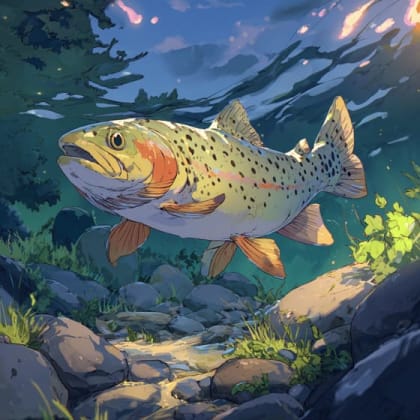
Barramundi
Lates calcarifer
Barramundi are tasty fish that are loved by many. They have a sleek body and can swim very fast!
The Barramundi has a large, silver-grey body with big, prominent scales and a distinctive concave forehead. Its eyes are often golden, and it possesses a prominent, upward-slanting mouth. This sleek, torpedo-shaped fish is built for powerful swimming.
Category
FishRarity
Common
Danger
2/5 · Low
Snaps
Be the first to snap!
Barramundi are famous for leaping high out of the water when hooked by anglers!
Barramundi can change their sex, starting as males and later becoming females!
Their name 'Barramundi' means 'large-scaled river fish' in an Aboriginal language.
They can grow over 1.5 meters long and weigh more than a grown-up!
Barramundi can live in both freshwater and saltwater because of specialized kidneys that help them adapt to different water types.
Barramundi has a sensitive swim bladder that helps them hear very well, picking up faint sounds of prey in murky water.
Barramundi can open their large mouth extremely fast, creating a vacuum that sucks in unsuspecting prey in an instant.
A fierce hunter, the Barramundi gobbles up smaller fish, crustaceans, and even water insects!
Age differences: Young barramundi eat more insects and crustaceans, switching to primarily fish as they grow larger.
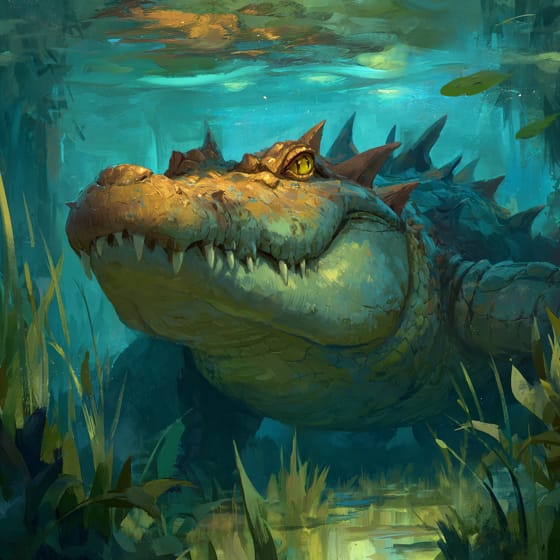
Crocodylus porosus
Large crocodiles prey on adult barramundi.
Haliaeetus leucogaster
Eagles snatch barramundi from the water's surface.
Penaeus monodon
Barramundi actively hunt and consume prawns.
Melanotaenia splendida
They prey on various smaller freshwater fish.
Cherax quadricarinatus
Young barramundi consume crustaceans like crayfish.
Colorful describes organisms or objects displaying a wide range of bright and distinct colors.
Piscivorous organisms are animals that primarily subsist on a diet of fish.
This trait signifies organisms belonging to a very old evolutionary group with ancestors dating back millions of years.
This trait characterizes organisms with an exceptionally long lifespan compared to others of their kind.

This trait identifies organisms whose diet consists entirely or primarily of animal tissue.

Freshwater habitats include non-saline aquatic environments such as rivers, lakes, ponds, and wetlands, vital for numerous species.

This trait identifies organisms that exhibit exceptional swiftness in movement for hunting, escape, or travel.

Aquatic habitats encompass environments where organisms live predominantly in water, including oceans, rivers, lakes, and wetlands.
Danger
2/5 · Low
Watch quietly from a distance and never try to feed or chase wild animals.
The easiest way to identify Barramundi is to use the Snappit nature identifier app.
50-180 cm
1-60 kg
10-20 years
A fierce hunter, the Barramundi gobbles up smaller fish, crustaceans, and even water insects!
35 km/h
Ambush
30 m
Zoom in to split clusters and explore where this object has been snapped.
Recent snaps will appear here as new observations are added.
Take the discovery with you
Snap it with Snappit to identify it, learn what makes it special, and add the discovery to your collection.