




Bead-like Cottonwood Gall aphid
Thecabius populimonilis
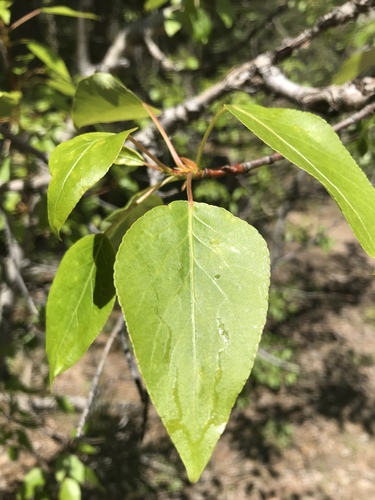
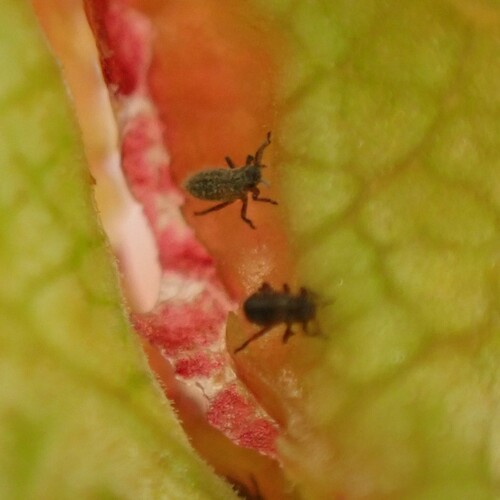
The Bead-like Cottonwood Gall aphid is a tiny insect that makes round, bead-like galls on cottonwood trees. These galls are like little homes for the aphids, where they can stay safe and feed on the tree's juices.
Habitat: Forests
The Bead-like Cottonwood Gall aphid is a tiny, soft-bodied insect, typically yellowish-green in color. Its pear-shaped body is often hidden inside distinctive, bead-like growths on cottonwood leaves. These aphids lack prominent wings in their gall-dwelling stage.
Category
InsectsRarity
Common
Danger
1/5 · Very low
Snaps
Be the first to snap!
Some aphid babies are born already pregnant!
These aphids create their own living 'house' inside a leaf!
They change forms throughout their life, like a secret identity!
They drink sugary sap like tiny juice boxes!
Bead-like Cottonwood Gall aphid can create protective galls because of special chemicals injected into leaves that force the tree to grow a shelter.
Bead-like Cottonwood Gall aphid can multiply quickly because females can reproduce without a mate, filling galls with many offspring.
Bead-like Cottonwood Gall aphid has the ability to manipulate cottonwood plants by forcing them to grow a home for its colony.
These tiny insects drink the sugary sap directly from cottonwood leaves, their leafy homes.

Populus deltoides
relies on for food and to create its protective gall.
Hippodamia convergens
preys on aphids, helping control their populations.
Chrysoperla carnea
larvae are voracious predators of aphids.
Aphidius colemani
lays eggs inside the aphid, leading to its demise.
Solitary animals live alone for most of their lives, only interacting with others for mating or parental care.
This trait characterizes organisms whose diet consists entirely or primarily of plant material.
Forest habitats are terrestrial environments dominated by dense tree cover, supporting a high diversity of plant and animal life.
Pertaining to species that are significantly smaller than typical or average for their kind.
Describes organisms that transfer pollen, enabling the fertilization and reproduction of plants.
No aliases listed yet.
Danger
1/5 · Very low
It's best to look at insects from a distance and not touch them, as some can be delicate.
Look for six legs, antennae, three body sections and the shape of the wings. Beetles have hardened front wings; flies have just one working pair. Tiny insects may need a close view before their group is clear. Insect Identifier: upload a photo and compare the visible details.
1-3 mm
20-30 days
These tiny insects drink the sugary sap directly from cottonwood leaves, their leafy homes.
Forests
6
1000
Zoom in to split clusters and explore where this object has been snapped.
Recent snaps will appear here as new observations are added.
Take the discovery with you
Snap it with Snappit to identify it, learn what makes it special, and add the discovery to your collection.