





Eastern Cottonwood
Populus deltoides
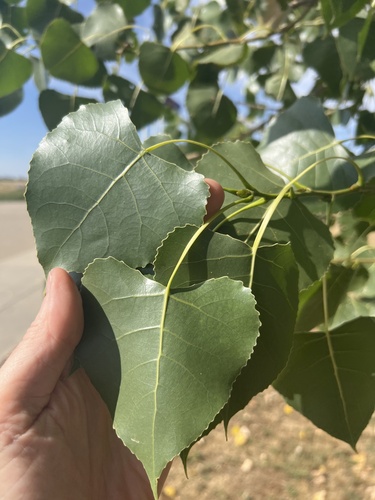
The Eastern Cottonwood is a tall tree with big, heart-shaped leaves that flutter in the wind. It grows near rivers and loves sunny places, making it a great home for many birds and animals.
Habitat: Wetlands
The Eastern Cottonwood has broad, triangular leaves that shimmer and clap in the wind, turning bright yellow in autumn. Its bark is smooth and greenish-gray when young, becoming deeply furrowed and dark gray with age. Fuzzy, cotton-like seeds disperse widely from its female trees.
Category
PlantsRarity
Common
Danger
1/5 · Very low
Snaps
28
Beavers love to eat its bark and twigs, often using its wood for their dams and lodges!
It's one of the fastest-growing native hardwood trees in North America!
Its leaves famously create a distinctive rustling sound that Native Americans called 'the speaking tree'!
The inner bark was traditionally chewed for pain relief, acting like nature's aspirin!
Eastern Cottonwood can grow incredibly fast, sometimes over 3 feet a year, to quickly dominate open spaces.
Eastern Cottonwood has fluffy, wind-dispersed seeds that float like tiny parachutes to colonize new areas.
Eastern Cottonwood can grow deep, extensive roots that anchor it firmly and find water in riparian zones.
Deciduous plants periodically shed all their leaves, typically during autumn or dry seasons.
Broadleaf trees are angiosperms characterized by flat, wide leaves that are typically shed annually in temperate climates.
Rapid growing plants exhibit accelerated growth rates, quickly increasing in size and biomass within a short period.
Timber refers to wood that has been prepared for use in building and carpentry.

This habitat trait identifies species found in wetlands, which are areas of land saturated with water, either permanently or seasonally, including marshes, swamps, and bogs.

Describes organisms that transfer pollen, enabling the fertilization and reproduction of plants.
No aliases listed yet.
Danger
1/5 · Very low
Stay away from the tree's branches and watch for falling leaves.
The easiest way to identify Eastern Cottonwood is to use the Snappit nature identifier app.
2000-3500 cm
1500-2500 cm
5-12 cm
Spring
Yes
None
Perennial
Zoom in to split clusters and explore where this object has been snapped.
Sep 16, 2024
Fort BufordPhoto attribution
(c) Rob Foster, some rights reserved (CC BY)
License: CC BY 4.0 ↗
Image may be shown cropped inside the card frame.

Illinois, US
You might spot Common Eastern Bumble Bee and Brown-Belted Bumble Bee.
View guide →

Connecticut, US
You might spot American Robin, Eastern Poison Ivy, and Duck.
View guide →

Massachusetts, US
You might spot Common Eastern Bumble Bee and Asian Lady Beetle.
View guide →

New York, US
You might spot Rock Pigeon, American Robin, and Spotted Lanternfly.
View guide →

South Dakota, US
You might spot Duck, Canada Goose, and Thirteen-Lined Ground Squirrel.
View guide →

Michigan, US
You might spot Bladder Campion, Bearberry, and Common Milkweed.
View guide →
Take the discovery with you
Snap it with Snappit to identify it, learn what makes it special, and add the discovery to your collection.











.jpg&width=800)


_001.jpg&width=800)




