





Mangrove Skipper
Phocides batabano
The Mangrove Skipper is a small butterfly that loves to flutter around mangrove trees. Its bright colors and quick movements make it a fun sight to see in nature!
Habitat: Coastal areas
The Mangrove Skipper has dark brown to black wings with a striking metallic blue-green sheen, especially visible on its hindwings and body. It features small white spots on its forewings and distinctive orange tufts on its hind legs. This coloration helps it blend into shadowy mangrove environments.
Category
InsectsRarity
Common
Danger
1/5 · Very low
Snaps
1
Even though they are small, these skippers can travel long distances along coastlines!
Its caterpillar builds a cozy leaf shelter by folding a leaf over itself like a tiny sleeping bag!
Mangrove Skippers zip around so fast, they often look like blurry rockets!
They have long, straw-like tongues called a proboscis to sip sweet flower nectar!
The Mangrove Skipper can fly incredibly fast and erratically because of its powerful wing muscles, helping it escape hungry predators quickly.
Its caterpillar form has green and striped markings that help it hide perfectly among the leaves of mangrove trees, staying safe from birds.
The adult skipper can locate nectar-rich flowers using its excellent vision and antennae, helping it find vital energy sources.
Caterpillars munch on mangrove leaves, while adult skippers sip nectar from flowers.
Age differences: Larvae eat leaves of host plants; adults feed exclusively on flower nectar.

Rhizophora mangle
Its caterpillars eat the leaves for growth.
Laguncularia racemosa
A vital host plant providing food for larvae.
Anolis carolinensis
This common lizard preys on adult skippers.
Conocarpus erectus
Another important plant for the skipper's larval stage.
Camouflaged describes organisms that possess coloring or patterns that allow them to blend into their environment.
Colorful describes organisms or objects displaying a wide range of bright and distinct colors.
This trait characterizes organisms whose diet consists entirely or primarily of plant material.
Describes plants that are particularly attractive and beneficial to a wide range of pollinating organisms.

Coastal habitats are dynamic environments located along the interface between land and sea, influenced by tides, waves, and saltwater.

Diurnal animals are primarily active during daylight hours, typically resting or sleeping at night.

This trait identifies organisms that exhibit exceptional swiftness in movement for hunting, escape, or travel.

Describes organisms that transfer pollen, enabling the fertilization and reproduction of plants.
No aliases listed yet.
Danger
1/5 · Very low
Always watch butterflies from a distance and don't try to catch them.
The easiest way to identify Mangrove Skipper is to use the Snappit nature identifier app.
35-50 mm
10-20 mm
14-40 days
15 km/h
Caterpillars munch on mangrove leaves, while adult skippers sip nectar from flowers.
Coastal areas
Foraging
Zoom in to split clusters and explore where this object has been snapped.

US
You might spot Great Barracuda, Gray Snapper, and Atlantic Sergeant Major.
View guide →
Florida, US
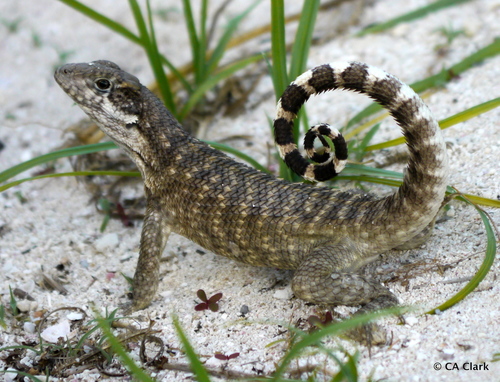
You might spot Northern Curly-Tailed Lizard and Green Iguana.
View guide →

Florida, US
You might spot Willet, Lightning Whelk, and Ruddy Turnstone.
View guide →
Take the discovery with you
Snap it with Snappit to identify it, learn what makes it special, and add the discovery to your collection.







.jpg&width=800)



