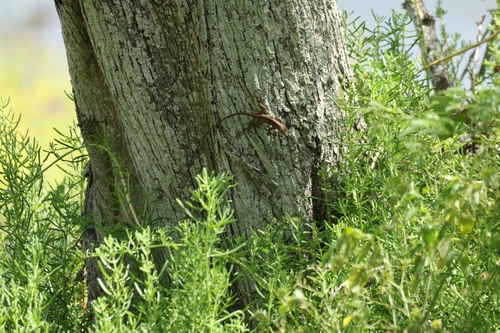
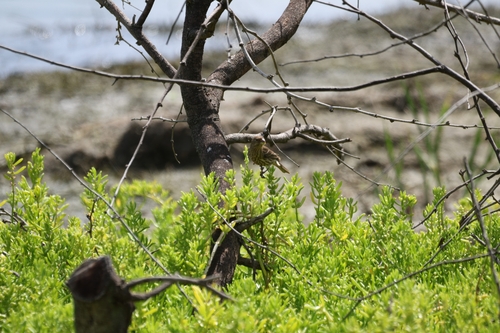
Brown Anole
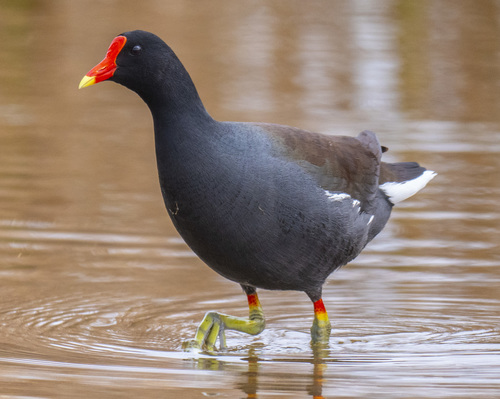
Kawai Nui Marsh is a cherished wildlife sanctuary and the largest remaining freshwater wetland in Hawai'i, a vibrant oasis brimming with natural beauty and historical significance.
Kawai Nui Marsh is a cherished wildlife sanctuary and the largest remaining freshwater wetland in Hawai'i, a vibrant oasis brimming with natural beauty and historical significance. Spanning approximately 830 acres on Oʻahu's Windward side, this Ramsar Wetland of International Importance serves as a critical habitat for several endangered native Hawaiian waterbirds and offers breathtaking views of the majestic Koʻolau Mountains. It's a place where history, culture, and nature intertwine, inviting visitors to connect with Hawaiʻi's ancient past and its vital present.
The marsh is a haven for unique Hawaiian waterbirds, including the endangered Hawaiian Stilt (Aeʻo), Hawaiian Coot (ʻAlae keʻokeʻo), and Hawaiian Gallinule (ʻAlae ʻula), as well as the Hawaiian Duck (Kōloa Maoli). Visitors can stroll or bike along the Kawainui Marsh Trail, a paved levee that offers excellent vantage points for birdwatching and photography, especially of these rare species in their natural environment. The Kaha Garden, located near the trailhead, provides an opportunity to discover various native Hawaiian plants such as Pōhinahina, Milo, ʻŪlei, ʻĀkia, Naupaka, Maʻo hau hele, and Neke fern.
A visit to Kawai Nui Marsh offers a serene escape and a profound appreciation for Hawaii's natural and cultural heritage. Whether you're seeking to witness endangered bird species, immerse yourself in the tranquility of a vital wetland ecosystem, or simply enjoy a scenic walk with stunning mountain backdrops, the marsh provides a memorable experience. Its role in flood control and its ongoing restoration efforts underscore its ecological importance, making it a powerful example of conservation in action. Planning to visit? Download the Snappit app to identify the wildlife you spot in real-time.
Kawai Nui Marsh boasts a rich and lengthy history, deeply intertwined with the cultural development of ancient Hawai'i. Geologic evidence suggests it was once a wide, shallow bay that transformed into a brackish lagoon around 500 CE, when Polynesian settlers arrived and established communities around its edges. By 1750, the marsh had been developed into a 400-acre fishpond, a vital food source for native Hawaiians, with irrigated *loʻi kalo* (taro patches) and other agricultural crops around its perimeter. The area was a political seat of power and home to significant *heiau* (temples), including the Ulupō Heiau, which still overlooks the marsh today. In the 19th and 20th centuries, the marsh saw various uses, including rice cultivation by Chinese farmers, sugarcane farming, and ranching, which led to the introduction of invasive plants. Despite these changes and proposals to fill in the marsh for development, conservation efforts prevailed. In 2005, Kawai Nui Marsh was officially designated a Ramsar Wetland of International Importance, recognizing its historical, biological, and cultural significance. Today, multiple organizations are actively involved in restoring areas of the fishpond and its surrounding habitat through traditional practices and modern conservation techniques, focusing on creating suitable environments for native and endangered waterbirds.
Each card links to a full Explore page with photos, traits, and fun facts.
Start with the big picture, then zoom in to explore individual wildlife observations around this place.
Go early or late
Visit in the early morning or late afternoon to avoid the midday sun and for the best chances to see active wildlife and beautiful light for photography.
Protect yourself from the sun
There is very little shade on the trail, so wear a hat, sunglasses, and long sleeves, and apply sunscreen generously.
Bring water
Stay hydrated, especially on warmer days, as the trail offers no cover.
Footwear
Wear comfortable walking shoes or sneakers, as you'll be on a paved or gravel path.
Parking
Parking is generally available at Kaha Park, located at the end of Kaha Street in Kailua (704 Kaha St, Kailua, HI).
Respect the wildlife
Maintain a respectful distance from the birds and other animals, as this is a sensitive wildlife sanctuary. Stay on marked trails to protect their habitat.
Jun 6, 2026
Photo attribution
(c) Damien Wallace, some rights reserved (CC BY)
License: CC BY 4.0 ↗
Image may be shown cropped inside the card frame.
Jun 6, 2026
Photo attribution
(c) Damien Wallace, some rights reserved (CC BY)
License: CC BY 4.0 ↗
Image may be shown cropped inside the card frame.
Jun 6, 2026
Photo attribution
(c) Damien Wallace, some rights reserved (CC BY)
License: CC BY 4.0 ↗
Image may be shown cropped inside the card frame.
Jun 6, 2026
Photo attribution
(c) Damien Wallace, some rights reserved (CC BY)
License: CC BY 4.0 ↗
Image may be shown cropped inside the card frame.
Jun 6, 2026
Photo attribution
(c) Damien Wallace, some rights reserved (CC BY)
License: CC BY 4.0 ↗
Image may be shown cropped inside the card frame.

Maryland, US
You might spot White-Tailed Deer and Eastern Gray Squirrel.
View guide →
.jpg)
District of Columbia, US
You might spot Eastern Gray Squirrel, Duck, and House Sparrow.
View guide →

Illinois, US
You might spot American Robin, Canada Goose, and House Sparrow.
View guide →

Virginia, US
You might spot Spotted Lanternfly and Northern Cardinal.
View guide →
Take the discovery with you
Identify the wildlife you spot, learn as you go, and keep a collection of the adventure.