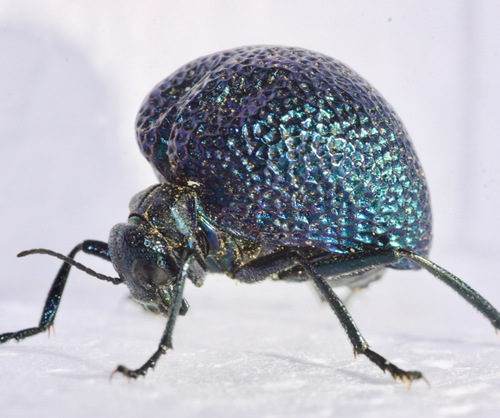





Black Bladder-bodied Meloid
Cysteodemus wislizeni
The Black Bladder-bodied Meloid is a special beetle with a shiny black body. It loves to hide in dry, sunny places and is known for its unique shape and color.
Habitat: Desert
The Black Bladder-bodied Meloid has a strikingly inflated, shiny black, globular body that resembles a small bladder. Its small head and narrow thorax appear disproportionate to its large, fused wing covers, making it visually distinct from other beetles.
Category
InsectsRarity
Common
Danger
1/5 · Very low
Snaps
Be the first to snap!
Baby bladder-bodied meloids hunt for grasshopper eggs deep underground!
Its unusual name comes from its body shape, which looks like a tiny black balloon!
They wear a "poison perfume" made of cantharidin, warning predators to stay away!
Unlike most beetles, adults cannot fly, using their tough shell for protection instead!
Black Bladder-bodied Meloid can produce cantharidin, a potent toxin that helps them deter predators with a blistering chemical defense.
Black Bladder-bodied Meloid has tough, fused elytra that help them protect their soft body, making them resilient in harsh desert environments.
Black Bladder-bodied Meloid larvae can secretly parasitize grasshopper eggs, helping them find food and grow into adults.
Adults munch on flowers and pollen, while larvae feast on grasshopper eggs underground!
Age differences: Larvae are parasitic insectivores, consuming grasshopper eggs; adults are herbivorous, feeding on flowers.
Schistocerca americana
Larvae consume its eggs underground.
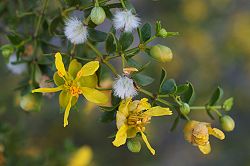
Larrea tridentata
Adults feed on its leaves and flowers.
Ambrosia dumosa
Adults also feed on flowers of this desert plant.
Solitary animals live alone for most of their lives, only interacting with others for mating or parental care.
Colorful describes organisms or objects displaying a wide range of bright and distinct colors.
This trait characterizes organisms whose diet consists entirely or primarily of plant material.
Desert habitats are arid regions characterized by extremely low precipitation and often extreme temperatures, supporting specialized flora and fauna.
Diurnal animals are primarily active during daylight hours, typically resting or sleeping at night.
Pertaining to species that are significantly smaller than typical or average for their kind.
Describes organisms that transfer pollen, enabling the fertilization and reproduction of plants.
No aliases listed yet.
Danger
1/5 · Very low
Always watch where you step in nature to avoid stepping on small insects.
Look for hard wing covers meeting in a line down the back, then compare the antennae, body shape, legs and markings. Metallic colors shift a lot with lighting. Beetle Identifier: upload a photo and compare the visible details.
10-25 mm
30-90 days
Adults munch on flowers and pollen, while larvae feast on grasshopper eggs underground!
Desert
Foraging
6
Zoom in to split clusters and explore where this object has been snapped.
Recent snaps will appear here as new observations are added.
Take the discovery with you
Snap it with Snappit to identify it, learn what makes it special, and add the discovery to your collection.