_I.jpg&width=800)





Spotless Lady Beetle
Cycloneda sanguinea
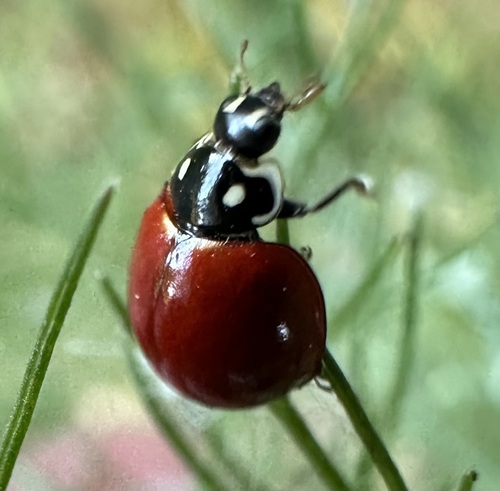
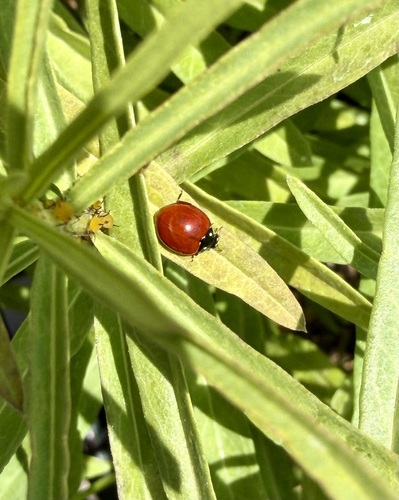
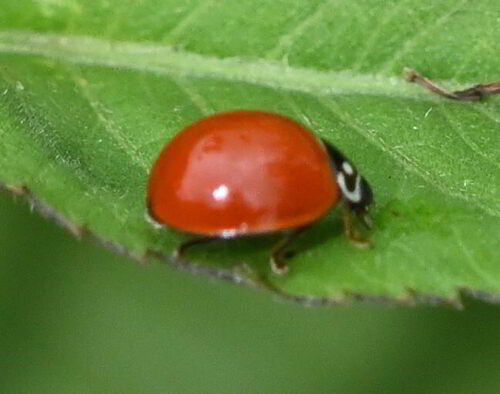
The Spotless Lady Beetle is a small, friendly bug that helps gardens by eating tiny pests. It has a shiny, red body without spots, making it easy to spot!
Habitat: Urban areas
The Spotless Lady Beetle is a small, dome-shaped insect, typically bright red or orange with no spots on its wing covers. It has a black head marked with two distinctive white dashes, and black legs, making it easily identifiable from other ladybugs.
Category
InsectsRarity
Common
Danger
1/5 · Very low
Snaps
16
Baby spotless lady beetles look like tiny, spiky, dark alligators!
It drinks tiny water droplets like a thirsty hero after a long day!
Its bright red color is a warning sign to birds: "I taste very yucky!"
When scared, it plays dead by tucking in its legs and antennae!
Spotless Lady Beetle can secrete a bitter, smelly fluid from its leg joints that helps them scare away hungry predators.
Spotless Lady Beetle can swiftly locate and devour plant-damaging aphids, helping them keep gardens healthy.
Spotless Lady Beetle has strong wings that help them fly short distances to find food and new places to live.
A tiny predator that helps plants by eating many soft-bodied pests like aphids!
Aphis gossypii
Its favorite meal, crucial for plant health.
Myzus persicae
Another common pest this beetle devours.
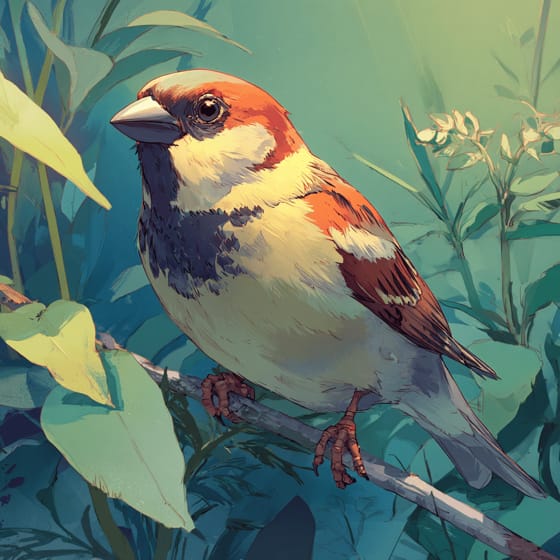
Passer domesticus
A common bird that might try to snack on them.

Zea mays
Often found in cornfields, feeding on corn pests.
Solitary animals live alone for most of their lives, only interacting with others for mating or parental care.
Colorful describes organisms or objects displaying a wide range of bright and distinct colors.
This trait identifies organisms whose diet primarily consists of insects and other small invertebrates.
Describes plants that are particularly attractive and beneficial to a wide range of pollinating organisms.

This trait characterizes organisms with an exceptionally long lifespan compared to others of their kind.

Diurnal animals are primarily active during daylight hours, typically resting or sleeping at night.

This habitat trait indicates species that can coexist with humans in urban and suburban environments, utilizing man-made structures and green spaces.

Describes organisms that transfer pollen, enabling the fertilization and reproduction of plants.
No aliases listed yet.
Danger
1/5 · Very low
These beetles are safe to observe, but it's best not to touch them too much.
The easiest way to identify Spotless Lady Beetle is to use the Snappit nature identifier app.
3.5-6 mm
30-270 days
A tiny predator that helps plants by eating many soft-bodied pests like aphids!
Urban areas
Pursuit
6
Zoom in to split clusters and explore where this object has been snapped.
Jun 16, 2026
Atchison VillagePhoto attribution
(c) Barbara Banfield, some rights reserved (CC BY)
License: CC BY 4.0 ↗
Image may be shown cropped inside the card frame.
Jun 15, 2026
Little ItalyPhoto attribution
(c) Henrik Kibak, some rights reserved (CC BY)
License: CC BY 4.0 ↗
Image may be shown cropped inside the card frame.
Mar 29, 2026
Butterfly WorldPhoto attribution
(c) Dennis Vollmar, some rights reserved (CC BY)
License: CC BY 4.0 ↗
Image may be shown cropped inside the card frame.

California, US
You might spot Western Fence Lizard and California Brittlebush.
View guide →

California, US
You might spot Monarch, Canada Goose, and Western Gull.
View guide →

California, US
You might spot Western Fence Lizard, Duck, and California Brittlebush.
View guide →
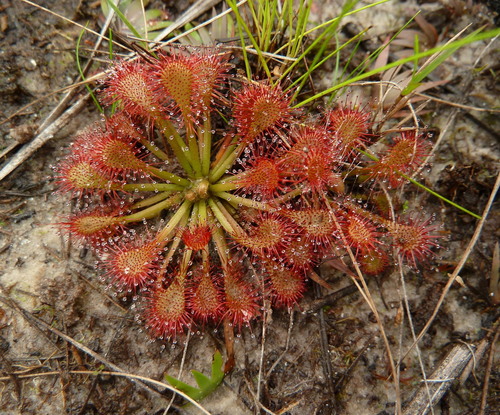
Florida, US
You might spot Pink Sundew, Drooping Forked Fern, and Netted Pawpaw.
View guide →

California, US
You might spot Western Fence Lizard, Eastern Fox Squirrel, and Duck.
View guide →

California, US
You might spot Snowy Egret, Great Blue Heron, and Western Gull.
View guide →
Take the discovery with you
Snap it with Snappit to identify it, learn what makes it special, and add the discovery to your collection.








.jpg&width=800)



