




Black Fire Beetle
Melanophila acuminata
The Black Fire Beetle is a shiny black insect that loves to hang out near trees. They are special because they can find fires and help new trees grow after a fire happens!
Habitat: Forests
The Black Fire Beetle is a slender, flattened beetle, entirely shiny black in color. Its distinct, somewhat elongated shape and relatively long antennae help it stand out, especially against charred wood.
Category
InsectsRarity
Common
Danger
1/5 · Very low
Snaps
Be the first to snap!
Black Fire Beetle larvae eat dead, burnt wood, helping recycle nutrients back into the forest!
Female beetles lay their eggs deep inside fire-scorched trees, where their babies will safely grow!
They can fly directly into smoking forests, bravely searching for the perfect charred log!
This beetle has special pits that detect the invisible heat waves from a distant forest fire!
Black Fire Beetles can smell smoke and detect invisible heat waves from forest fires up to 80 miles away to find burnt wood.
Black Fire Beetles have special adaptations that allow them to survive in extremely hot, recently burned areas without harm.
Black Fire Beetles are among the first animals to arrive after a wildfire, quickly colonizing freshly burned wood.
Larvae eat dead, charred wood; adult beetles usually do not eat at all.
Age differences: Larvae consume dead wood, while adults are typically non-feeding or consume very little.
Picoides arcticus
A favorite meal for woodpeckers specializing in burnt forests.

Sitta canadensis
Often foraged by nuthatches on the bark of burned trees.
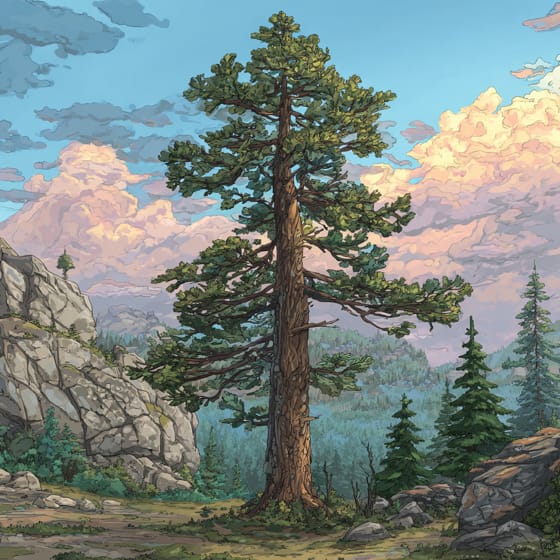
Pinus contorta
Larvae develop within the charred wood of these burned trees.
Solitary animals live alone for most of their lives, only interacting with others for mating or parental care.
Scavengers consume dead organic matter, helping to decompose carcasses and other waste in the ecosystem.
This trait characterizes organisms whose diet consists entirely or primarily of plant material.
Forest habitats are terrestrial environments dominated by dense tree cover, supporting a high diversity of plant and animal life.

Diurnal animals are primarily active during daylight hours, typically resting or sleeping at night.

Describes a species whose presence and role have a disproportionately large effect on its environment.

Pertaining to species that are significantly smaller than typical or average for their kind.

Describes organisms that transfer pollen, enabling the fertilization and reproduction of plants.

Endangered status indicates a species is at a very high risk of extinction in the wild in the near future.
No aliases listed yet.
Danger
1/5 · Very low
Look but don't touch! Some insects can bite or sting.
The easiest way to identify Black Fire Beetle is to use the Snappit nature identifier app.
20-30 mm
10-14 mm
15-45 days
15 km/h
Larvae eat dead, charred wood; adult beetles usually do not eat at all.
Forests
6
Zoom in to split clusters and explore where this object has been snapped.
Recent snaps will appear here as new observations are added.
Take the discovery with you
Snap it with Snappit to identify it, learn what makes it special, and add the discovery to your collection.







.jpg&width=800)


