





Black Woodpecker
Dryocopus martius
The Black Woodpecker is a large bird with a shiny black body and a bright red crown. They love to drum on trees to find food and make their homes in forests.
Habitat: Forests
The Black Woodpecker is a strikingly large bird, almost entirely jet black with a bright crimson cap on its head. Males have an entirely red crown, while females have red only on the back of their crown. Its pale yellow eye stands out against its dark plumage.
Category
BirdsRarity
Common
Danger
1/5 · Very low
Snaps
Be the first to snap!
At over half a meter tall, they are Europe's largest and most impressive woodpecker!
Their drumming can be heard from miles away, like a powerful drum solo through the forest!
They can see and follow the hidden tunnels of ants and beetle larvae under bark!
They create big holes in trees that many other forest animals then use as homes!
Black Woodpeckers have a specially designed skull that acts like a shock absorber, protecting their brain from powerful pecking impacts.
Black Woodpeckers have a long, barbed, and sticky tongue that helps them snatch insects from deep within tree tunnels.
Black Woodpeckers have very stiff tail feathers that act like a tripod, bracing them securely against tree trunks while they peck.
These powerful birds feast mainly on insects found hidden inside trees!
Formica rufa
Primary prey, excavated from their nests.

Strix aluco
Uses abandoned nest cavities for nesting.
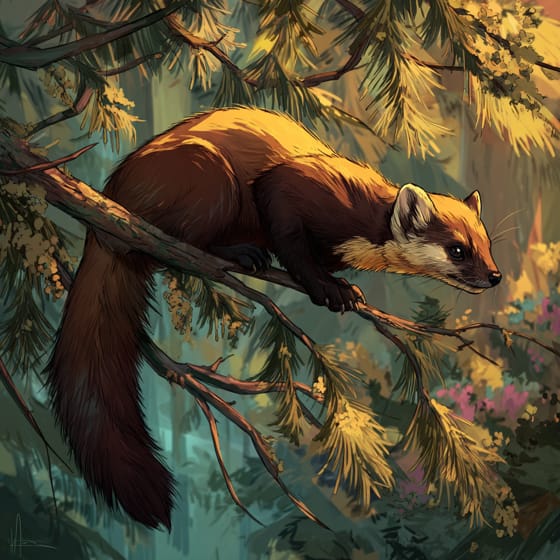
Martes martes
May prey on eggs, nestlings, or adult birds.
Vespertilio murinus
Uses old tree holes for roosting.
Feathered describes animals, primarily birds, possessing a covering of feathers.
Arboreal animals live primarily in trees, utilizing them for shelter, food, and protection from predators.
This trait identifies organisms whose diet primarily consists of insects and other small invertebrates.
This trait describes organisms that manipulate external objects to achieve a specific goal.

Forest habitats are terrestrial environments dominated by dense tree cover, supporting a high diversity of plant and animal life.

Diurnal animals are primarily active during daylight hours, typically resting or sleeping at night.

Describes a species whose presence and role have a disproportionately large effect on its environment.

This trait identifies organisms that exhibit exceptional swiftness in movement for hunting, escape, or travel.
No aliases listed yet.
Danger
1/5 · Very low
Enjoy watching birds from a distance and don't disturb their nests.
The easiest way to identify Black Woodpecker is to use the Snappit nature identifier app.
45-57 cm
64-80 cm
0.25-0.45 kg
5-10 years
50 km/h
These powerful birds feast mainly on insects found hidden inside trees!
Forests
Zoom in to split clusters and explore where this object has been snapped.
Recent snaps will appear here as new observations are added.
Take the discovery with you
Snap it with Snappit to identify it, learn what makes it special, and add the discovery to your collection.




.jpg&width=800)








