





Blue Forget-Me-Not
myosotis stricta
The Blue Forget-Me-Not is a small, charming flower with bright blue petals that look like tiny stars. These flowers often grow in clusters and can bring a splash of color to gardens and meadows!
Habitat: Blue Forget-Me-Nots thrive in moist, grassy areas, often found in meadows, along streams, and in gardens.
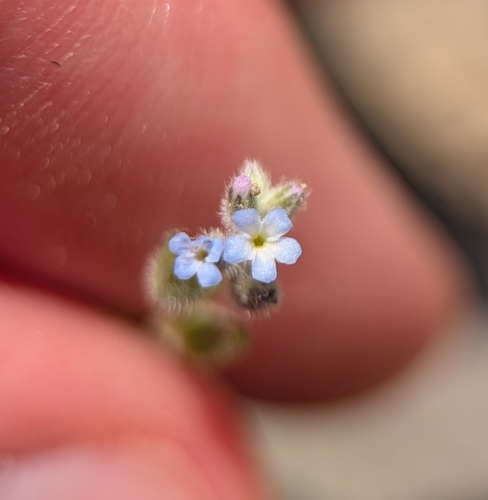
The Blue Forget-Me-Not has tiny, true-blue, five-petaled flowers, each with a bright yellow or white eye in the center. These delicate, star-shaped blooms grow in small clusters on slender stems, making them easily recognizable.
Category
PlantsRarity
Common
Danger
0/5 · No known danger
Snaps
1
In some cultures, receiving Forget-Me-Nots is a sweet symbol of everlasting loyalty.
One Forget-Me-Not plant can produce hundreds of microscopic seeds in a single season!
The name 'Forget-Me-Not' comes from an old legend about a knight who picked flowers for his love.
These tiny flowers were once ground into a powder and used as a blue dye for fabrics.
Blue Forget-Me-Not has tiny, hooked seeds that cling to fur and clothes, helping it spread to new places.
Blue Forget-Me-Not can quickly drop many seeds, ensuring new plants pop up year after year.
Blue Forget-Me-Not grows low to the ground, which helps it avoid strong winds and stay moist.
Apis mellifera
Visits flowers for nectar.
Bombus terrestris
Feeds on nectar and pollen.

Helix aspersa
Grazes on leaves and stems.
Colorful describes organisms or objects displaying a wide range of bright and distinct colors.
Grassland habitats are terrestrial biomes dominated by grasses and herbaceous plants, supporting a variety of grazing animals.
This trait characterizes organisms whose diet consists entirely or primarily of plant material.
Forest habitats are terrestrial environments dominated by dense tree cover, supporting a high diversity of plant and animal life.

Describes organisms that transfer pollen, enabling the fertilization and reproduction of plants.
Danger
0/5 · No known danger
No special safety notes yet.
The easiest way to identify Blue Forget-Me-Not is to use the Snappit nature identifier app.
10-30 cm
10-20 cm
0.3-0.8 cm
Spring to early summer
No
None
Annual
Zoom in to split clusters and explore where this object has been snapped.
May 18, 2026
Tiverton Four Corners Historic DistrictPhoto attribution
(c) Tyler Ekholm, some rights reserved (CC BY)
License: CC BY 4.0 ↗
Image may be shown cropped inside the card frame.

Rhode Island, US
You might spot Mountain Laurel, American Holly, and Eastern Skunk Cabbage.
View guide →
New York, US
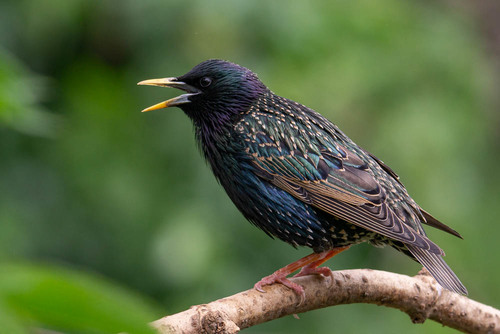
You might spot European Starling, Henbit Deadnettle, and Red Deadnettle.
View guide →
.jpg)
British Columbia, CA
You might spot Oregon Grape, Heartleaf Arnica, and Solomon's Plume.
View guide →
Take the discovery with you
Snap it with Snappit to identify it, learn what makes it special, and add the discovery to your collection.








.jpg&width=800)



_001.jpg&width=800)




