





Blue Jacob's Ladder
Polemonium caeruleum
Blue Jacob's Ladder is a beautiful flower with lovely blue petals. It grows in shady places and can make gardens look magical with its colorful blooms.
Habitat: Woodlands
The Blue Jacob's Ladder has vivid sky-blue to purple bell-shaped flowers arranged in loose clusters. Its distinctive pinnate leaves resemble tiny ladders, giving it a unique, delicate appearance that stands out in meadows.
Category
PlantsRarity
Common
Danger
1/5 · Very low
Snaps
Be the first to snap!
In some places, people used its roots in traditional herbal remedies long ago.
Its scientific name, *Polemonium*, might come from an ancient Greek king or philosopher!
The 'ladder' in its name comes from its leaves, which truly look like rungs climbing a stem.
You might find varieties with white or even pink flowers, not just its famous blue!
Blue Jacob's Ladder can produce sweet nectar and bright blue-purple flowers to guide busy bees directly to its pollen.
It can survive frosty winters by going dormant underground, storing energy to burst forth with new growth in spring.
Blue Jacob's Ladder has unique ladder-like leaves that help it efficiently collect sunlight for energy.
Apis mellifera
Visits flowers for nectar and pollen collection.
Bombus terrestris
An important pollinator, especially in its native European range.
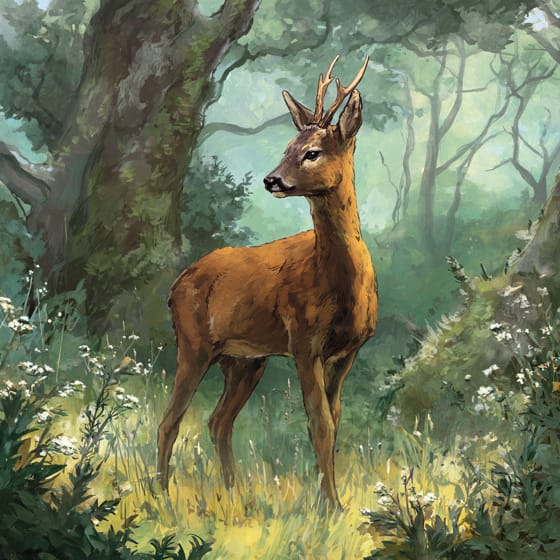
Capreolus capreolus
Browses on young leaves and shoots, especially in early spring.
Flowering plants are any plants that produce flowers as part of their reproductive cycle.
Shade tolerant plants are adapted to grow and thrive in areas with low light levels, requiring less direct sunlight.
Spring blooming plants produce their flowers during the spring season, often signifying the end of winter and the start of new growth.
Colorful describes organisms or objects displaying a wide range of bright and distinct colors.

Describes plants that are particularly attractive and beneficial to a wide range of pollinating organisms.

Forest habitats are terrestrial environments dominated by dense tree cover, supporting a high diversity of plant and animal life.
No aliases listed yet.
Danger
1/5 · Very low
Always look but don't touch flowers without asking an adult first.
The easiest way to identify Blue Jacob's Ladder is to use the Snappit nature identifier app.
30-90 cm
30-45 cm
1-2.5 cm
Spring_summer
Yes
None
Perennial
Zoom in to split clusters and explore where this object has been snapped.
Recent snaps will appear here as new observations are added.
Take the discovery with you
Snap it with Snappit to identify it, learn what makes it special, and add the discovery to your collection.







.jpg&width=800)



_001.jpg&width=800)



