_male.jpg&width=800)





Blue-winged Grasshopper
Oedipoda caerulescens
The Blue-winged Grasshopper is a colorful insect with bright blue wings. It loves to hop around grassy fields and is fun to watch as it jumps from place to place.
Habitat: Grasslands
The Blue-winged Grasshopper has a highly variable body color, ranging from grey to brown or red, allowing it to perfectly camouflage. Its most striking feature is the bright blue hindwings, visible only in flight, which are edged with a broad black band.
Category
InsectsRarity
Common
Danger
1/5 · Very low
Snaps
Be the first to snap!
Its two big compound eyes can see almost all around them at once!
They have super strong jaws for munching tough plants!
When it gets cold, their eggs wait safely underground until spring.
Wow, their ears are actually on their tummy, right behind their legs!
The Blue-winged Grasshopper can change its body color to perfectly match its stony or sandy habitat, helping it hide from hungry predators.
When threatened, it flashes its bright blue hindwings to startle predators, giving it a precious second to escape by jumping away.
This grasshopper has powerful hind legs that allow it to jump incredible distances quickly, making a speedy getaway from danger.
This grasshopper is a plant-eater, munching on various grasses and small green plants.

Lanius collurio
A common bird predator of grasshoppers.
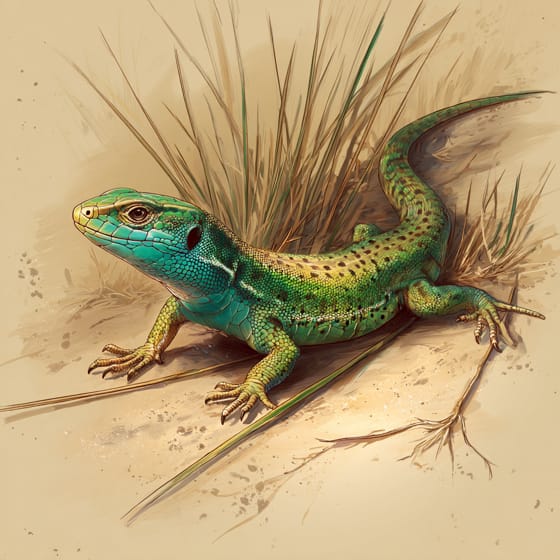
Lacerta agilis
Lizards frequently hunt grasshoppers in sunny habitats.
Festuca ovina
This grass species is a primary food source for the grasshopper.

Mantis religiosa
A formidable insect predator that preys on grasshoppers.
Singing animals produce complex vocalizations, often for purposes of attracting mates, defending territory, or communicating within their species.
Camouflaged describes organisms that possess coloring or patterns that allow them to blend into their environment.
Colorful describes organisms or objects displaying a wide range of bright and distinct colors.
Grassland habitats are terrestrial biomes dominated by grasses and herbaceous plants, supporting a variety of grazing animals.

This trait characterizes organisms whose diet consists entirely or primarily of plant material.

Diurnal animals are primarily active during daylight hours, typically resting or sleeping at night.

This trait identifies organisms that exhibit exceptional swiftness in movement for hunting, escape, or travel.
No aliases listed yet.
Danger
1/5 · Very low
Grasshoppers are harmless, but it's best to watch them from a distance and not touch them.
The easiest way to identify Blue-winged Grasshopper is to use the Snappit nature identifier app.
30-60 mm
15-38 mm
30-90 days
15 km/h
This grasshopper is a plant-eater, munching on various grasses and small green plants.
Grasslands
Foraging
Zoom in to split clusters and explore where this object has been snapped.
Recent snaps will appear here as new observations are added.
Take the discovery with you
Snap it with Snappit to identify it, learn what makes it special, and add the discovery to your collection.






.jpg&width=800)



