

Boettger'S Lizard
gallotia caesaris
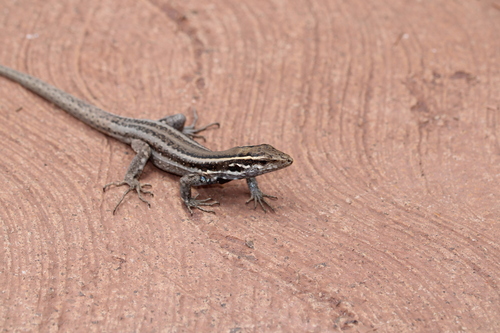
Boettger's Lizard, also known as Caesar's lizard, is a vibrant and highly adaptable reptile endemic to the western Canary Islands of El Hierro and La Gomera. Despite its modest size compared to some of its giant island relatives, this lizard is a key player in its ecosystem, thriving across a range of terrains from arid volcanic plains to lush agricultural fields. Its curious nature and diurnal activity make it a common and delightful sight for hikers and nature enthusiasts visiting these scenic Atlantic islands.
Habitat: Found across a diverse range of environments including rocky slopes, dry scrublands, traditional stone walls, and cultivated gardens.
This small-to-medium lizard typically reaches up to 30 cm in total length, featuring a slender, athletic build. Adult males are striking, presenting a dark brown to charcoal-black body often adorned with brilliant blue or green spots along their flanks. Females and younger individuals are more cryptically colored, showcasing a series of pale, longitudinal stripes along their backs and sides to blend seamlessly into dry grasses and rocky crevices.
Category
ReptilesRarity
Common
Danger
1/5 · Very low
Snaps
Be the first to snap!
Although native only to El Hierro and La Gomera, they were accidentally introduced to the island of Tenerife, where they have established a successful breeding population.
During the breeding season, males exhibit highly territorial behavior, performing head-bobbing displays and flashing their bright blue flank spots to ward off rivals.
They play a crucial role in the island's ecosystem as seed dispersers for several endemic plants, including the Canary Island spurge.
Can detach its tail when grabbed by a predator, allowing the lizard to escape while the wriggling tail distracts the attacker.
Highly efficient at absorbing heat from dark volcanic rocks, enabling rapid warming and active foraging in cool morning temperatures.
Possesses a specialized digestive system that allows it to consume tough endemic fruits, passing the seeds unharmed to assist island reforestation.
An opportunistic feeder that transitions from a heavily insectivorous diet in youth to consuming a high volume of plants, fruits, and flowers as an adult.
Age differences: Juveniles primarily hunt small invertebrates for protein, whereas mature adults consume a higher percentage of local plant matter.
Falco tinnunculus
Frequently preyed upon by local birds of prey scanning the open, rocky terrains.
Felis catus
Suffers significant predation pressure from introduced domestic and feral predators.
Gallotia galloti
Competes for food resources and basking spots in areas of Tenerife where Boettger's lizard has been introduced.
No trait badges are assigned for this object yet.
No aliases listed yet.
Collections for this object will appear here as more themes are added.
Danger
1/5 · Very low
No special safety notes yet.
Compare toes, scales, head shape, crests and tail proportions. Many lizards can drop and regrow their tails, so a short tail isn't always a species trait. Lizard Identifier: upload a photo and compare the visible details.
0.015+ kg
An opportunistic feeder that transitions from a heavily insectivorous diet in youth to consuming a high volume of plants, fruits, and flowers as an adult.
Found across a diverse range of environments including rocky slopes, dry scrublands, traditional stone walls, and cultivated gardens.
Foraging
Zoom in to split clusters and explore where this object has been snapped.
Recent snaps will appear here as new observations are added.
Take the discovery with you
Snap it with Snappit to identify it, learn what makes it special, and add the discovery to your collection.