





Broad-tipped Conehead
Neoconocephalus triops
The Broad-tipped Conehead is a fun-looking insect with a long body and a wide head. They love to hop around in grassy areas and can be found in many places during the summer.
Habitat: Grasslands
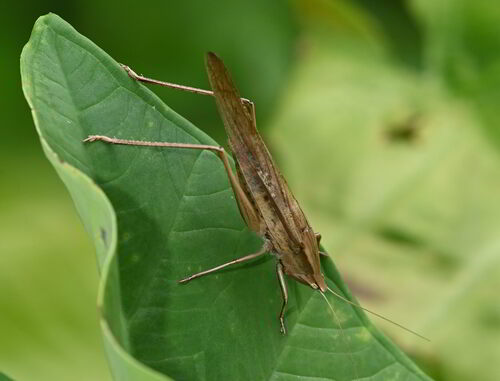
The Broad-tipped Conehead is a large, slender katydid, typically bright green, sometimes brown or yellow. It has a distinctive pointed cone-shaped head and very long antennae, often longer than its body. Its wings extend far past its abdomen.
Category
InsectsRarity
Common
Danger
1/5 · Very low
Snaps
3
Male coneheads rub their wings over 40 times per second to sing!
Some coneheads can fly, but usually only for short bursts.
Their 'ears' are tiny slits located on their front legs!
Their antennae are incredibly long, helping them feel their way at night!
Broad-tipped Conehead can produce an incredibly loud, buzzing song by rubbing its wings, which helps them attract mates.
Broad-tipped Conehead has a vibrant green body that helps it blend perfectly into tall grasses, protecting it from predators.
Broad-tipped Conehead has powerful hind legs that allow it to make impressive leaps, helping it escape quickly from danger.
These insects munch on plants like grasses and seeds, enjoying a leafy vegetarian diet!

Lanius ludovicianus
Shrikes are known to impale them on thorns for later.

Zea mays
Often found feeding on corn plants in agricultural fields.
Argiope aurantia
Spiders often catch coneheads in their large, intricate webs.

Lithobates catesbeianus
Frogs ambush and eat them near wetland habitats.
Social animals live in organized groups, cooperating for survival benefits such as foraging, defense, and raising offspring.
Camouflaged describes organisms that possess coloring or patterns that allow them to blend into their environment.
Grassland habitats are terrestrial biomes dominated by grasses and herbaceous plants, supporting a variety of grazing animals.
This trait characterizes organisms whose diet consists entirely or primarily of plant material.

Diurnal animals are primarily active during daylight hours, typically resting or sleeping at night.

This trait identifies organisms that exhibit exceptional swiftness in movement for hunting, escape, or travel.

Describes organisms that transfer pollen, enabling the fertilization and reproduction of plants.
No aliases listed yet.
Danger
1/5 · Very low
It's best to watch insects from a distance and not touch them, as they can be delicate.
The easiest way to identify Broad-tipped Conehead is to use the Snappit nature identifier app.
80-120 mm
40-60 mm
60-90 days
These insects munch on plants like grasses and seeds, enjoying a leafy vegetarian diet!
Grasslands
Foraging
6
Zoom in to split clusters and explore where this object has been snapped.
Mar 29, 2026
Butterfly WorldPhoto attribution
(c) Dennis Vollmar, some rights reserved (CC BY)
License: CC BY 4.0 ↗
Image may be shown cropped inside the card frame.

Florida, US
You might spot Cuban Tree Frog, Cane Toad, and Bee.
View guide →
Georgia, US
You might spot Eastern Gray Squirrel, Domestic Cat, and American Robin.
View guide →
Alabama, US
You might spot Blackbanded Darter and Cope's Gray Tree Frog.
View guide →
California, US
You might spot Anole, Chinese Privet, and Muscovy Duck.
View guide →
Take the discovery with you
Snap it with Snappit to identify it, learn what makes it special, and add the discovery to your collection.






.jpg&width=800)




