





Broad-winged Thistle
Carduus acanthoides
The Broad-winged Thistle is a tall plant with spiky leaves and beautiful purple flowers. It grows in sunny places and is loved by butterflies and bees!
Habitat: Grasslands
The Broad-winged Thistle has deeply lobed, spiny leaves that extend down its stem, creating a distinctive winged appearance. Its vibrant purple-pink flower heads are globe-shaped and erupt from spiky bracts, making it visually striking.
Category
PlantsRarity
Common
Danger
2/5 · Low
Snaps
3
Even though they’re spiky, many bees and butterflies visit their flowers for nectar!
Its scientific name, Carduus acanthoides, actually means 'spiny thistle'!
This plant is often called a 'weed' but it provides important food for many insects!
Thistles are a favorite snack for hungry goldfinches, who love to eat their seeds!
Broad-winged Thistle has sharp spines covering its stems and leaves that help it defend against hungry herbivores.
Broad-winged Thistle can launch its seeds with fluffy parachutes, allowing them to float on the wind to new locations.
Broad-winged Thistle can grow a deep taproot to find water and nutrients far underground, helping it survive dry conditions.
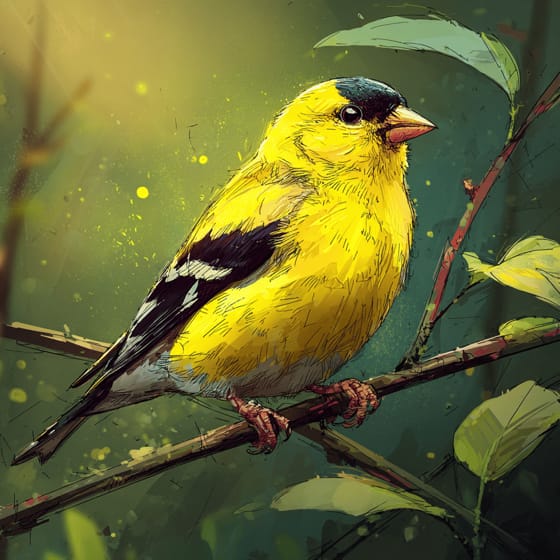
Spinus tristis
eats seeds from the flower heads
Apis mellifera
collects nectar and pollen from flowers
Vanessa cardui
feeds on nectar from the thistle flowers
Trichoplusia ni
caterpillars sometimes munch on its leaves
Flowering plants are any plants that produce flowers as part of their reproductive cycle.
Biennial plants complete their life cycle over two growing seasons, typically forming foliage in the first year and flowering/seeding in the second.
Summer blooming plants produce their flowers during the summer season, often providing vibrant color when many other plants have finished.
Colorful describes organisms or objects displaying a wide range of bright and distinct colors.

Grassland habitats are terrestrial biomes dominated by grasses and herbaceous plants, supporting a variety of grazing animals.

Describes plants that are particularly attractive and beneficial to a wide range of pollinating organisms.

Possessing sharp, pointed projections or spines on the body or surface.
No aliases listed yet.
Danger
2/5 · Low
Be careful around thistles; their spiky leaves can prick your skin.
The easiest way to identify Broad-winged Thistle is to use the Snappit nature identifier app.
30-200 cm
30-60 cm
1.5-3 cm
Summer-fall
No
Mild
Biennial
Zoom in to split clusters and explore where this object has been snapped.

New York, US
You might spot Pine Grosbeak, Hydrangea Leaftier Moth, and Brown Trout.
View guide →

Minnesota, US
You might spot Red-Tailed Hawk, Canada Goose, and Western Meadowlark.
View guide →

Colorado, US
You might spot Rainbow Trout, Brown Trout, and Red Fox.
View guide →
Take the discovery with you
Snap it with Snappit to identify it, learn what makes it special, and add the discovery to your collection.








.jpg&width=800)



_001.jpg&width=800)




