





purple pitcher plant
Sarracenia purpurea
The purple pitcher plant is a special plant that looks like a tall cup. It catches bugs to eat, which helps it grow in wet places where the soil is poor.
Habitat: Wetlands
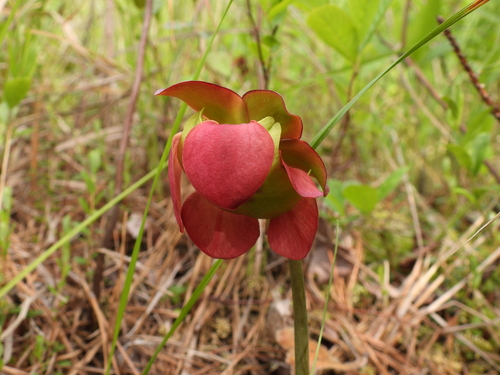
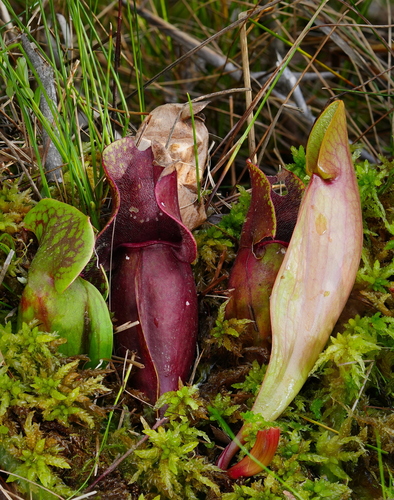
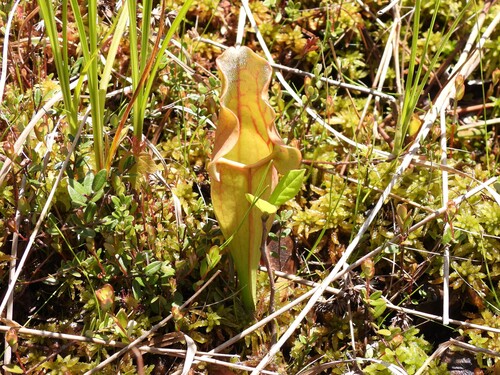
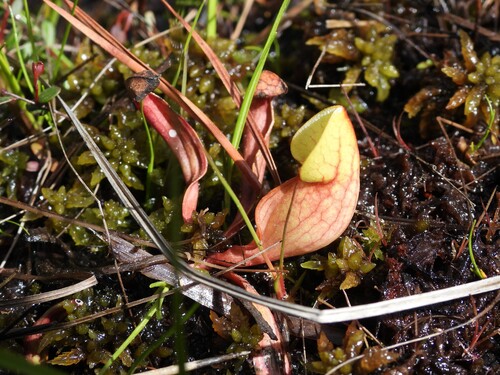
The purple pitcher plant is a low-growing perennial with a rosette of deep red to purple, trumpet-shaped leaves (pitchers). These leaves often have prominent purplish veins and a ruffled, lighter-colored hood. Its unique nodding flowers are also dark red or purple.
Category
PlantsRarity
Common
Danger
1/5 · Very low
Snaps
32
Its unique umbrella-shaped flowers hang upside down, protecting pollen from rain!
Some purple pitcher plants can live for 20 years or even longer in the wild!
The pitcher plant gets most of its food from sunlight, not just the bugs it eats!
This plant often hosts tiny mosquito larvae that live safely inside its watery pitchers!
The purple pitcher plant can lure and capture insects in its water-filled leaves to obtain essential nutrients.
Its pitcher leaves are perfectly shaped to collect rainwater, which helps drown its insect prey.
This plant has a special tolerance to cold, allowing it to survive freezing winters in temperate zones.
Wyeomyia smithii
Mosquito larvae live harmlessly inside the pitcher plant's leaves.
Bombus impatiens
Bumblebees visit the unique flowers, helping the plant reproduce.
Exyra rolandiana
Moth larvae munch on the pitcher plant, sometimes harming it.
Flowering plants are any plants that produce flowers as part of their reproductive cycle.
A tube flower has petals fused together at the base, forming a distinct tubular structure that typically holds nectar deep within.
Evergreen plants retain their foliage throughout the year, never shedding all their leaves at once.
Colorful describes organisms or objects displaying a wide range of bright and distinct colors.

This trait identifies organisms whose diet primarily consists of insects and other small invertebrates.

Describes plants that are particularly attractive and beneficial to a wide range of pollinating organisms.

Carnivorous plants are predatory flowering plants that derive some or most of their nutrients from trapping and consuming animals or protozoans.

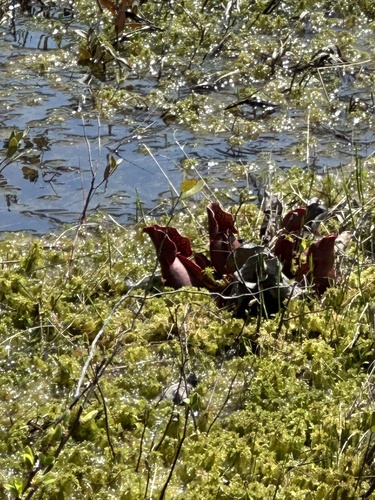
This habitat trait identifies species found in wetlands, which are areas of land saturated with water, either permanently or seasonally, including marshes, swamps, and bogs.
No aliases listed yet.
Danger
1/5 · Very low
Don't touch the plant's leaves; they are special and can be delicate.
The easiest way to identify purple pitcher plant is to use the Snappit nature identifier app.
15-60 cm
20-50 cm
3-5 cm
Late Spring - Early Summer
No
None
Perennial
Zoom in to split clusters and explore where this object has been snapped.
Jun 2, 2026
Monmouth Battlefield State ParkPhoto attribution
(c) geosesarma, some rights reserved (CC BY)
License: CC BY 4.0 ↗
Image may be shown cropped inside the card frame.
May 28, 2026
Long Island Game FarmPhoto attribution
no rights reserved
License: CC0 1.0 ↗
Image may be shown cropped inside the card frame.
May 17, 2026
Monmouth Battlefield State ParkPhoto attribution
(c) geosesarma, some rights reserved (CC BY)
License: CC BY 4.0 ↗
Image may be shown cropped inside the card frame.
May 5, 2026
CheshamPhoto attribution
(c) Jaime McGuigan, some rights reserved (CC BY)
License: CC BY 4.0 ↗
Image may be shown cropped inside the card frame.
May 3, 2026
Monmouth Battlefield State ParkPhoto attribution
(c) geosesarma, some rights reserved (CC BY)
License: CC BY 4.0 ↗
Image may be shown cropped inside the card frame.

Massachusetts, US
You might spot Eastern Newt, Purple Pitcher Plant, and Hobblebush.
View guide →

Wisconsin, US
You might spot Purple Pitcher Plant, Papillose Peatmoss, and Tamarack.
View guide →

New Hampshire, US
You might spot Eastern Red-Backed Salamander and Eastern Newt.
View guide →

Vermont, US
You might spot Eastern White Pine, Staghorn Sumac, and Box Elder.
View guide →

New Hampshire, US
You might spot Eastern White Pine and White-Tailed Deer.
View guide →

New York, US
You might spot American Toad and Purple Pitcher Plant.
View guide →
Take the discovery with you
Snap it with Snappit to identify it, learn what makes it special, and add the discovery to your collection.








.jpg&width=800)



_001.jpg&width=800)



