





Broadbeard Beardtongue
Penstemon angustifolius
The Broadbeard Beardtongue is a pretty flower with long, narrow leaves and bright blue or purple blooms. It loves to grow in sunny places and attracts butterflies and bees!
Habitat: Grasslands
The Broadbeard Beardtongue has slender stems with narrow, grass-like leaves. It boasts clusters of vibrant blue-purple to lavender, tubular flowers. A distinctive fuzzy 'beard' inside each bloom gives it its unique name and helps guide pollinators.
Category
PlantsRarity
Common
Danger
1/5 · Very low
Snaps
1
Its scientific name, Penstemon, means 'five stamens'—even with one sterile!
Some Native American tribes used this plant for traditional medicine.
The 'beardtongue' is actually a sterile stamen, not a real tongue!
The vibrant blue-purple color is a rare sight in many dry desert plants!
Broadbeard Beardtongue has special roots and leaves that help it survive long periods with very little water.
Its bright, tubular flowers act like a landing strip for long-tongued bees, guiding them to sweet nectar.
The fuzzy 'beardtongue' inside its flower helps brush pollen onto visiting insects as they search for nectar.
Apis mellifera
Visits flowers for nectar and pollen.
Bombus occidentalis
Long tongues ideal for tubular flowers.
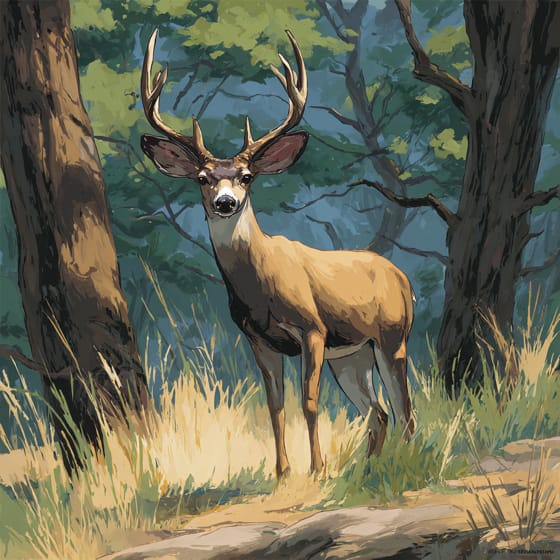
Odocoileus hemionus
May browse on leaves and stems.
Flowering plants are any plants that produce flowers as part of their reproductive cycle.
Spring blooming plants produce their flowers during the spring season, often signifying the end of winter and the start of new growth.
Drought-tolerant plants can survive and flourish in conditions with limited water availability.
Colorful describes organisms or objects displaying a wide range of bright and distinct colors.

Grassland habitats are terrestrial biomes dominated by grasses and herbaceous plants, supporting a variety of grazing animals.

Describes plants that are particularly attractive and beneficial to a wide range of pollinating organisms.
No aliases listed yet.
Danger
1/5 · Very low
Always look but don't touch flowers in the wild to help them stay safe.
The easiest way to identify Broadbeard Beardtongue is to use the Snappit nature identifier app.
15-45 cm
15-30 cm
2-3 cm
Late spring - early summer
No
None
Perennial
Zoom in to split clusters and explore where this object has been snapped.

New Mexico, US
You might spot Common Side-Blotched Lizard and Kingcup Cactus.
View guide →

New Mexico, US
You might spot Pinkflower Hedgehog Cactus and Kingcup Cactus.
View guide →

Nebraska, US
You might spot Great Plains Yucca, Plains Pricklypear, and Winterfat.
View guide →
Take the discovery with you
Snap it with Snappit to identify it, learn what makes it special, and add the discovery to your collection.








.jpg&width=800)



_001.jpg&width=800)




