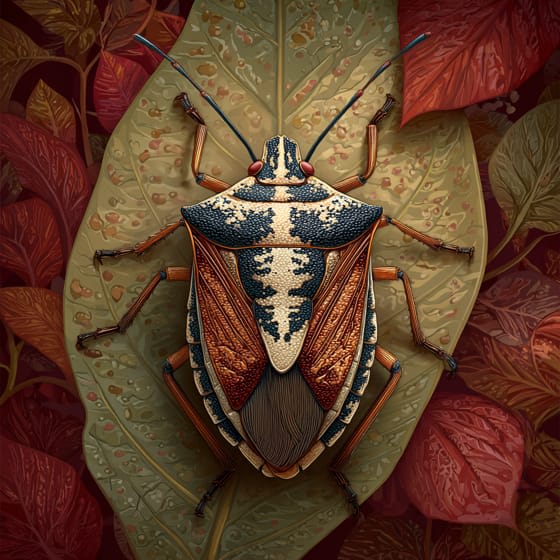





Brown Marmorated Stink Bug
Halyomorpha halys
The Brown Marmorated Stink Bug is a funny-looking bug that sometimes gives off a strong smell when scared. They are usually brown with stripes.
Habitat: Gardens, fields, and homes
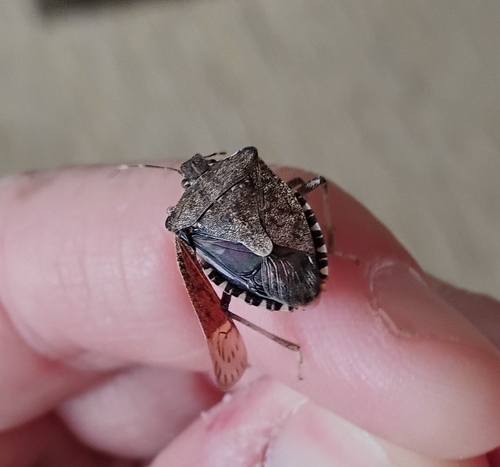
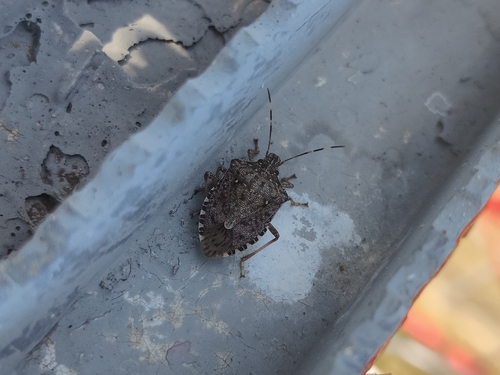
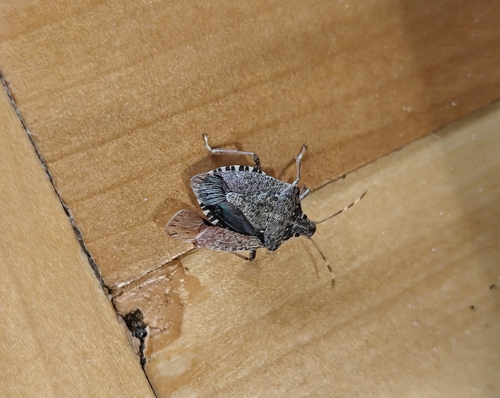
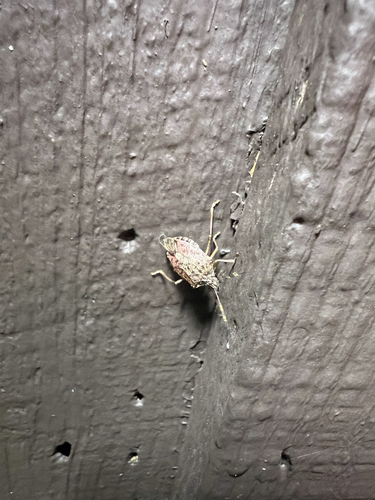
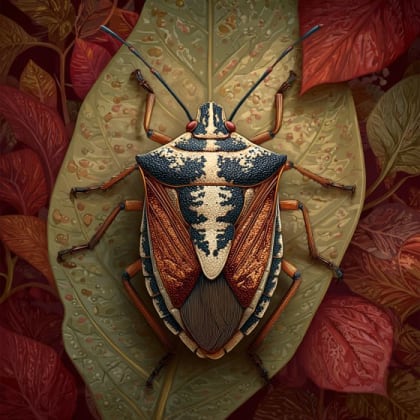
The Brown Marmorated Stink Bug is a shield-shaped insect, mottled brown and gray with light and dark bands on its antennae and legs. It has distinctive alternating dark and light bands along the outer edge of its abdomen, making it blend well with tree bark.
Category
InsectsRarity
Common
Danger
2/5 · Low
Snaps
107
Brown Marmorated Stink Bugs are originally from parts of Asia like China, Japan, and Korea!
Mom stink bugs lay their tiny, barrel-shaped eggs in perfect clusters on the underside of plant leaves!
Stink bugs quietly 'talk' to each other by vibrating the surfaces they stand on!
Wow! These bugs are famous hitchhikers, often traveling across continents in shipping containers!
Brown Marmorated Stink Bug can release a smelly chemical from its glands that makes it taste and smell bad to predators.
Brown Marmorated Stink Bug has a marbled brown pattern that helps it disappear against tree bark, making it tricky for predators to spot.
Brown Marmorated Stink Bug can squeeze into tiny cracks and crevices to stay warm and safe during cold winter months.
These hungry bugs munch on sap from many different plants, especially fruits, vegetables, and field crops.
Trissolcus japonicus
lays eggs inside stink bug eggs
Malus domestica
feeds on fruit and sap

Glycine max
damages plant sap
Pristhesancus plagipennis
preys on adult stink bugs
Wildlife encompasses all undomesticated animal and plant life existing in their natural habitats.
Singing animals produce complex vocalizations, often for purposes of attracting mates, defending territory, or communicating within their species.
Camouflaged describes organisms that possess coloring or patterns that allow them to blend into their environment.
This trait characterizes organisms whose diet consists entirely or primarily of plant material.

Toxic organisms contain substances that are poisonous and can cause adverse effects upon exposure.

This habitat trait indicates species that can coexist with humans in urban and suburban environments, utilizing man-made structures and green spaces.

Nocturnal animals are primarily active during the nighttime hours, typically resting or sleeping during the day.
Danger
2/5 · Low
Do not touch or pick up. Some insects sting or bite. Ask an adult for help.
The easiest way to identify Brown Marmorated Stink Bug is to use the Snappit nature identifier app.
12-17 mm
180-365 days
These hungry bugs munch on sap from many different plants, especially fruits, vegetables, and field crops.
Gardens, fields, and homes
Foraging
6
Zoom in to split clusters and explore where this object has been snapped.
Jun 6, 2026
Nuttallburg Coal Mining Complex and Town Historic DistrictPhoto attribution
no rights reserved
License: CC0 1.0 ↗
Image may be shown cropped inside the card frame.
Jun 4, 2026
Belleplain State ForestPhoto attribution
(c) jamie bee, some rights reserved (CC BY)
License: CC BY 4.0 ↗
Image may be shown cropped inside the card frame.
May 30, 2026
American Baptist CollegePhoto attribution
(c) Ansil B.R., some rights reserved (CC BY)
License: CC BY 4.0 ↗
Image may be shown cropped inside the card frame.
Jul 26, 2024
Glen Echo ParkPhoto attribution
(c) Carrie Seltzer, some rights reserved (CC BY)
License: CC BY 4.0 ↗
Image may be shown cropped inside the card frame.

Tennessee, US
You might spot House Sparrow, Northern Mockingbird, and Gulf Fritillary.
View guide →

South Carolina, US
You might spot Anole, Green Treefrog, and Eastern Gray Squirrel.
View guide →

Illinois, US
You might spot Chicory, Hackberry Emperor, and Compass Plant.
View guide →

Wisconsin, US
You might spot Turkey, White-Tailed Deer, and Dame's Rocket.
View guide →
Virginia, US
You might spot White-Tailed Deer and House Sparrow.
View guide →

New York, US
You might spot Bald Eagle, Common Eastern Bumble Bee, and Red-Tailed Hawk.
View guide →
Take the discovery with you
Snap it with Snappit to identify it, learn what makes it special, and add the discovery to your collection.








.jpg&width=800)




