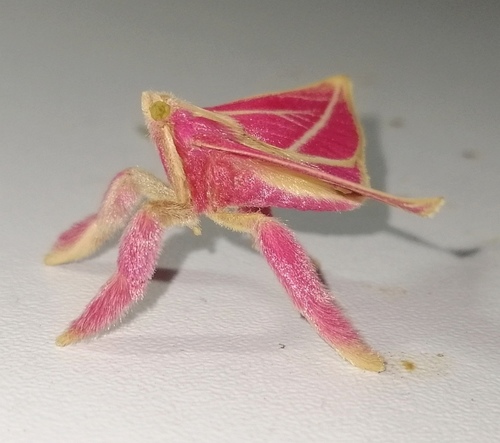





Butterflies And Moths
lepidoptera
Members of the order Lepidoptera, which encompasses all butterflies and moths, are among the most diverse and visually striking insects on Earth. Characterized by their multi-stage life cycle, they undergo a complete metamorphosis from leaf-eating larvae (caterpillars) to highly specialized, winged adults. With over one hundred and eighty thousand described species worldwide, this evolutionary lineage plays a critical role in global ecosystems as both pollinators of flowering plants and primary prey for birds, bats, and other insectivores. Their intricate wings, painted with microscopic scales, have captivated humans for centuries, representing symbols of transformation and natural beauty. From tiny micro-moths to giant silk moths, they inhabit virtually every terrestrial environment where flowering plants thrive, showcasing a remarkable array of evolutionary adaptations.
Habitat: Found in almost every terrestrial environment worldwide, particularly where flowering plants and suitable host vegetation are abundant.
Lepidopterans are defined by two pairs of membranous wings densely covered in tiny, overlapping scales that produce intricate patterns and colors, which can be vibrantly iridescent or masterfully camouflaged. Adults typically feature a coiled, straw-like feeding tube called a proboscis, large compound eyes, and prominent antennae. Butterflies generally possess thin, club-tipped antennae and rest with their wings folded vertically, while moths typically have feathery or tapered antennae and rest with their wings spread flat. Their sizes vary dramatically, with wingspans ranging from just a few millimeters to nearly thirty centimeters.
Category
InsectsRarity
Common
Danger
1/5 · Very low
Snaps
Be the first to snap!
Butterflies possess chemical receptors on their feet, allowing them to taste plants simply by standing on them.
Some adult moth species lack mouths entirely and must survive solely on energy stored during their caterpillar stage.
The Monarch butterfly is famous for its incredible multi-generational migration across North America.
The scientific name Lepidoptera is derived from Greek words meaning scaly wings.
They undergo a dramatic four-stage life cycle, transforming from a crawling caterpillar focused entirely on growth to a pupa, and finally to a winged adult specialized for reproduction.
Microscopic scales on their wings create physical structures that reflect light to produce brilliant metallic colors or absorb light for thermoregulation and camouflage.
Many species, especially nocturnal moths, possess highly sensitive antennae capable of detecting chemical mating signals from several miles away.
Caterpillars feed voraciously on solid foliage, whereas adult butterflies and moths drink liquid flower nectar, tree sap, and rotting fruit using a specialized proboscis.
Age differences: Caterpillars possess chewing mouthparts designed to consume leaves, while adults only possess a proboscis adapted for drinking liquid foods.

Asclepias syriaca
Monarch caterpillars rely solely on milkweed plants as their host food source, absorbing toxins that render them unpalatable to predators.

Cyanocitta cristata
Birds of many species actively hunt and consume Lepidopteran larvae and adults as a primary protein source.
Lavandula angustifolia
Adult butterflies and moths act as essential pollinators for many flowering plant species while gathering nectar.
Social animals live in organized groups, cooperating for survival benefits such as foraging, defense, and raising offspring.
Colorful describes organisms or objects displaying a wide range of bright and distinct colors.
This trait characterizes organisms whose diet consists entirely or primarily of plant material.
Describes plants that are particularly attractive and beneficial to a wide range of pollinating organisms.
Diurnal animals are primarily active during daylight hours, typically resting or sleeping at night.
Migratory animals undertake seasonal movements from one region to another, typically in response to changes in climate or food availability.
This habitat trait indicates species that can coexist with humans in urban and suburban environments, utilizing man-made structures and green spaces.
Describes organisms that transfer pollen, enabling the fertilization and reproduction of plants.
Collections for this object will appear here as more themes are added.
Danger
1/5 · Very low
No special safety notes yet.
Look for six legs, antennae, three body sections and the shape of the wings. Beetles have hardened front wings; flies have just one working pair. Tiny insects may need a close view before their group is clear. Insect Identifier: upload a photo and compare the visible details.
1-15 cm
1-30 cm
0.00001-0.03 kg
up to 1 years
48 km/h
Caterpillars feed voraciously on solid foliage, whereas adult butterflies and moths drink liquid flower nectar, tree sap, and rotting fruit using a specialized proboscis.
Found in almost every terrestrial environment worldwide, particularly where flowering plants and suitable host vegetation are abundant.
Zoom in to split clusters and explore where this object has been snapped.
Recent snaps will appear here as new observations are added.
Take the discovery with you
Snap it with Snappit to identify it, learn what makes it special, and add the discovery to your collection.