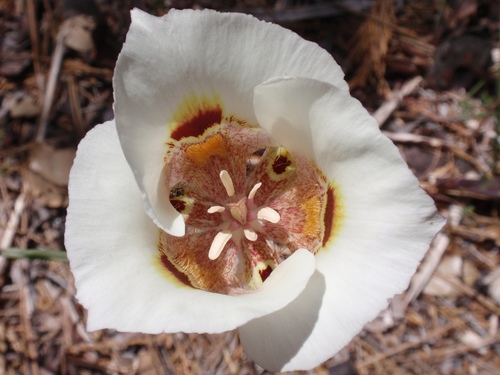


Butterfly Mariposa Lily
calochortus venustus
The Butterfly Mariposa Lily (Calochortus venustus) is one of California's most spectacular and variable wildflowers. Belonging to the lily family, this perennial herb grows from a deep underground bulb and bursts into bloom in late spring and early summer. Its name, 'Mariposa,' is Spanish for butterfly, which perfectly describes its delicately patterned, cup-shaped flowers that resemble butterfly wings. This plant is celebrated for its incredible color polymorphism, with blossoms ranging from pure white and pale pink to deep purple, vibrant red, or yellow, often displaying intricate, dark red blotches and yellow bands near the base of the petals. Native to the grasslands, chaparral, and open woodlands of California, the Butterfly Mariposa Lily is a vital part of its local ecosystem, attracting a diverse array of native pollinators. Spotting these stunning flowers on a sunny hillside is a true highlight for any native plant enthusiast, offering a brilliant display of nature's artistry.
Habitat: Found in open grasslands, sandy flats, chaparral, and foothill woodlands, typically in well-drained soils at elevations up to 2,500 meters.
The flower of the Butterfly Mariposa Lily is cup-shaped, featuring three large, wedge-shaped petals and three smaller, lance-shaped sepals. The petals are incredibly variable in color—ranging from white, cream, pink, and yellow to deep purple or red—and typically feature a prominent, dark reddish-purple spot or 'eye' surrounded by a yellow border near the base, resembling a butterfly wing pattern. The stem is slender, upright, and generally branched, growing 10 to 60 cm tall, with narrow, grass-like leaves that often wither by the time the flowers bloom.
Category
PlantsRarity
Common
Danger
1/5 · Very low
Snaps
Be the first to snap!
An individual population of Butterfly Mariposa Lilies can exhibit stunningly different colors, from white to purple, growing side-by-side on the exact same hillside.
Indigenous peoples of California, such as the Miwok and Yosemite tribes, traditionally harvested the nutritious bulbs of this lily to eat raw, boiled, or roasted.
The name 'Calochortus' comes from Greek, meaning 'beautiful grass', referring to the attractive flowers and grass-like leaves.
Establishes a deep underground bulb that stores water and nutrients, allowing the plant to survive hot, dry California summers.
Displays an extraordinarily wide range of petal colors and patterns within the same population, which may help attract a broader diversity of insect pollinators.
Completely dies back above ground after blooming to conserve energy during the harsh, dry Mediterranean summer season.
As a green plant, it produces its own organic nutrients through photosynthesis, using sunlight, water, and carbon dioxide.
No trait badges are assigned for this object yet.
No aliases listed yet.
Collections for this object will appear here as more themes are added.
Danger
1/5 · Very low
No special safety notes yet.
Start with the whole plant, then compare leaf arrangement, leaf edges, stems and any flowers or fruit. Opposite leaves grow in pairs; alternate leaves come one at a time along the stem. These details tell you far more together than a single green leaf does. Plant Identifier: upload a photo and compare the visible details.
10-60 cm
3-15 years
As a green plant, it produces its own organic nutrients through photosynthesis, using sunlight, water, and carbon dioxide.
Found in open grasslands, sandy flats, chaparral, and foothill woodlands, typically in well-drained soils at elevations up to 2,500 meters.
Zoom in to split clusters and explore where this object has been snapped.
Recent snaps will appear here as new observations are added.

California, US
You might spot Western Redbud and Harlequin Lupine.
View guide →
California, US
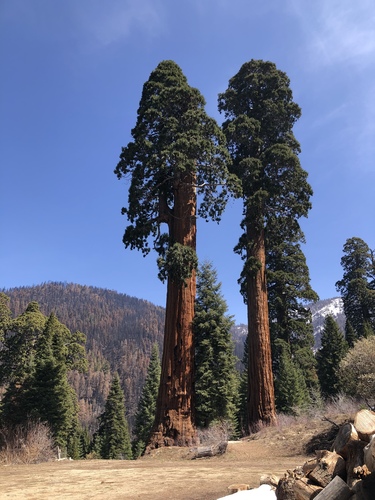
You might spot Sequoia, Mountain Misery, and Mule Deer.
View guide →

California, US
You might spot Utah Juniper and Chaparral Yucca.
View guide →
Take the discovery with you
Snap it with Snappit to identify it, learn what makes it special, and add the discovery to your collection.