.jpg&width=800)





wild comfrey
Andersonglossum virginianum
Wild comfrey is a lovely plant with big, fuzzy leaves and pretty purple flowers. It grows in fields and along roadsides, making nature look beautiful!
Habitat: Grasslands
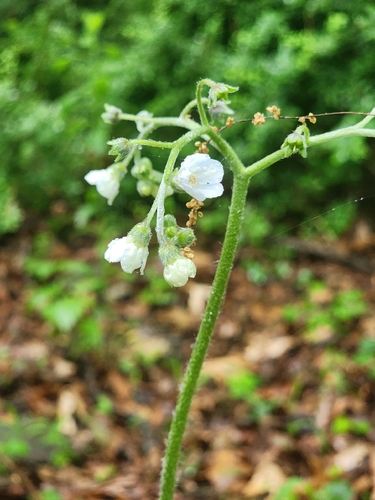
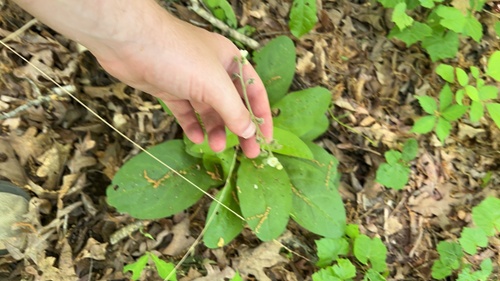
The wild comfrey has delicate bell-shaped flowers, typically pale blue to white, sometimes starting pinkish. Its large, lance-shaped leaves are covered in fine, stiff hairs, giving them a fuzzy texture and a dull green appearance.
Category
PlantsRarity
Common
Danger
2/5 · Low
Snaps
7
Its seeds wear tiny velcro suits to hitch rides on fuzzy animals!
Look closely! Its flowers often start pink and change to blue as they get older!
The plant can drink water from super deep underground with its long roots!
Wild comfrey leaves are covered in soft hairs, making them feel fuzzy to the touch!
This plant has a long, sturdy taproot that dives deep to find water and store nutrients, even in dry spells.
Its leaves are covered in fine, stiff hairs, which help protect it from hungry browsers and reduce water loss.

Odocoileus virginianus
browses leaves and stems
Apis mellifera
collects nectar and pollen

Bombus impatiens
buzz pollinates its flowers
Didelphis virginiana
disperses seeds on its fur
Furry describes animals possessing a dense covering of soft hair or fur.
Flowering plants are any plants that produce flowers as part of their reproductive cycle.
Biennial plants complete their life cycle over two growing seasons, typically forming foliage in the first year and flowering/seeding in the second.
Summer blooming plants produce their flowers during the summer season, often providing vibrant color when many other plants have finished.

Fragrant flowers emit a pleasant aroma, often to attract pollinators or for defense.

Medicinal plants possess chemical compounds that can be used for therapeutic purposes to treat illnesses or maintain health.

Grassland habitats are terrestrial biomes dominated by grasses and herbaceous plants, supporting a variety of grazing animals.

Describes plants that are particularly attractive and beneficial to a wide range of pollinating organisms.
No aliases listed yet.
Danger
2/5 · Low
Always look but don't touch plants unless a grown-up says it's okay.
The easiest way to identify wild comfrey is to use the Snappit nature identifier app.
30-90 cm
15-30 cm
0.5-1 cm
Late spring to early summer
No
Moderate
Perennial
Zoom in to split clusters and explore where this object has been snapped.
May 20, 2026
Camp Misty Mount Historic DistrictPhoto attribution
(c) Erin Collins, some rights reserved (CC BY)
License: CC BY 4.0 ↗
Image may be shown cropped inside the card frame.
Apr 14, 2026
Nickajack CavePhoto attribution
(c) will shepard, some rights reserved (CC BY)
License: CC BY 4.0 ↗
Image may be shown cropped inside the card frame.

Maryland, US
You might spot American Cancer-Root and Rue Anemone.
View guide →

Kentucky, US
You might spot Pond Slider, Crane-Fly Orchid, and Bloodroot.
View guide →

North Carolina, US
You might spot Eastern Tiger Swallowtail, Anole, and Monarch.
View guide →

South Carolina, US
You might spot Brown-Headed Cowbird and Eastern Box Turtle.
View guide →

Tennessee, US
You might spot Black Maidenhair Fern and Great Blue Heron.
View guide →

Tennessee, US
You might spot Twinleaf, Purple-Stem Cliffbrake, and Trifoliate Orange.
View guide →
Take the discovery with you
Snap it with Snappit to identify it, learn what makes it special, and add the discovery to your collection.








.jpg&width=800)


_001.jpg&width=800)




