.jpg&width=800)




Sea-buckthorn
Hippophae rhamnoides
Sea-buckthorn is a bright orange shrub that grows by the sea and in sunny places. Its small berries are packed with vitamins and are loved by birds and people alike!
Habitat: Coastal areas
The Sea-buckthorn is a thorny shrub or small tree with distinct narrow, silvery-green leaves. Its most striking feature is dense clusters of bright orange or yellow berries that cling tightly to the branches, often remaining through winter.
Category
PlantsRarity
Common
Danger
1/5 · Very low
Snaps
2
Did you know Sea-buckthorn berries contain 15 times more Vitamin C than oranges? Wow!
Its scientific name, Hippophae, means 'shiny horse,' because ancient Greeks fed it to horses!
Sea-buckthorn berries can stay on branches all winter, providing food for birds when scarce!
The vibrant orange oil from its berries is used in cosmetics and skincare products!
Sea-buckthorn has special root nodules that help it add important nitrogen to the soil, making it richer for other plants.
Sea-buckthorn can grow sharp thorns along its branches, helping to protect its valuable berries and leaves from hungry animals.
Sea-buckthorn can spread widely with deep roots and suckers, helping to hold sandy soils together and prevent erosion on coasts.
-4.jpg&width=800)
Turdus pilaris
Feeds on its nutrient-rich berries in winter.
Fringilla coelebs
Uses its dense, thorny branches for nesting and protection.
Frankia alni
Fixes nitrogen in root nodules, enriching the soil.
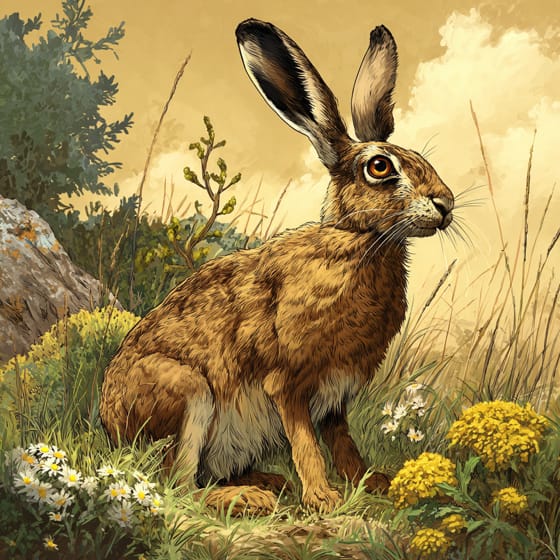
Lepus europaeus
Browses on its bark and young shoots, especially in winter.
Describes organisms capable of converting atmospheric nitrogen into compounds usable by plants.
A shrub is a woody plant smaller than a tree, typically with multiple stems branching from or near the ground.
Cold hardy plants are able to withstand low temperatures and freezing conditions without significant damage.
Evergreen plants retain their foliage throughout the year, never shedding all their leaves at once.

Fruit-bearing plants produce fruits, which are the mature ovaries of flowering plants containing seeds.

Medicinal plants possess chemical compounds that can be used for therapeutic purposes to treat illnesses or maintain health.

Drought-tolerant plants can survive and flourish in conditions with limited water availability.

Edible plants are those parts of a plant that are considered safe for human consumption.

Describes plants that are particularly attractive and beneficial to a wide range of pollinating organisms.

Coastal habitats are dynamic environments located along the interface between land and sea, influenced by tides, waves, and saltwater.
No aliases listed yet.
Danger
1/5 · Very low
Always ask an adult before trying any berries you find in nature.
The easiest way to identify Sea-buckthorn is to use the Snappit nature identifier app.
200-600 cm
150-300 cm
Spring
Yes
None
Perennial
Wind
Zoom in to split clusters and explore where this object has been snapped.
Take the discovery with you
Snap it with Snappit to identify it, learn what makes it special, and add the discovery to your collection.










.jpg&width=800)



_001.jpg&width=800)


