.JPG&width=800)





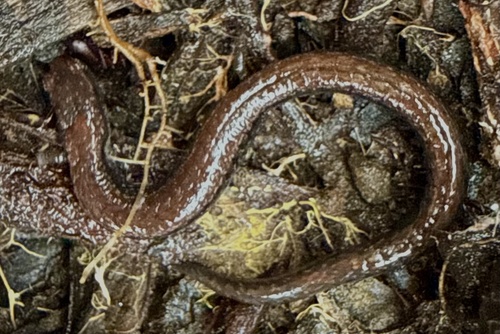
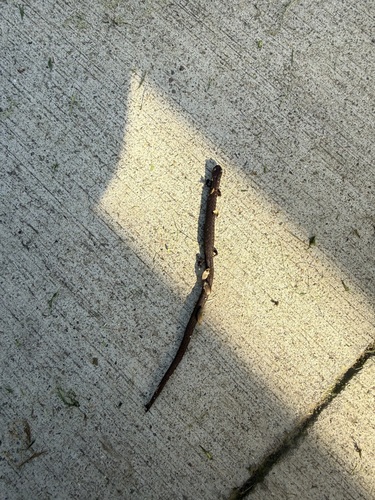
California Slender Salamander
Batrachoseps attenuatus
The California Slender Salamander is a small, slimy creature that loves to hide under rocks and leaves. It has a long body and can be very shy, making it a special little friend in nature.
Habitat: Forests
The California Slender Salamander is a very thin, worm-like amphibian, typically dark brown to black, often with a reddish-brown stripe down its back. It has tiny limbs and a small head, and distinctively features only four toes on its hind feet, making it stand out from most other salamanders.
Category
AmphibiansRarity
Common
Danger
1/5 · Very low
Snaps
9
A female slender salamander often curls around her eggs to protect them!
Scientists call them 'worms with legs' due to their extremely thin shape!
They can survive many months without food by slowing down their bodies!
This salamander has NO lungs, breathing entirely through its moist skin!
California Slender Salamander can drop its tail to escape predators, which helps them get away safely.
California Slender Salamander has a super-slender body that helps them squeeze into tiny cracks and hide from danger.
California Slender Salamander has special grooves near its nose that help them 'smell' tiny prey on the ground.
They eat tiny insects, mites, and worms found in damp leaf litter and soil.
Thamnophis sirtalis
A frequent predator in its forest and garden habitats.
Sorex ornatus
Shrews sometimes prey on small, ground-dwelling salamanders.
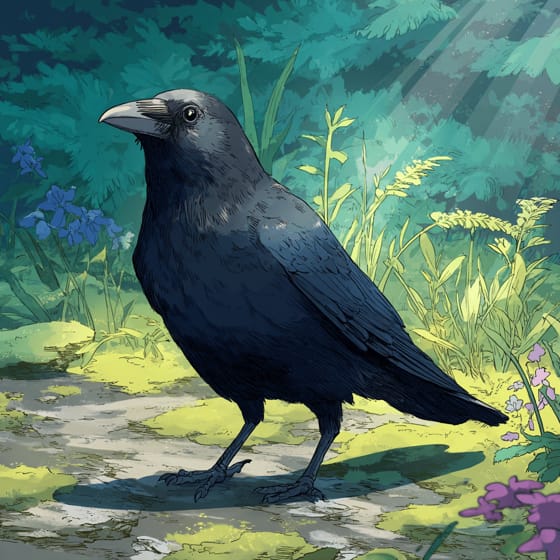
Corvus brachyrhynchos
Crows can spot and consume salamanders in exposed areas.
Solitary animals live alone for most of their lives, only interacting with others for mating or parental care.
Camouflaged describes organisms that possess coloring or patterns that allow them to blend into their environment.
This trait identifies organisms whose diet primarily consists of insects and other small invertebrates.
Forest habitats are terrestrial environments dominated by dense tree cover, supporting a high diversity of plant and animal life.

Pertaining to species that are significantly smaller than typical or average for their kind.

Regenerative organisms possess the ability to regrow lost or damaged body parts, tissues, or organs.

Nocturnal animals are primarily active during the nighttime hours, typically resting or sleeping during the day.

Endangered status indicates a species is at a very high risk of extinction in the wild in the near future.
No aliases listed yet.
Danger
1/5 · Very low
Always watch where you step in nature and don't touch wild animals.
The easiest way to identify California Slender Salamander is to use the Snappit nature identifier app.
7-13 cm
0.001-0.004 kg
5-10 years
0.1 km/h
They eat tiny insects, mites, and worms found in damp leaf litter and soil.
Forests
Foraging
Zoom in to split clusters and explore where this object has been snapped.
Feb 20, 2026
El Sereno Open SpacePhoto attribution
no rights reserved
License: CC0 1.0 ↗
Image may be shown cropped inside the card frame.
Feb 4, 2026
Happy Hollow Park & ZooPhoto attribution
(c) lazarus, some rights reserved (CC BY)
License: CC BY 4.0 ↗
Image may be shown cropped inside the card frame.

California, US
You might spot Jaguar, Varecia Variegata Subcincta, and Red Ruffed Lemur.
View guide →

California, US
You might spot Pacific Banana Slug and Ensatina.
View guide →

California, US
You might spot Western Azalea, Pacific Trillium, and Western Columbine.
View guide →

California, US
You might spot Eastern Fox Squirrel, Monarch, and Turkey.
View guide →

California, US
You might spot Hoary Rock-Rose, Brittleleaf Manzanita, and Chaparral Pea.
View guide →

California, US
You might spot White-Crowned Sparrow and Bermuda Buttercup.
View guide →
Take the discovery with you
Snap it with Snappit to identify it, learn what makes it special, and add the discovery to your collection.









.jpg&width=800)


