





Canadian wild ginger
Asarum canadense
Canadian wild ginger is a special plant with heart-shaped leaves and pretty, hidden flowers. It grows close to the ground in shady places, making it a lovely addition to the forest floor.
Habitat: Forests
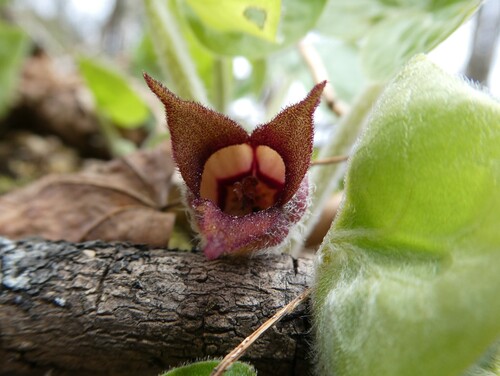
The Canadian wild ginger has distinctive heart-shaped, velvety leaves that grow low to the forest floor. Its unique reddish-brown, bell-shaped flower is often hidden beneath the leaves, appearing solitary at the plant's base.
Category
PlantsRarity
Common
Danger
1/5 · Very low
Snaps
6
Indigenous peoples historically used this plant for medicines and as a spice.
It smells like ginger when crushed, but it's not related to the ginger we eat!
Its unique flowers are pollinated by tiny flies and beetles that crawl on the forest floor.
The wild ginger forms dense mats on the forest floor, creating a cozy home for small critters!
Canadian wild ginger can spread widely using underground stems called rhizomes, helping it colonize new areas in the forest.
Its seeds have a fatty attachment that ants love, so they carry the seeds away, helping the plant spread its offspring.
Canadian wild ginger keeps its flowers close to the ground to attract crawling insects like flies and beetles for pollination.
Megaselia scalaris
Attracted to the low-lying flowers
Aphaenogaster picea
Carries seeds for their fatty attachments

Arion ater
Feeds on its tender leaves and stems
Aromatic plants produce and emit fragrant volatile organic compounds, often for defense or to attract pollinators.
Deciduous plants periodically shed all their leaves, typically during autumn or dry seasons.
Flowering plants are any plants that produce flowers as part of their reproductive cycle.
Shade tolerant plants are adapted to grow and thrive in areas with low light levels, requiring less direct sunlight.

Fragrant flowers emit a pleasant aroma, often to attract pollinators or for defense.

Medicinal plants possess chemical compounds that can be used for therapeutic purposes to treat illnesses or maintain health.

Edible plants are those parts of a plant that are considered safe for human consumption.

Forest habitats are terrestrial environments dominated by dense tree cover, supporting a high diversity of plant and animal life.

Describes organisms that transfer pollen, enabling the fertilization and reproduction of plants.
No aliases listed yet.
Danger
1/5 · Very low
Don't eat any plants unless you know they are safe. Always ask an adult first!
The easiest way to identify Canadian wild ginger is to use the Snappit nature identifier app.
10-20 cm
15-30 cm
2-4 cm
Spring
No
Mild
Perennial
Zoom in to split clusters and explore where this object has been snapped.
Apr 25, 2026
Stockbridge Common Historic DistrictPhoto attribution
no rights reserved
License: CC0 1.0 ↗
Image may be shown cropped inside the card frame.

Virginia, US
You might spot Garlic Mustard, Spotted Lanternfly, and Bloodroot.
View guide →

Minnesota, US
You might spot Common Eastern Bumble Bee and Turkey.
View guide →
New York, US
You might spot Duck, Water Caltrop, and Spotted Lanternfly.
View guide →

Wisconsin, US
You might spot Eastern Skunk Cabbage, Sharp-Lobed Hepatica, and Snakewort.
View guide →

Vermont, US
You might spot Eastern White Pine, Eastern Newt, and Painted Bunting.
View guide →
Kentucky, US
You might spot Great Waterleaf, Lesser Celandine, and White-Tailed Deer.
View guide →
Take the discovery with you
Snap it with Snappit to identify it, learn what makes it special, and add the discovery to your collection.






.jpg&width=800)


_001.jpg&width=800)


