
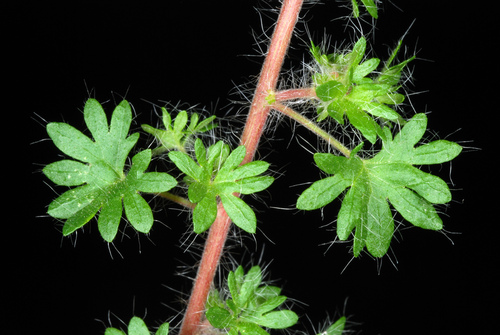


Cardinal Feather
acalypha radians
Cardinal Feather (Acalypha radians) is a fascinating, low-growing perennial herb native to the sandy soils of the southern United States and northern Mexico. Known for its striking, fuzzy red flower spikes that resemble bright cardinal feathers, this resilient plant brings a splash of vivid color to arid landscapes. It belongs to the Euphorbiaceae, or spurge family, which is famous for its diverse and often unusual plant forms. In the wild, Cardinal Feather serves as an important stabilizer for loose, sandy soils, utilizing its deep taproot to anchor itself against shifting dunes. It is highly adapted to drought and heat, thriving in environments where many other plants would quickly wither. This makes it a key ecological player in sand-prairie ecosystems, offering shelter to ground-dwelling insects and helping to prevent wind erosion.
Habitat: Found in open sandy prairies, coastal dunes, and dry oak woodlands, often flourishing in loose, nutrient-poor soils.
This plant is easily recognized by its spreading, low-profile growth habit, typically reaching 10 to 40 centimeters in height. Its stems are covered in fine, grayish hairs and support small, rounded to fan-shaped leaves with distinctively scalloped edges. The most prominent feature is the bright crimson or deep pink female flower spikes, which are dense, cylindrical, and covered in soft, thread-like structures that give them a furry, feather-like texture.
Category
PlantsRarity
Common
Danger
1/5 · Very low
Snaps
Be the first to snap!
Cardinal Feather is a pioneer species, meaning it is one of the first plants to colonize and help stabilize disturbed sandy soils and dunes.
Despite looking like a soft, pet-able feather, the red spikes are actually complex structures of female flowers waiting to catch pollen.
The genus name Acalypha is derived from the ancient Greek word for nettle, due to the similar nettle-like shape of the leaves in some species.
Develops an exceptionally long and robust taproot that reaches deep water tables and stabilizes the plant in shifting sands.
Stems and leaves are covered in dense glandular hairs that reduce moisture loss and deter crawling insect pests.
The bright red, fuzzy pistils are feather-like to efficiently capture wind-blown pollen across open, breezy habitats.
As a photosynthetic plant, Cardinal Feather generates its own energy using sunlight, water, and carbon dioxide.

Odocoileus virginianus
Provides occasional browse for deer in sandy rangelands.
Cenchrus spinifex
Competes directly for nutrients and water in sandy soils.

Lasioglossum sp.
Native bees visit the flowers to collect pollen.
No trait badges are assigned for this object yet.
No aliases listed yet.
Collections for this object will appear here as more themes are added.
Danger
1/5 · Very low
No special safety notes yet.
Start with the whole plant, then compare leaf arrangement, leaf edges, stems and any flowers or fruit. Opposite leaves grow in pairs; alternate leaves come one at a time along the stem. These details tell you far more together than a single green leaf does. Plant Identifier: upload a photo and compare the visible details.
10+ cm
3+ years
As a photosynthetic plant, Cardinal Feather generates its own energy using sunlight, water, and carbon dioxide.
Found in open sandy prairies, coastal dunes, and dry oak woodlands, often flourishing in loose, nutrient-poor soils.
Photosynthesis
Zoom in to split clusters and explore where this object has been snapped.
Recent snaps will appear here as new observations are added.
Take the discovery with you
Snap it with Snappit to identify it, learn what makes it special, and add the discovery to your collection.


















