





beaked hazelnut
Corylus cornuta
The beaked hazelnut is a special shrub with long, pointy nuts that look like little beaks! It grows in forests and is loved by animals for its tasty nuts.
Habitat: Forests
The beaked hazelnut is a multi-stemmed shrub with rounded, toothed leaves. It features distinctive nuts encased in a leafy, tube-like husk that extends into a 'beak,' giving it its name. The husks are green, turning brown as the nuts ripen.
Category
PlantsRarity
Common
Danger
1/5 · Very low
Snaps
7
Even before leaves appear, the male catkins release clouds of yellow pollen into the spring breeze!
Hazelnut wood is sometimes used for making small tools, fishing rods, or even walking sticks!
Indigenous peoples traditionally used its flexible stems for weaving strong baskets and crafts!
The 'beak' on its nut husks can be up to twice as long as the tasty nut inside!
Beaked hazelnut has a long, tubular husk that completely encases its nuts, protecting them from hungry animals until ripe.
It produces long, dangling catkins in very early spring, releasing pollen into the wind before its leaves even appear.
Its fibrous root system helps anchor soil on slopes and disturbed areas, preventing erosion.
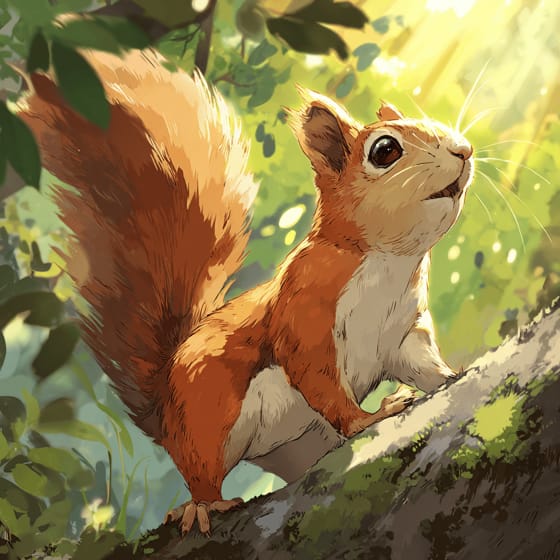
Sciurus carolinensis
Caches and consumes its nutritious nuts.

Odocoileus virginianus
Browses its leaves and young twigs.
Meleagris gallopavo
Forages for fallen nuts and catkins.

Aphelocoma californica
Disperses and eats its tasty nuts.
Deciduous plants periodically shed all their leaves, typically during autumn or dry seasons.
A shrub is a woody plant smaller than a tree, typically with multiple stems branching from or near the ground.
Nut bearing plants produce hard-shelled fruits, commonly known as nuts, which contain a single seed and are a valuable food source.
Edible plants are those parts of a plant that are considered safe for human consumption.

Fall color refers to the seasonal change in foliage pigmentation, primarily in deciduous plants, displaying vibrant hues.

Forest habitats are terrestrial environments dominated by dense tree cover, supporting a high diversity of plant and animal life.
No aliases listed yet.
Danger
1/5 · Very low
Always ask an adult before touching plants, as some may not be safe.
The easiest way to identify beaked hazelnut is to use the Snappit nature identifier app.
100-500 cm
100-400 cm
Early spring
Yes
None
Perennial
Wind
Zoom in to split clusters and explore where this object has been snapped.

Washington, US
You might spot Great Blue Heron, Aggregating Anemone, and Ochre Sea Star.
View guide →

Massachusetts, US
You might spot Painted Turtle and Eastern White Pine.
View guide →

California, US
You might spot Sequoia, California Incense-Cedar, and White Fir.
View guide →

Oregon, US
You might spot Bald Eagle, Golden Eagle, and Snowy Owl.
View guide →
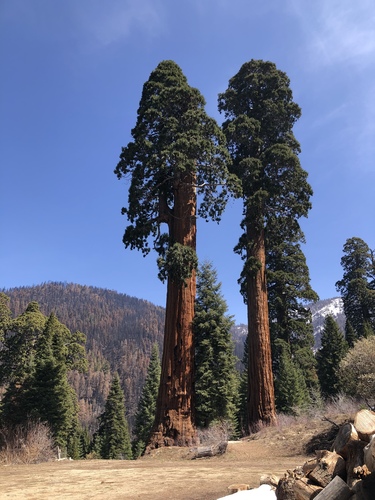
California, US
You might spot Sequoia, Mountain Misery, and Mule Deer.
View guide →

Connecticut, US
You might spot American Chestnut, Pink Lady's Slipper, and Buttonbush.
View guide →
Take the discovery with you
Snap it with Snappit to identify it, learn what makes it special, and add the discovery to your collection.







.jpg&width=800)



_001.jpg&width=800)



