




Carolina Burying Beetle
nicrophorus carolina
The Carolina Burying Beetle is a little bug that helps clean up the environment by burying dead animals! It's like a superhero for nature, turning waste into food for their babies.
Habitat: They live in forests, fields, and gardens, often near decaying animals.
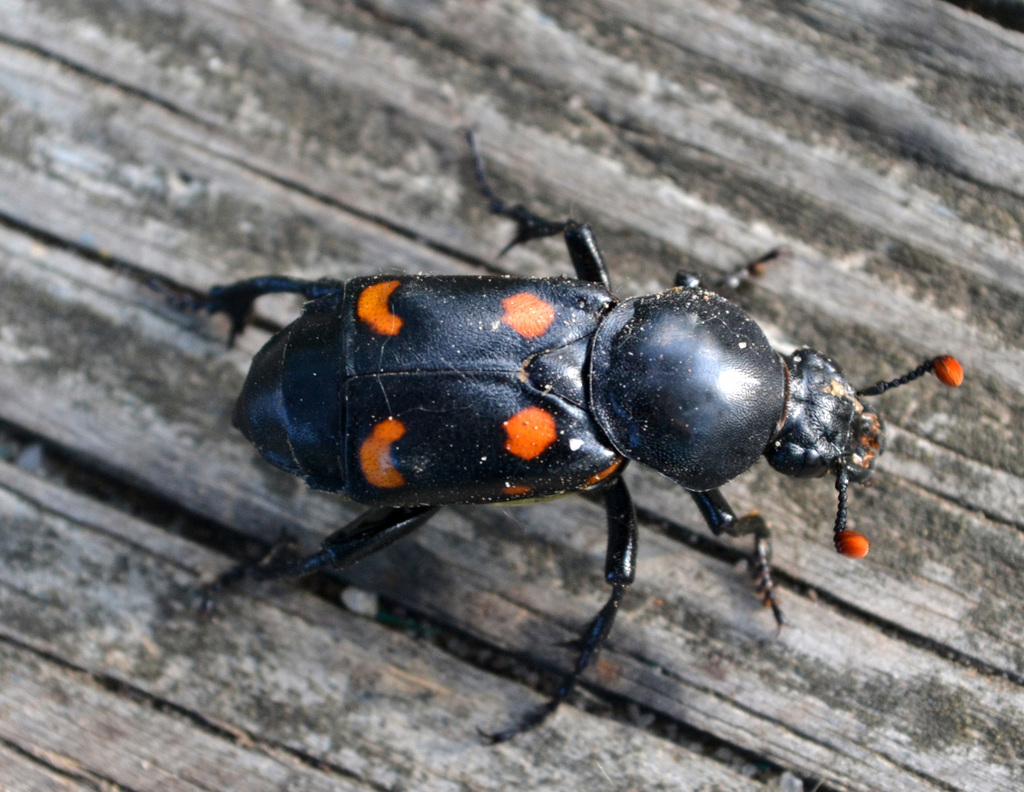
The Carolina Burying Beetle has a striking black body adorned with two prominent, irregular orange bands across its wing covers (elytra). Its antennae feature bright orange clubs, and its head is mostly black. This coloration makes it easily distinguishable from other dark beetles.
Category
InsectsRarity
Common
Danger
0/5 · No known danger
Snaps
1
Mama and papa beetles work together to care for their hungry grubs!
Sometimes they will fight other beetles for the perfect burial site!
These beetles are known as the "undertakers" of the insect world!
They actually hum or squeak by rubbing body parts to communicate!
Carolina Burying Beetle has an incredible sense of smell that helps them locate dead animals from afar.
Carolina Burying Beetle can work with a partner to quickly bury carcasses, providing a safe nursery and food source.
Carolina Burying Beetle can remove fur or feathers and coat carrion with secretions that help preserve it for their larvae.
Carolina Burying Beetle has unique parental care, staying with their young to feed and protect them until they are grown.
These beetles eat dead animals, recycling nutrients back into the ecosystem.
Age differences: Larvae are fed pre-digested carrion by their parents.

Peromyscus leucopus
Feeds on their deceased carcasses.
Didelphis virginiana
A generalist predator of insects.
Calliphora vicina
Also relies on carrion as a food source.
Solitary animals live alone for most of their lives, only interacting with others for mating or parental care.
Burrowing animals dig tunnels and chambers in the ground, using these subterranean structures for shelter, hunting, or breeding.
Describes organisms that break down dead organic material, recycling nutrients back into the ecosystem.
This trait identifies organisms whose diet consists entirely or primarily of animal tissue.

Nocturnal animals are primarily active during the nighttime hours, typically resting or sleeping during the day.
Danger
0/5 · No known danger
No special safety notes yet.
The easiest way to identify Carolina Burying Beetle is to use the Snappit nature identifier app.
40-70 mm
20-35 mm
60-180 days
18 km/h
These beetles eat dead animals, recycling nutrients back into the ecosystem.
They live in forests, fields, and gardens, often near decaying animals.
Scavenging
Zoom in to split clusters and explore where this object has been snapped.
Take the discovery with you
Snap it with Snappit to identify it, learn what makes it special, and add the discovery to your collection.











.jpg&width=800)




