




Castor Bean
Ricinus communis
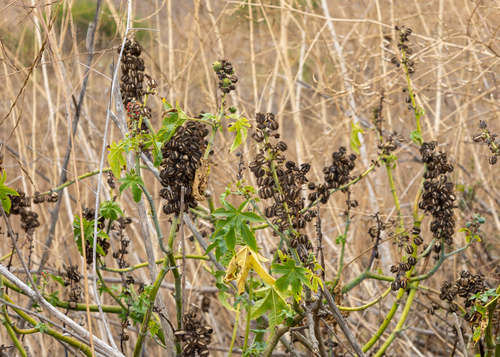
The Castor Bean plant has large, glossy leaves and spiky seed pods. It grows tall with vibrant red or green seeds that are poisonous if eaten.
Habitat: Various environments
The Castor Bean has large, deeply lobed leaves, often reddish or purplish, resembling a giant star or hand. Its sturdy stems can be green to dark red, topped with spiky, often vibrant red or green seed pods that burst open when ripe, revealing patterned seeds.
Category
PlantsRarity
Common
Danger
4/5 · High
Snaps
16
Ancient Egyptians used castor oil thousands of years ago for lamps and as a medicine!
Castor Bean is a 'monotypic' genus, meaning it's the only species in its entire group!
The highly toxic ricin from its seeds is one of the most poisonous natural substances known.
The seeds were once used as a precise unit of weight for gems and medicines!
Castor Bean produces ricin, a deadly poison, in its seeds and other parts, making it extremely dangerous for most animals to eat.
Castor Bean has spiky seed pods that explosively open, flinging seeds far away to spread its offspring.
Castor Bean can grow incredibly fast in warm climates, quickly outcompeting other plants for sunlight and space.
Apis mellifera
visits flowers for pollen, aiding wind dispersal
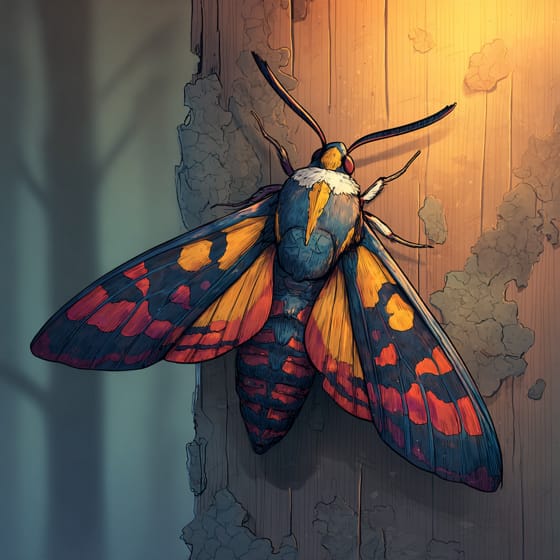
Acherontia atropos
caterpillars feed on its leaves despite toxicity
Bemisia tabaci
feeds on sap, weakening the plant as a pest
Tetranychus urticae
sucks plant juices, causing leaf damage
Describes organisms capable of converting atmospheric nitrogen into compounds usable by plants.
Shade tolerant plants are adapted to grow and thrive in areas with low light levels, requiring less direct sunlight.
Broadleaf trees are angiosperms characterized by flat, wide leaves that are typically shed annually in temperate climates.
Medicinal plants possess chemical compounds that can be used for therapeutic purposes to treat illnesses or maintain health.

This human use trait identifies species cultivated as oil crops, harvested for their seeds or fruits from which vegetable oils are extracted for food, fuel, or industrial uses.

Rapid growing plants exhibit accelerated growth rates, quickly increasing in size and biomass within a short period.

Toxic organisms contain substances that are poisonous and can cause adverse effects upon exposure.

Poisonous organisms produce toxins that can cause harm when ingested, inhaled, or absorbed through contact.

This habitat trait indicates species that can coexist with humans in urban and suburban environments, utilizing man-made structures and green spaces.

Threatened status denotes a species likely to become endangered in the foreseeable future without effective conservation interventions.
Danger
4/5 · High
Never touch or eat any part of the Castor Bean plant as it is poisonous.
The easiest way to identify Castor Bean is to use the Snappit nature identifier app.
100-600 cm
100-300 cm
Summer to fall, year-round in tropical climates
No
Deadly
Perennial
Wind
Zoom in to split clusters and explore where this object has been snapped.
Jun 6, 2026
Venice Canal Historic DistrictPhoto attribution
(c) Roberto Daniel Avila, some rights reserved (CC BY)
License: CC BY 4.0 ↗
Image may be shown cropped inside the card frame.
Jun 6, 2026
Venice Canal Historic DistrictPhoto attribution
(c) Roberto Daniel Avila, some rights reserved (CC BY)
License: CC BY 4.0 ↗
Image may be shown cropped inside the card frame.

California, US
You might spot Western Fence Lizard and California Brittlebush.
View guide →

California, US
You might spot Western Fence Lizard, Duck, and California Brittlebush.
View guide →

California, US
You might spot Western Fence Lizard, Eastern Fox Squirrel, and Duck.
View guide →

California, US
You might spot Snowy Egret, Great Blue Heron, and Western Gull.
View guide →

California, US
You might spot Giant Anteaters and Black-and-Gold Howler Monkey.
View guide →

California, US
You might spot Giraffes, African Lion, and Tiger.
View guide →
Take the discovery with you
Snap it with Snappit to identify it, learn what makes it special, and add the discovery to your collection.










.jpg&width=800)


_001.jpg&width=800)



