





Chalk Dudleya
Dudleya pulverulenta
Chalk Dudleya is a special plant that looks like a little rosette of leaves. It grows in rocky places and can be found in coastal areas. Its leaves are covered in a powdery coating that helps it stay dry.
Habitat: Coastal areas
The Chalk Dudleya has rosettes of thick, succulent leaves coated in a distinctive white, powdery "chalk." Its tall, reddish flower stalks emerge from the center, bearing bright yellow or reddish-yellow star-shaped flowers.
Category
PlantsRarity
Common
Danger
1/5 · Very low
Snaps
1
Its scientific name, 'pulverulenta,' means 'powdery,' referring to its unique white coating!
Some types of hummingbirds love to sip nectar from its bright, bell-shaped flowers!
The chalky powder on its leaves is actually tiny wax particles that rub off easily, so try not to touch!
This plant is sometimes called 'Live-Forever' because it can bounce back after very long dry periods!
Chalk Dudleya's thick, fleshy leaves are like tiny water bottles, storing precious moisture to help it survive dry spells.
Chalk Dudleya can grow deep roots that firmly anchor it to rocky cliffs, helping it stay put even in strong winds!
Apis mellifera
Gathers nectar from its flowers.

Calypte anna
Sips nectar and aids reproduction.
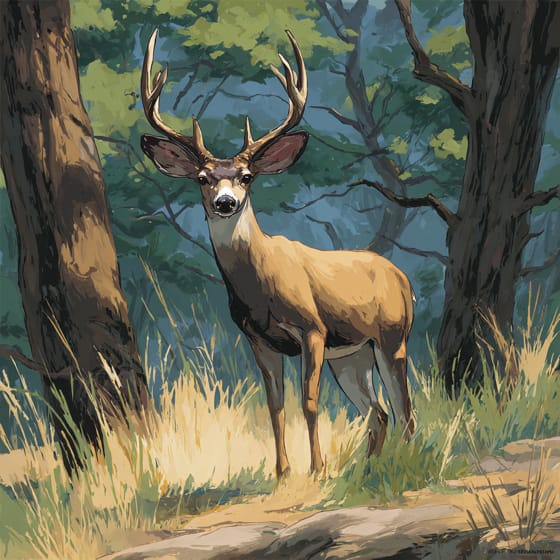
Odocoileus hemionus
Occasionally browses its succulent leaves.
Flowering plants are any plants that produce flowers as part of their reproductive cycle.
Spring blooming plants produce their flowers during the spring season, often signifying the end of winter and the start of new growth.
Evergreen plants retain their foliage throughout the year, never shedding all their leaves at once.
Drought-tolerant plants can survive and flourish in conditions with limited water availability.

Succulent plants have thickened, fleshy parts, usually leaves or stems, adapted to store water in arid climates.

Describes plants that are particularly attractive and beneficial to a wide range of pollinating organisms.

Coastal habitats are dynamic environments located along the interface between land and sea, influenced by tides, waves, and saltwater.

Describes a species whose presence and role have a disproportionately large effect on its environment.

Endangered status indicates a species is at a very high risk of extinction in the wild in the near future.
No aliases listed yet.
Danger
1/5 · Very low
Always look but don't touch plants unless you know they are safe.
The easiest way to identify Chalk Dudleya is to use the Snappit nature identifier app.
5-60 cm
10-20 cm
1-2 cm
Spring to early summer (April-July)
No
None
Perennial
Zoom in to split clusters and explore where this object has been snapped.

California, US
You might spot Western Fence Lizard and California Brittlebush.
View guide →

California, US
You might spot Western Fence Lizard, Duck, and California Brittlebush.
View guide →

California, US
You might spot California Buckwheat, Chaparral Yucca, and White Sage.
View guide →
Take the discovery with you
Snap it with Snappit to identify it, learn what makes it special, and add the discovery to your collection.








.jpg&width=800)



_001.jpg&width=800)



