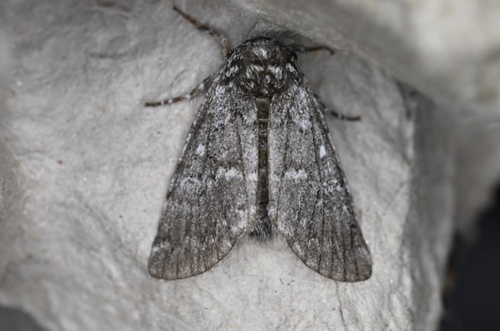


Close-Banded Yellowhorn
colocasia propinquilinea
The Close-banded Yellowhorn (Colocasia propinquilinea) is a fascinating species of moth native to the deciduous woodlands of North America. Renowned for its intricately patterned wings and the striking appearance of its larval stage, this species is a wonderful example of the diverse Noctuidae family. The common name hints at the yellowish tufts or structures sometimes observed on these insects, making them a delight for dedicated moth enthusiasts to discover. While the adult moths are primarily active at night and drawn to artificial lights, their caterpillars are voracious leaf-eaters that play a vital part in the forest food web, converting plant matter into energy that sustains various woodland predators.
Habitat: Found predominantly in temperate deciduous and mixed forests across eastern North America, often resting on tree trunks or hidden among leaf litter.
Adult Close-banded Yellowhorn moths feature cryptic, grayish-white forewings adorned with distinct, closely set black zigzag lines and bands, which provide excellent camouflage against tree bark. They have a stout, furry thorax often displaying faint yellowish or pale tufts. Their wingspan typically ranges from 3.0 to 4.0 centimeters. The caterpillars are equally distinctive, often sporting bristly tufts of hair and bright markings to deter predators before they pupate in the soil or leaf litter.
Category
InsectsRarity
Common
Danger
1/5 · Very low
Snaps
Be the first to snap!
After a voracious eating phase, the caterpillar overwinters as a pupa, effectively hitting 'pause' on its development until the warm spring weather returns.
Like many owlet moths, they have a built-in early warning system in the form of a tiny 'ear' on their thorax to hear approaching bats.
The name Close-banded refers to the tight, zigzagging black lines on the moth's forewings, helping distinguish it from related species.
Adults blend seamlessly into tree bark using their disruptive gray and black wing patterns to avoid daytime predators.
Possesses specialized hearing organs called tympana that can detect the ultrasonic echolocation clicks of hunting bats.
The hairy caterpillars can cause mild irritation to potential predators, using their bristly tufts as a physical and chemical deterrent.
The caterpillars are strictly herbivorous, feeding on the foliage of deciduous trees, while adults feed lightly on nectar.
Age differences: Caterpillars consume large quantities of tree leaves, whereas adults transition to a liquid nectar diet or rely on stored larval fat reserves.

Betula papyrifera
Provides foliage for the caterpillars to consume during their larval stage.

Lasiurus borealis
Hunts and consumes adult moths while foraging at night.

Poecile atricapillus
Forages for caterpillars in the forest canopy to feed their young.
No trait badges are assigned for this object yet.
No aliases listed yet.
Collections for this object will appear here as more themes are added.
Danger
1/5 · Very low
No special safety notes yet.
Compare resting wing shape, forewing markings, antennae and body build. Small brown moths can hinge on fine details a phone photo can't always catch. Moth Identifier: upload a photo and compare the visible details.
1-2 cm
3-4 cm
0.0001-0.0005 kg
0-1 years
The caterpillars are strictly herbivorous, feeding on the foliage of deciduous trees, while adults feed lightly on nectar.
Found predominantly in temperate deciduous and mixed forests across eastern North America, often resting on tree trunks or hidden among leaf litter.
Foraging
Zoom in to split clusters and explore where this object has been snapped.
Recent snaps will appear here as new observations are added.
Take the discovery with you
Snap it with Snappit to identify it, learn what makes it special, and add the discovery to your collection.